
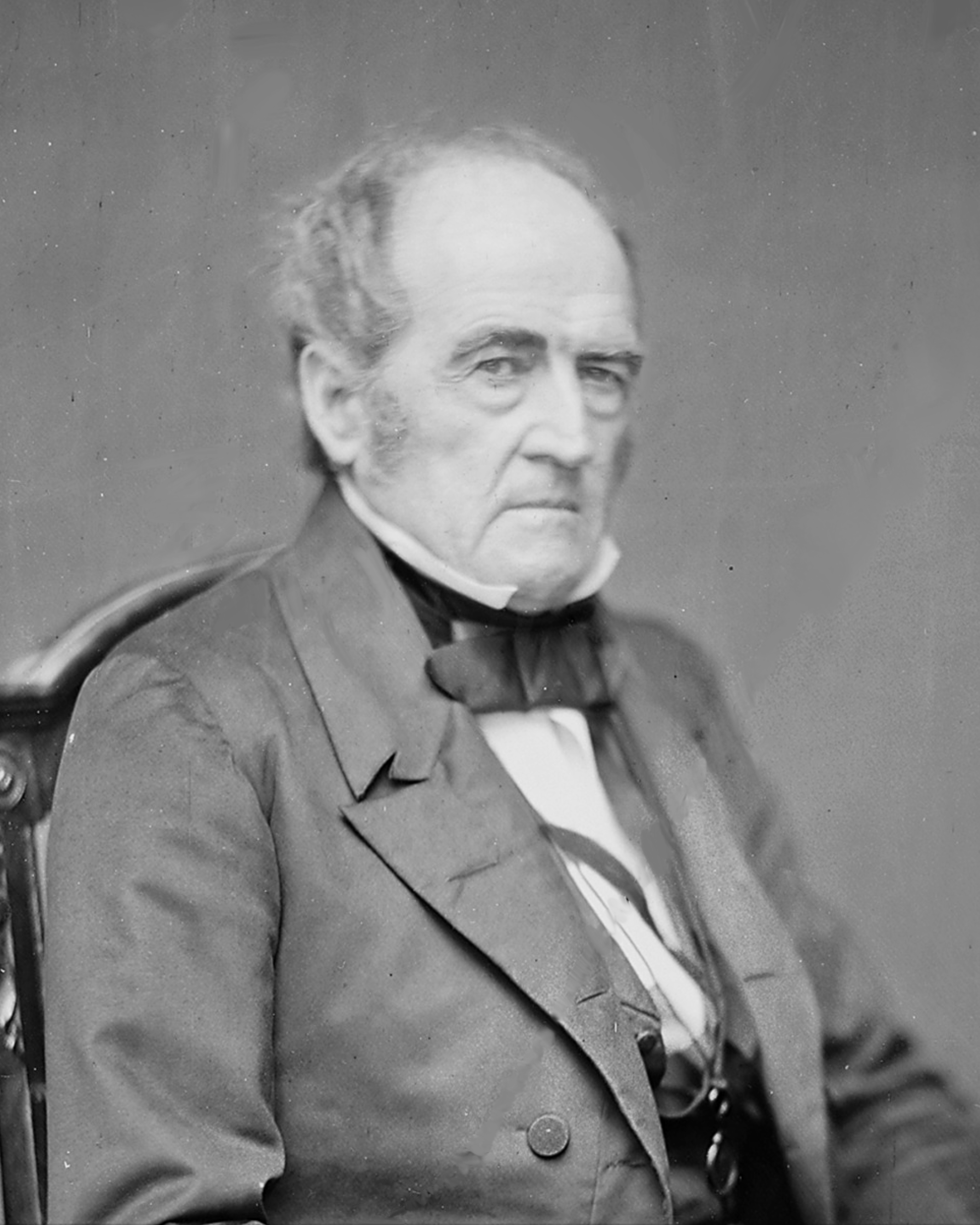
Historical · U.S. Senate · Tennessee
John Bell
Former U.S. Senator from Tennessee · 1847–1859 · American · Class 2
John Bell represented Tennessee in the United States Senate (1847–1859) for the American party. The page below collects sourced biographical facts, term history, committee roles, and provenance for Bell.
Bioguide ID: B000340
Key facts
- Full name
- John Bell
- State
- Tennessee
- Party
- American
- Senate class
- Class II
- Senate service
- 1847–1859
- First Senate term
- 1847
- Status
- Left office
- Current term ends
- —
- Born
- 1796
- Bioguide ID
- B000340
- Committee assignments
- —
- Dataset version
- 1.20260602
Biographical narrative
1,249 words · sourced from the Wikipedia REST extract
John Bell was an American politician, attorney, and planter who served as a U.S. Senator from Tennessee. His political career spanned several decades, during which he held various significant positions, including Speaker of the House of Representatives and Secretary of War. Bell was a prominent figure in the antebellum period and was known for his candidacy for the presidency in 1860 as the nominee of the Constitutional Union Party. His political stance was characterized by a complex relationship with slavery and secession, reflecting the turbulent political landscape of the time.
Early life and career
John Bell was born on February 18, 1796, in Mill Creek, a small community near Nashville, Tennessee. He was the son of Samuel Bell, a farmer and blacksmith, and Margaret Edmiston Bell. Bell was one of nine siblings, and his family had a notable military background; his paternal grandfather, Robert Bell, served in the American Revolution, while his maternal grandfather, John Edmiston, fought at the Battle of Kings Mountain. This heritage likely influenced Bell's early interest in public service and governance.
Bell pursued higher education at Cumberland College, which would later be renamed the University of Nashville, graduating in 1814. Following his graduation, he studied law and was admitted to the bar in 1816. He established a successful legal practice in Franklin, Tennessee, which laid the groundwork for his future political career.
In 1817, Bell entered politics by winning a seat in the Tennessee Senate. During his tenure as a state senator, he advocated for judicial reforms and supported the relocation of the state capital to Murfreesboro, a decision influenced by personal connections, as his wife, Sally Dickinson, was a granddaughter of the town's namesake. After serving a single term in the state legislature, Bell chose not to seek reelection and moved to Nashville, where he formed a law partnership with Henry Crabb.
Bell's political ambitions continued to grow, and in 1826, he ran for the U.S. House of Representatives, seeking to represent Tennessee's 7th District, which had become vacant due to the election of Sam Houston as governor. His campaign was marked by a contentious rivalry with Felix Grundy, both of whom claimed allegiance to the policies of President Andrew Jackson. Despite Jackson's endorsement of Grundy, Bell's appeal to younger voters enabled him to win the election by a narrow margin.
During his time in the House, Bell opposed the Tariff of 1828 and was against federal funding for improvements to the Cumberland Road, arguing that such actions exceeded the constitutional authority of the federal government. One of his notable initiatives was the Tennessee land bill, which sought to transfer federal lands in Tennessee to the state for the establishment of public schools. However, this proposal faced opposition from congressmen from eastern states, leading to its eventual shelving.
In his second term from 1829 to 1831, Bell served as chairman of the House Committee on Indian Affairs. In this capacity, he played a significant role in drafting the Indian Removal Act, which facilitated the forced relocation of Native American tribes, including the Cherokee, to Oklahoma. This act became a pivotal moment in American history, leading to the tragic events known as the Trail of Tears. Despite his involvement in this legislation, Bell faced opposition from various quarters, including future political allies.
Bell's political alignment began to shift during his fourth term in the House. Initially a strong supporter of Jackson, he began to diverge from the president's policies, particularly regarding the national bank. This shift culminated in Bell's election as Speaker of the House in 1834, where he garnered support from anti-Jackson factions. His election marked a significant turning point in his political career, as he began to openly question Jackson's policies, particularly regarding the rechartering of the national bank.
The rift between Bell and Jackson deepened as he supported the presidential campaign of Hugh Lawson White, a fellow member of the emerging Whig Party, against Jackson's chosen successor, Martin Van Buren. This break with Jackson earned Bell the label of "The Great Apostate," reflecting the significant ideological shift in his political affiliations.
Senate tenure
John Bell's Senate career began in 1847 when he was elected to represent Tennessee. He served in the Senate until 1859, during which time he was a member of the American Party. His tenure in the Senate was marked by significant national events, including the growing tensions surrounding slavery and the impending Civil War.
Throughout his Senate career, Bell maintained a complex stance on slavery. Although he was a slaveholder himself, he opposed the expansion of slavery into new territories during the 1850s. This position set him apart from many of his Southern contemporaries and positioned him as a moderate voice in a deeply divided political landscape. He was an advocate for maintaining the Union and campaigned vigorously against secession, arguing that the Constitution provided sufficient protections for slavery without the need for states to break away from the Union.
In 1860, Bell was nominated as the presidential candidate for the Constitutional Union Party, a political group that sought to bridge the divide between pro-slavery and anti-slavery factions by taking a neutral stance on the issue of slavery. His campaign focused on preserving the Union and preventing the secession of Southern states. Bell's appeal resonated particularly in border states, and he managed to secure electoral votes from Tennessee, Kentucky, and Virginia, albeit by narrow margins.
Despite his efforts to maintain the Union, the political climate shifted dramatically following the outbreak of the Civil War. After the Battle of Fort Sumter in April 1861, Bell's allegiance shifted, and he ultimately abandoned the Union cause to support the Confederacy. This decision marked a significant turning point in his political life and reflected the complexities of loyalty and ideology during a time of national crisis.
Legislative focus and committees
During his time in the Senate, John Bell was involved in various legislative initiatives and served on several important committees. His legislative focus included issues related to slavery, state rights, and national unity. Bell's moderate stance on slavery distinguished him from many of his contemporaries, as he sought to navigate the contentious debates surrounding the institution while advocating for the preservation of the Union.
Bell's committee assignments allowed him to influence key legislation during a critical period in American history. His experience in the House, particularly his role in the Indian Affairs Committee, informed his perspectives on federal-state relations and the treatment of Native American populations. His involvement in the drafting of the Indian Removal Act demonstrated his willingness to engage with complex and often controversial issues, even as he faced opposition from various factions.
As a senator, Bell's focus on national unity and compromise was evident in his efforts to address the growing divide between North and South. His candidacy for the presidency in 1860 as a member of the Constitutional Union Party underscored his commitment to finding a middle ground amidst the escalating tensions that would ultimately lead to the Civil War. Bell's political career, marked by significant shifts in allegiance and ideology, reflects the complexities of American politics during a transformative era in the nation's history.
In summary, John Bell's legacy as a politician is characterized by his early alignment with Andrew Jackson, his later affiliation with the Whig Party, and his complex stance on slavery and secession. His contributions to American politics, particularly during his time in the Senate, continue to be studied as part of the broader narrative of antebellum America and the Civil War.
Notable legislation
Sponsored and co-sponsored legislation for John Bell is pending operator curation. The biographical narrative above carries the same provenance trail until per-bill rows are written.
Sources
- [1]https://en.wikipedia.org/wiki/John_Bell_(Tennessee_politician)Wikipedia · retrieved 2026-06-02
Notable quotes
Sourced quotes for John Bell are pending operator curation. Narrative-scope provenance remains attached below.
Sources
- [1]https://en.wikipedia.org/wiki/John_Bell_(Tennessee_politician)Wikipedia · retrieved 2026-06-02
Key positions
Curated policy positions for John Bell are pending operator review. The biographical narrative above carries the same provenance trail until per-topic positions are written.
Sources
- [1]https://en.wikipedia.org/wiki/John_Bell_(Tennessee_politician)Wikipedia · retrieved 2026-06-02
Terms served
- 1827–1829U.S. House · District 7 · Term 1 · Jackson
- 1829–1831U.S. House · District 7 · Term 2 · Jackson
- 1831–1833U.S. House · District 7 · Term 3 · Jackson
- 1833–1835U.S. House · District 7 · Term 4 · Jackson
- 1835–1837U.S. House · District 7 · Term 5 · Whig
- 1837–1839U.S. House · District 7 · Term 6 · Whig
- 1839–1841U.S. House · District 7 · Term 7 · Whig
- 1847–1853U.S. Senate · Term 8 · Whig · Class II
- 1853–1859U.S. Senate · Term 9 · American · Class II
Sources & provenance
Every attributable claim above carries a per-section [N] marker that resolves to the corresponding URL below. Each entry records the upstream provider, the canonical URL, and the timestamp at which the source was retrieved by the ingest pipeline.
Key facts
- https://bioguide.congress.gov/search/bio/B000340bioguide · retrieved 2026-06-02
- https://www.govtrack.us/congress/members/401331govtrack · retrieved 2026-06-02
Biographical narrative
- https://en.wikipedia.org/wiki/John_Bell_(Tennessee_politician)wikipedia · retrieved 2026-06-02
Find your senator
Every U.S. state elects two senators. Browse Tennessee’s delegation, the full former-senator roster, or explore the role and term length.
Related on The Candidate
- Preceded by Spencer JarnaginEarlier holder of the Tennessee Class II Senate seat · Whig.Open
- Succeeded by Joseph FowlerLater holder of the Tennessee Class II Senate seat · Republican.Open
- Albert GoreFormer U.S. Senator from Tennessee · DemocraticOpen
- Albert Gore Jr.Former U.S. Senator from Tennessee · DemocraticOpen
- Alexander AndersonFormer U.S. Senator from Tennessee · DemocraticOpen
- Alfred NicholsonFormer U.S. Senator from Tennessee · DemocraticOpen