
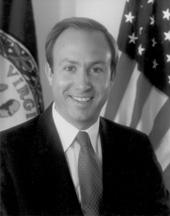
Historical · U.S. Senate · Virginia
Paul Trible Jr.
Former U.S. Senator from Virginia · 1983–1989 · Republican · Class 1
Paul Trible Jr. represented Virginia in the United States Senate (1983–1989) for the Republican party. The page below collects sourced biographical facts, term history, committee roles, and provenance for Jr..
Bioguide ID: T000367
Key facts
- Full name
- Paul Trible Jr.
- State
- Virginia
- Party
- Republican
- Senate class
- Class I
- Senate service
- 1983–1989
- First Senate term
- 1983
- Status
- Left office
- Current term ends
- —
- Born
- 1946
- Bioguide ID
- T000367
- Committee assignments
- —
- Dataset version
- 1.20260602
Biographical narrative
946 words · sourced from the Wikipedia REST extract
Paul S. Trible Jr. is a former United States Senator from Virginia, representing the Republican Party. His tenure in the Senate spanned from 1983 until 1989, during which he served as a member of the Senate Class 1. Trible's political career is marked by his involvement in various legislative matters and his contributions to the state of Virginia. Born in late 1946, he has had a significant impact on the political landscape of his state and has been involved in public service for several decades.
Early life and career
Paul S. Trible Jr. was born on December 29, 1946. His early life and formative years laid the groundwork for his future in public service and politics. Details regarding his upbringing, education, and early influences are not extensively documented, but it is known that he pursued higher education, which is often a common pathway for individuals entering the political arena.
Before entering the Senate, Trible had a notable career in public service and politics. He served in various capacities that helped him build a reputation as a dedicated public servant. His political journey began in the Virginia House of Delegates, where he gained valuable experience and insight into the legislative process. This experience would later serve him well during his time in the U.S. Senate.
Trible's commitment to public service was evident early on, and he was recognized for his leadership abilities and dedication to his constituents. His background in state politics provided him with a strong foundation for his subsequent election to the U.S. Senate. The transition from state-level politics to the national stage is a significant step for many politicians, and Trible's experience in Virginia's legislative body equipped him with the skills necessary to navigate the complexities of federal governance.
Senate tenure
Paul S. Trible Jr. was elected to the United States Senate in 1983, marking the beginning of his term in the upper chamber of Congress. His election came during a period of significant political activity in the United States, and he quickly became involved in various legislative initiatives. Trible's Senate term lasted until January 3, 1989, during which he served as a Republican representative for the state of Virginia.
During his time in the Senate, Trible was part of a broader Republican agenda that sought to address various national issues, including economic policies, defense matters, and social programs. His tenure coincided with the presidency of Ronald Reagan, a period characterized by conservative policies and a focus on strengthening the military. As a senator, Trible aligned himself with these priorities, advocating for legislation that reflected the values and interests of his constituents.
Trible's legislative activities included participation in debates and discussions on a wide range of issues. He was known for his ability to engage with colleagues across the aisle, which is an essential aspect of Senate operations. The Senate is often viewed as a deliberative body, and Trible's contributions to discussions and negotiations were part of his role as a senator. His efforts to build bipartisan support for certain initiatives highlighted his understanding of the importance of collaboration in achieving legislative goals.
Throughout his Senate career, Trible faced various challenges and opportunities that shaped his political identity. The dynamics of the Senate, including shifts in party control and evolving public opinion, influenced the legislative landscape during his tenure. Trible's ability to adapt to these changes was crucial in maintaining his effectiveness as a senator.
Legislative focus and committees
During his time in the Senate, Paul S. Trible Jr. was involved in several key legislative areas that reflected his priorities and the interests of his constituents. While specific details about the bills he sponsored or supported are not provided, it is common for senators to focus on issues pertinent to their states, such as economic development, education, healthcare, and infrastructure.
Trible's committee assignments would have played a significant role in shaping his legislative focus. Senators typically serve on multiple committees, which are responsible for reviewing and making recommendations on proposed legislation. These committees are essential for the legislative process, as they allow for detailed examination of issues and provide a platform for senators to advocate for their priorities.
Although the specific committees Trible served on are not detailed, it is likely that he participated in committees that aligned with his interests and the needs of Virginia. For example, committees related to finance, commerce, or national security would be relevant for a senator representing a state with diverse economic and strategic interests.
In addition to his committee work, Trible's engagement in broader legislative debates would have contributed to his visibility and influence within the Senate. Senators often participate in discussions that shape national policy, and Trible's contributions would have been part of the larger dialogue on pressing issues facing the country during the 1980s.
Trible's legislative focus and committee work reflect the responsibilities of a senator to advocate for their constituents while also addressing national concerns. The balance between local interests and broader national priorities is a critical aspect of a senator's role, and Trible's tenure exemplified this dynamic.
After completing his Senate term in January 1989, Trible's political career continued in various capacities, although specific details about his post-Senate activities are not included in this account. His time in the Senate remains a significant chapter in his life, characterized by his commitment to public service and his contributions to the state of Virginia and the nation.
Overall, Paul S. Trible Jr.'s career as a U.S. Senator is marked by his dedication to legislative service and his engagement in the political process. His experiences in the Senate reflect the complexities of governance and the importance of representation in the federal legislative system.
Notable legislation
Sponsored and co-sponsored legislation for Paul Trible Jr. is pending operator curation. The biographical narrative above carries the same provenance trail until per-bill rows are written.
Sources
- [1]https://en.wikipedia.org/wiki/Paul_TribleWikipedia · retrieved 2026-06-02
Notable quotes
Sourced quotes for Paul Trible Jr. are pending operator curation. Narrative-scope provenance remains attached below.
Sources
- [1]https://en.wikipedia.org/wiki/Paul_TribleWikipedia · retrieved 2026-06-02
Key positions
Curated policy positions for Paul Trible Jr. are pending operator review. The biographical narrative above carries the same provenance trail until per-topic positions are written.
Sources
- [1]https://en.wikipedia.org/wiki/Paul_TribleWikipedia · retrieved 2026-06-02
Terms served
- 1977–1979U.S. House · District 1 · Term 1 · Republican
- 1979–1981U.S. House · District 1 · Term 2 · Republican
- 1981–1983U.S. House · District 1 · Term 3 · Republican
- 1983–1989U.S. Senate · Term 4 · Republican · Class I
Sources & provenance
Every attributable claim above carries a per-section [N] marker that resolves to the corresponding URL below. Each entry records the upstream provider, the canonical URL, and the timestamp at which the source was retrieved by the ingest pipeline.
Key facts
- https://bioguide.congress.gov/search/bio/T000367bioguide · retrieved 2026-06-02
- https://www.govtrack.us/congress/members/410936govtrack · retrieved 2026-06-02
Biographical narrative
- https://en.wikipedia.org/wiki/Paul_Triblewikipedia · retrieved 2026-06-02
Find your senator
Every U.S. state elects two senators. Browse Virginia’s delegation, the full former-senator roster, or explore the role and term length.
Related on The Candidate
- Preceded by Harry Byrd Jr.Earlier holder of the Virginia Class I Senate seat · Independent.Open
- Succeeded by Charles RobbLater holder of the Virginia Class I Senate seat · Democratic.Open
- Abraham VenableFormer U.S. Senator from Virginia · RepublicanOpen
- Absalom RobertsonFormer U.S. Senator from Virginia · DemocraticOpen
- Andrew MooreFormer U.S. Senator from Virginia · RepublicanOpen
- Armistead MasonFormer U.S. Senator from Virginia · RepublicanOpen