
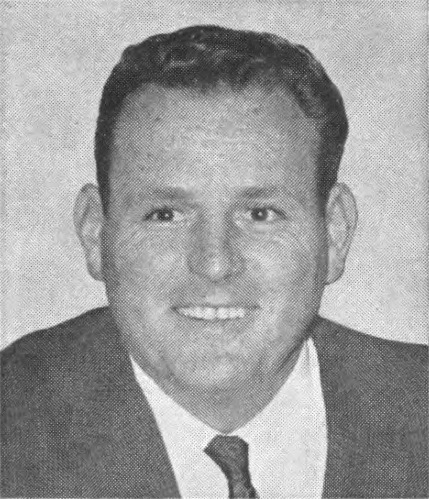
Historical · U.S. House · Arizona · District 3
George Senner Jr.
Former U.S. Representative · Arizona District 3 · 1963–1967 · Democratic
George Senner Jr. represented Arizona's District 3 in the United States House of Representatives (1963–1967) for the Democratic party. The page below collects sourced biographical facts, term history, committee roles, and provenance for Jr..
Bioguide ID: S000243
Key facts
- Full name
- George Senner Jr.
- State
- Arizona
- District
- District 3
- Party
- Democratic
- House service
- 1963–1967
- First House term
- 1963
- Status
- Left office
- Current term ends
- —
- Born
- 1921
- Bioguide ID
- S000243
- Committee assignments
- —
- Dataset version
- 1.20260605
Biographical narrative
848 words · sourced from the Wikipedia REST extract
George Senner Jr. was an American politician who served as a Democratic member of the U.S. House of Representatives from Arizona's 3rd congressional district. His congressional career spanned from 1963 to 1967, during which he participated in significant legislative actions, including the passage of landmark civil rights and social welfare laws. Following his time in Congress, Senner returned to his legal practice until his passing in 2007.
Early life and career
George Frederick Senner Jr. was born on November 24, 1921, in Miami, Arizona. He completed his secondary education at Miami High School, where he was actively involved in sports, particularly football, and held the position of president of his senior class. His early involvement in school leadership and athletics may have laid the groundwork for his future public service.
In May 1942, Senner enlisted in the United States Marine Corps, serving for 27 months in the South Pacific during World War II. He attained the rank of sergeant before being discharged in October 1945. Following his military service, Senner resumed his education, ultimately earning a law degree from the University of Arizona in 1952. He was admitted to the bar in the same year, marking the beginning of his legal career.
Senner's professional journey in law began with his role as an assistant attorney for the city of Miami from 1952 to 1954. His legal expertise and community involvement led to his election as the county attorney for Gila County in 1954, a position he held until 1957. His tenure in this role allowed him to gain valuable experience in public administration and legal affairs.
In August 1957, Senner was appointed to the Arizona Corporation Commission, where he served until 1961. His leadership abilities were recognized when he was named chairman of the commission, a position he held from 1958 to 1961. This role involved overseeing regulatory matters related to public utilities and corporations in Arizona, further establishing his credentials in governance and public policy.
House tenure
Senner's political career took a significant turn when he was elected to the United States House of Representatives in 1962, representing Arizona's newly established 3rd congressional district. His election came during a period of significant political change in the United States, and he aligned himself with the Democratic Party, which was advocating for various social reforms.
Senner's first term in Congress began in 1963, during which he participated in numerous legislative initiatives. He was known for his support of key legislation that aimed to address civil rights, healthcare, and social welfare. Among the notable laws he voted for were the Civil Rights Act of 1964, which aimed to eliminate discrimination based on race, color, religion, sex, or national origin; the Social Security Amendments of 1965, which established Medicare and Medicaid; and the Voting Rights Act of 1965, designed to eliminate barriers to voting for African Americans and other minority groups.
His legislative actions reflected the broader goals of the Democratic Party during the 1960s, which focused on social justice and expanding access to essential services. Senner was re-elected in 1964, indicating a level of support from his constituents for his policies and approach to governance.
However, his tenure in Congress came to an end after the 1966 elections when he was defeated in his bid for re-election by Republican candidate Sam Steiger. This loss marked the conclusion of his congressional career, which lasted a total of two terms. Following his departure from the House, Senner returned to the practice of law, continuing his professional career outside of public office.
Legislative focus and committees
During his time in the House of Representatives, George Senner Jr. was involved in various legislative efforts that aligned with the Democratic Party's priorities of the era. His support for civil rights legislation was particularly notable, as he participated in the passage of the Civil Rights Act of 1964 and the Voting Rights Act of 1965. These laws were pivotal in advancing the civil rights movement and aimed to dismantle systemic discrimination in the United States.
In addition to civil rights, Senner played a role in shaping healthcare policy through his support of the Social Security Amendments of 1965, which introduced Medicare and Medicaid. These programs were designed to provide health coverage to the elderly and low-income individuals, reflecting a commitment to expanding access to healthcare services.
While specific committee assignments during his tenure are not detailed, it is common for members of Congress to serve on committees that align with their legislative interests and the needs of their constituents. Senner's focus on civil rights and social welfare suggests that he may have been involved in committees related to these issues.
After his defeat in the 1966 elections, Senner returned to his legal practice, where he continued to contribute to his community and utilize his legal expertise. He remained active in public life until his passing on October 6, 2007, in Sun City, Arizona. His career in public service and law left a lasting impact on the communities he served and reflected the broader social changes occurring in the United States during the 1960s.
Notable legislation
Sponsored and co-sponsored legislation for George Senner Jr. is pending operator curation. The biographical narrative above carries the same provenance trail until per-bill rows are written.
Sources
- [1]https://en.wikipedia.org/wiki/George_F._Senner_Jr.Wikipedia · retrieved 2026-06-05
Notable quotes
Sourced quotes for George Senner Jr. are pending operator curation. Narrative-scope provenance remains attached below.
Sources
- [1]https://en.wikipedia.org/wiki/George_F._Senner_Jr.Wikipedia · retrieved 2026-06-05
Key positions
Curated policy positions for George Senner Jr. are pending operator review. The biographical narrative above carries the same provenance trail until per-topic positions are written.
Sources
- [1]https://en.wikipedia.org/wiki/George_F._Senner_Jr.Wikipedia · retrieved 2026-06-05
Terms served
- 1963–1965U.S. House · Term 1 · Democratic
- 1965–1967U.S. House · Term 2 · Democratic
Sources & provenance
Every attributable claim above carries a per-section [N] marker that resolves to the corresponding URL below. Each entry records the upstream provider, the canonical URL, and the timestamp at which the source was retrieved by the ingest pipeline.
Key facts
- https://bioguide.congress.gov/search/bio/S000243bioguide · retrieved 2026-06-05
- https://www.govtrack.us/congress/members/409747govtrack · retrieved 2026-06-05
Biographical narrative
- https://en.wikipedia.org/wiki/George_F._Senner_Jr.wikipedia · retrieved 2026-06-05
Find your representative
Every U.S. state elects representatives by district. Browse Arizona’s delegation, the full former-representative roster, or explore the role and term length.
Related on The Candidate
- Succeeded by Sam SteigerLater holder of the Arizona District 3 House seat · Republican.Open
- John MurdockFormer U.S. Representative · Arizona District 1 · DemocraticOpen
- John RhodesFormer U.S. Representative · Arizona District 1 · RepublicanOpen
- John Rhodes IIIFormer U.S. Representative · Arizona District 1 · RepublicanOpen
- Rick RenziFormer U.S. Representative · Arizona District 1 · RepublicanOpen
- Democratic PartyFederal candidates and office holders on the Democratic line.Open