
Historical · U.S. House · Arizona · District 3
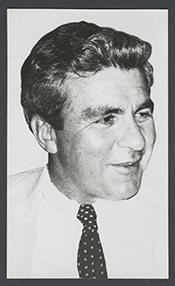
Sam Steiger
Former U.S. Representative · Arizona District 3 · 1967–1977 · Republican
Sam Steiger represented Arizona's District 3 in the United States House of Representatives (1967–1977) for the Republican party. The page below collects sourced biographical facts, term history, committee roles, and provenance for Steiger.
Bioguide ID: S000846
Key facts
- Full name
- Sam Steiger
- State
- Arizona
- District
- District 3
- Party
- Republican
- House service
- 1967–1977
- First House term
- 1967
- Status
- Left office
- Current term ends
- —
- Born
- 1929
- Bioguide ID
- S000846
- Committee assignments
- —
- Dataset version
- 1.20260605
Biographical narrative
982 words · sourced from the Wikipedia REST extract
Samuel Steiger was an American politician and journalist who served as a U.S. Representative for Arizona's 3rd congressional district from 1967 until 1977. A member of the Republican Party, he was known for his outspoken nature and conservative voting record. Over the course of his political career, Steiger held various positions, including two terms in the Arizona State Senate and one term as mayor of Prescott, Arizona. He also gained notoriety for several incidents during his tenure, including a controversial shooting of burros in 1975, which drew significant public attention.
Early life and career
Samuel Steiger was born on March 10, 1929, in New York City to Lewis and Rebecca (Klein) Steiger. He received his early education in local schools before pursuing higher education. At the age of 14, he made his first trip to Arizona, visiting a dude ranch, which would later influence his decision to settle in the state. Steiger attended Cornell University and graduated in 1950 with a Bachelor of Science degree from Colorado A&M.
Following his graduation, Steiger was commissioned into the United States Army, where he served during the Korean War as a tank platoon leader. His service was marked by bravery, and he was awarded the Purple Heart for his actions during the conflict. After completing his military service, he settled in Prescott, Arizona, where he began his political career.
Steiger married Cynthia Jean Gardner in 1954, and the couple had three children: twins Lewis and Gail, born in April 1956, and Delia Rebecca, born in May 1959. His first marriage ended in divorce, and he later married Lynda, with that marriage also concluding in divorce in January 1979.
Steiger's entry into politics was somewhat unconventional. In 1959, while working as a ranch hand in Springerville, he and friends noted that Yavapai County had never elected a Republican representative. This observation led to a wager among his friends, challenging him to run for office. In 1960, he successfully ran for a seat in the Arizona State Senate, where he quickly made a name for himself. As a freshman senator, he wrote a column accusing other legislators of selling their votes and challenged the leadership over perceived unethical practices. His bold approach and distinctive campaign branding, which included a tiger motif, helped him stand out in the political landscape.
House tenure
After serving two terms in the Arizona State Senate, Steiger set his sights on the U.S. House of Representatives. In 1964, he ran against incumbent George F. Senner Jr. for Arizona's 3rd congressional district seat but lost a close election. Following this defeat, he worked as a correspondent covering the Vietnam War, which further shaped his political views and public persona. In 1966, he made a second attempt for the congressional seat, benefiting from a mid-decade reapportionment that shifted the district's demographics toward a more Republican base. This time, he successfully defeated Senner and began his first term in the House.
During his time in Congress, which spanned five terms from 1967 to 1977, Steiger was known for his forthrightness and willingness to speak candidly about the issues facing the government. He advocated for a code of ethics for elected officials, emphasizing the importance of transparency and accountability among members of Congress. His outspoken nature earned him both supporters and critics, with some colleagues labeling him a "bomb thrower" due to his provocative statements.
Steiger's voting record was consistently conservative, aligning him with the Republican Party's platform. He received a zero rating from Americans for Democratic Action, indicating his opposition to many liberal policies, while earning a perfect score from Americans for Constitutional Action. His commitment to conservative principles was recognized with a Distinguished Service Award from Americans for Constitutional Action for his dedication to promoting individual rights and economic growth. However, his opposition to environmental regulations earned him a spot on the League of Conservation Voters' "Dirty Dozen" list, reflecting his contentious relationship with conservationists.
Despite his conservative stance, Steiger was popular among his constituents, facing only one close reelection contest during his tenure. In 1974, he narrowly retained his seat, winning by a margin of just over 3,000 votes. This election was particularly challenging for many Republicans, as voter discontent stemming from the Watergate scandal impacted the political landscape.
Legislative focus and committees
Throughout his congressional career, Steiger was involved in various legislative initiatives and served on multiple committees. His focus was primarily on issues related to economic growth, individual rights, and national security. He was a staunch advocate for policies that aligned with conservative economic principles, often opposing regulations that he believed hindered business and economic development.
Steiger's tenure was marked by significant events, including a controversial incident in 1975 involving the shooting of two burros. The incident occurred when Steiger responded to complaints about a herd of burros causing disturbances in the community. He claimed that he shot the animals in self-defense after they charged at him. This event sparked public outrage and led to protests, with children picketing outside federal buildings in Phoenix. The fallout from this incident overshadowed some of his legislative accomplishments and became a defining moment in his political career.
In addition to his legislative duties, Steiger also engaged in political commentary through radio and television talk shows, further establishing his presence in the public sphere. He was known for his candid discussions on political issues, drawing from his experiences both as a politician and as a journalist.
Steiger's congressional career came to an end on January 3, 1977, after serving five terms in the House. Following his departure from Congress, he continued to be active in political discourse and remained a notable figure in Arizona's political landscape until his passing on September 26, 2012. His legacy includes a mix of legislative achievements and controversial moments that reflect the complexities of political life in the United States during the latter half of the 20th century.
Notable legislation
Sponsored and co-sponsored legislation for Sam Steiger is pending operator curation. The biographical narrative above carries the same provenance trail until per-bill rows are written.
Sources
- [1]https://en.wikipedia.org/wiki/Sam_SteigerWikipedia · retrieved 2026-06-05
Notable quotes
Sourced quotes for Sam Steiger are pending operator curation. Narrative-scope provenance remains attached below.
Sources
- [1]https://en.wikipedia.org/wiki/Sam_SteigerWikipedia · retrieved 2026-06-05
Key positions
Curated policy positions for Sam Steiger are pending operator review. The biographical narrative above carries the same provenance trail until per-topic positions are written.
Sources
- [1]https://en.wikipedia.org/wiki/Sam_SteigerWikipedia · retrieved 2026-06-05
Terms served
- 1967–1969U.S. House · Term 1 · Republican
- 1969–1971U.S. House · Term 2 · Republican
- 1971–1973U.S. House · Term 3 · Republican
- 1973–1975U.S. House · Term 4 · Republican
- 1975–1977U.S. House · Term 5 · Republican
Sources & provenance
Every attributable claim above carries a per-section [N] marker that resolves to the corresponding URL below. Each entry records the upstream provider, the canonical URL, and the timestamp at which the source was retrieved by the ingest pipeline.
Key facts
- https://bioguide.congress.gov/search/bio/S000846bioguide · retrieved 2026-06-05
- https://www.govtrack.us/congress/members/410310govtrack · retrieved 2026-06-05
Biographical narrative
- https://en.wikipedia.org/wiki/Sam_Steigerwikipedia · retrieved 2026-06-05
Find your representative
Every U.S. state elects representatives by district. Browse Arizona’s delegation, the full former-representative roster, or explore the role and term length.
Related on The Candidate
- Preceded by George Senner Jr.Earlier holder of the Arizona District 3 House seat · Democratic.Open
- Succeeded by Robert StumpLater holder of the Arizona District 3 House seat · Republican.Open
- John MurdockFormer U.S. Representative · Arizona District 1 · DemocraticOpen
- John RhodesFormer U.S. Representative · Arizona District 1 · RepublicanOpen
- John Rhodes IIIFormer U.S. Representative · Arizona District 1 · RepublicanOpen
- Rick RenziFormer U.S. Representative · Arizona District 1 · RepublicanOpen