
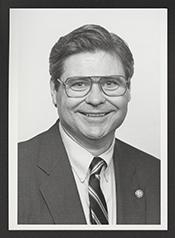
Historical · U.S. House · Georgia · District 4
Ben Jones
Former U.S. Representative · Georgia District 4 · 1989–1993 · Democratic
Ben Jones represented Georgia's District 4 in the United States House of Representatives (1989–1993) for the Democratic party. The page below collects sourced biographical facts, term history, committee roles, and provenance for Jones.
Bioguide ID: J000211
Key facts
- Full name
- Ben Jones
- State
- Georgia
- District
- District 4
- Party
- Democratic
- House service
- 1989–1993
- First House term
- 1989
- Status
- Left office
- Current term ends
- —
- Born
- 1941
- Bioguide ID
- J000211
- Committee assignments
- —
- Dataset version
- 1.20260605
Biographical narrative
867 words · sourced from the Wikipedia REST extract
Benjamin Lewis Jones is a former American politician, actor, playwright, and essayist, recognized for his role as Cooter Davenport in the television series "The Dukes of Hazzard." He served as a U.S. Representative for Georgia's Fourth Congressional District from January 3, 1989, to January 3, 1993. A member of the Democratic Party, Jones's political career followed a successful acting career, which began in the 1960s and included numerous theatrical productions and television appearances.
Early life and career
Ben Jones was born on August 30, 1941, in Edgecombe County, North Carolina, near McNair's Railroad Crossing. He was raised in a family with deep ties to the railroad industry; his father, Hubert C. "Buck" Jones, worked as a railroad section foreman, while his mother, Ila Virginia Stephens, was the daughter of a railroad section foreman. Shortly after his birth, the family relocated to Portsmouth, Virginia, where they lived in a section house—essentially a railroad company shack that lacked indoor plumbing and electricity. This modest upbringing was situated next to the Pinners Point Railyard, which served the shipping piers in the area.
Jones graduated from Woodrow Wilson High School in 1959. To finance his college education, he took on various odd jobs. In 1960, he enrolled at East Carolina College, which is now known as East Carolina University. By 1961, he transferred to the University of North Carolina at Chapel Hill, where he was recognized for his potential as a writer.
During his time at UNC, Jones spent his summers working on a railroad work train that contracted with various railroads across the South. His involvement in the arts began in earnest in 1962 when he joined the Carolina Playmakers, a theatrical group at the university. This experience led him to earn money through summer stock theater and performances in the outdoor drama "Unto These Hills" in Cherokee, North Carolina.
In addition to his burgeoning acting career, Jones was actively engaged in the Civil Rights Movement during the 1960s. His commitment to social justice led to his arrest during sit-ins, and he faced violence from the Ku Klux Klan on two separate occasions.
House tenure
Jones's political career began in earnest when he ran for a seat in the U.S. House of Representatives in 1986, seeking to represent Georgia's Fourth Congressional District. He faced incumbent Pat Swindall in this election and, despite being considered a long shot, garnered over 47% of the vote. Following Swindall's indictment for perjury, Jones ran again in 1988 and won the election by a significant margin. His first term in office began on January 3, 1989.
During his time in Congress, Jones served two terms, concluding his tenure on January 3, 1993. He was a member of the Democratic whip and participated in the Committee on Veterans' Affairs and the Committee on Public Works and Transportation. His legislative work included a focus on issues relevant to veterans and infrastructure.
Jones's political career was marked by a notable challenge in 1994 when he ran against Newt Gingrich, who had become a prominent figure in the Republican Party. Although Jones was ultimately defeated in this race, he made headlines by filing ethics charges against Gingrich, alleging misuse of tax-exempt organizations for political purposes. This complaint led to an investigation, resulting in Gingrich being reprimanded by the House of Representatives and ordered to reimburse the House for the investigation's costs.
After his congressional career, Jones transitioned to a political independent. He later moved to Virginia, where he was the Democratic nominee for the 2002 election in Virginia's 7th Congressional District, challenging Republican incumbent Eric Cantor. Jones was not successful in this bid.
Legislative focus and committees
Throughout his congressional tenure, Jones was known for his involvement in various legislative matters, particularly those concerning veterans and public infrastructure. As a member of the Committee on Veterans' Affairs, he engaged with issues affecting military personnel and their families, advocating for their rights and benefits. His work on the Committee on Public Works and Transportation involved addressing infrastructure needs and improvements, which are critical for the development and maintenance of public facilities and services.
Jones's role as a Democratic whip positioned him as a key figure in party leadership, where he contributed to the coordination of party strategy and legislative priorities. His experience in acting and the arts informed his communication skills, which he utilized in his political career to connect with constituents and advocate for his legislative agenda.
Despite his two terms in Congress, Jones's political career was relatively brief, concluding in the early 1990s. Following his departure from the House, he returned to the entertainment industry, where he continued to build on his legacy as an actor while also engaging in various business ventures related to his role in "The Dukes of Hazzard."
In summary, Ben Jones's career spans multiple fields, from acting to politics, reflecting a diverse set of interests and commitments. His time in the U.S. House of Representatives is characterized by his advocacy for veterans and infrastructure, as well as his notable challenge to a prominent political figure. After leaving Congress, he maintained a connection to his roots in entertainment and continued to engage with fans of his work in television and film.
Notable legislation
Sponsored and co-sponsored legislation for Ben Jones is pending operator curation. The biographical narrative above carries the same provenance trail until per-bill rows are written.
Sources
- [1]https://en.wikipedia.org/wiki/Ben_Jones_(American_actor_and_politician)Wikipedia · retrieved 2026-06-05
Notable quotes
Sourced quotes for Ben Jones are pending operator curation. Narrative-scope provenance remains attached below.
Sources
- [1]https://en.wikipedia.org/wiki/Ben_Jones_(American_actor_and_politician)Wikipedia · retrieved 2026-06-05
Key positions
Curated policy positions for Ben Jones are pending operator review. The biographical narrative above carries the same provenance trail until per-topic positions are written.
Sources
- [1]https://en.wikipedia.org/wiki/Ben_Jones_(American_actor_and_politician)Wikipedia · retrieved 2026-06-05
Terms served
- 1989–1991U.S. House · Term 1 · Democratic
- 1991–1993U.S. House · Term 2 · Democratic
Sources & provenance
Every attributable claim above carries a per-section [N] marker that resolves to the corresponding URL below. Each entry records the upstream provider, the canonical URL, and the timestamp at which the source was retrieved by the ingest pipeline.
Key facts
- https://bioguide.congress.gov/search/bio/J000211bioguide · retrieved 2026-06-05
- https://www.govtrack.us/congress/members/406106govtrack · retrieved 2026-06-05
Biographical narrative
- https://en.wikipedia.org/wiki/Ben_Jones_(American_actor_and_politician)wikipedia · retrieved 2026-06-05
Find your representative
Every U.S. state elects representatives by district. Browse Georgia’s delegation, the full former-representative roster, or explore the role and term length.
Related on The Candidate
- Preceded by Patrick SwindallEarlier holder of the Georgia District 4 House seat · Republican.Open
- Succeeded by Cynthia McKinneyLater holder of the Georgia District 4 House seat · Democratic.Open
- Andrew SloanFormer U.S. Representative · Georgia District 1 · RepublicanOpen
- Anthony WayneFormer U.S. Representative · Georgia District 1Open
- Archibald MacIntyreFormer U.S. Representative · Georgia District 1 · DemocraticOpen
- Bo GinnFormer U.S. Representative · Georgia District 1 · DemocraticOpen