
Historical · U.S. House · Georgia · District 4
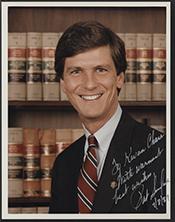
Patrick Swindall
Former U.S. Representative · Georgia District 4 · 1985–1989 · Republican
Patrick Swindall represented Georgia's District 4 in the United States House of Representatives (1985–1989) for the Republican party. The page below collects sourced biographical facts, term history, committee roles, and provenance for Swindall.
Bioguide ID: S001122
Key facts
- Full name
- Patrick Swindall
- State
- Georgia
- District
- District 4
- Party
- Republican
- House service
- 1985–1989
- First House term
- 1985
- Status
- Left office
- Current term ends
- —
- Born
- 1950
- Bioguide ID
- S001122
- Committee assignments
- —
- Dataset version
- 1.20260605
Biographical narrative
876 words · sourced from the Wikipedia REST extract
Patrick L. Swindall was an American politician, attorney, and businessman who served as a Republican member of the U.S. House of Representatives for Georgia's 4th congressional district from 1985 until 1989. His tenure in Congress was marked by both electoral success and significant legal challenges, culminating in a conviction for perjury that ultimately ended his political career. Born in Gadsden, Alabama, in 1950, Swindall's early life and career were characterized by his involvement in the family business and his pursuit of higher education, which laid the groundwork for his later political ambitions.
Early life and career
Patrick L. Swindall was born on October 18, 1950, in Gadsden, Alabama. He grew up in a family that owned a furniture store in Atlanta, where he worked during his youth. This early exposure to business and management likely influenced his later pursuits in both the private sector and politics. Swindall attended the University of Georgia, where he earned a Bachelor of Arts degree in 1972. He continued his education at the University of Georgia School of Law, obtaining his Juris Doctor degree in 1975.
After completing his legal education, Swindall began his career as an attorney, initially practicing law with the firm Heyman & Sizemore. By April 1979, at the age of 28, he became the youngest partner in the firm's history. His legal career in Atlanta spanned several years, during which he developed a reputation in the legal community. However, in December 1983, Swindall resigned from his law practice to pursue a career in politics, setting the stage for his entry into the U.S. House of Representatives.
In 1984, Swindall launched his campaign for Congress, running against incumbent Democratic Congressman Elliott H. Levitas, who had held the seat for five terms. Swindall's campaign was notable for its successful strategy, which resulted in an upset victory over Levitas by a margin of six percentage points. This victory was significant, as Levitas had been a well-established figure in Georgia politics since his election in 1974. Swindall's political career continued to gain momentum as he was re-elected in 1986, defeating actor Ben L. Jones by a similar margin.
House tenure
Swindall's tenure in the U.S. House of Representatives began in January 1985 and lasted until January 1989. During his time in office, he was involved in various legislative activities and participated in discussions on issues pertinent to his constituents in Georgia's 4th congressional district, which encompasses parts of Atlanta's eastern suburbs. His voting record included opposition to several pieces of legislation, including the Abandoned Shipwrecks Act of 1987, which aimed to protect certain abandoned shipwrecks and manage them as cultural and historical resources.
Despite his initial electoral successes, Swindall's political career faced significant challenges. In October 1988, he was indicted on multiple counts of perjury related to a money laundering scheme involving an undercover IRS agent. The investigation revealed that Swindall had lied to a federal grand jury about his knowledge of the source of funds he sought for a luxury home construction project, which were linked to illegal drug money. This legal predicament overshadowed his congressional achievements and ultimately led to his defeat in a rematch against Jones in the 1988 election, where he lost by a substantial margin.
Swindall's indictment and subsequent conviction for perjury marked a dramatic turn in his career. He was found guilty on nine counts and sentenced to one year in prison, as well as a fine. Although he appealed the conviction and had some counts overturned, he ultimately served his sentence, which began in 1994. His legal troubles not only ended his congressional career but also resulted in his disbarment from practicing law in Georgia.
Legislative focus and committees
During his time in the House of Representatives, Swindall's legislative focus reflected the interests and concerns of his constituents, particularly those in the suburban areas of Atlanta. His voting record included significant decisions on various issues, although specific details regarding the committees he served on or the full scope of his legislative initiatives are not extensively documented. Swindall's opposition to the Abandoned Shipwrecks Act of 1987 is one of the few specific legislative actions noted during his time in office.
Swindall's political career was ultimately overshadowed by his legal issues, which began to emerge during his second term in Congress. The perjury charges and subsequent conviction not only affected his reputation but also limited his ability to influence legislation and represent his constituents effectively. Following his release from prison in 1995, Swindall attempted to re-establish himself in the public sphere, hosting a religious-themed conservative radio show and engaging in business ventures.
In the years following his congressional tenure, Swindall faced additional legal challenges, including an indictment related to campaign contributions in 2009. Although these charges were later reduced to misdemeanors, they further complicated his post-political life. Swindall's personal life included a marriage to Kimberly Schiesser, with whom he had seven children, and the couple was often referred to in the media as the "Barbie and Ken of Politics."
Patrick L. Swindall passed away on July 11, 2018, at the age of 67. His death marked the end of a life that had traversed the realms of law, politics, and business, leaving behind a complex legacy shaped by both his achievements and controversies.
Notable legislation
Sponsored and co-sponsored legislation for Patrick Swindall is pending operator curation. The biographical narrative above carries the same provenance trail until per-bill rows are written.
Sources
- [1]https://en.wikipedia.org/wiki/Pat_SwindallWikipedia · retrieved 2026-06-05
Notable quotes
Sourced quotes for Patrick Swindall are pending operator curation. Narrative-scope provenance remains attached below.
Sources
- [1]https://en.wikipedia.org/wiki/Pat_SwindallWikipedia · retrieved 2026-06-05
Key positions
Curated policy positions for Patrick Swindall are pending operator review. The biographical narrative above carries the same provenance trail until per-topic positions are written.
Sources
- [1]https://en.wikipedia.org/wiki/Pat_SwindallWikipedia · retrieved 2026-06-05
Terms served
- 1985–1987U.S. House · Term 1 · Republican
- 1987–1989U.S. House · Term 2 · Republican
Sources & provenance
Every attributable claim above carries a per-section [N] marker that resolves to the corresponding URL below. Each entry records the upstream provider, the canonical URL, and the timestamp at which the source was retrieved by the ingest pipeline.
Key facts
- https://bioguide.congress.gov/search/bio/S001122bioguide · retrieved 2026-06-05
- https://www.govtrack.us/congress/members/410574govtrack · retrieved 2026-06-05
Biographical narrative
- https://en.wikipedia.org/wiki/Pat_Swindallwikipedia · retrieved 2026-06-05
Find your representative
Every U.S. state elects representatives by district. Browse Georgia’s delegation, the full former-representative roster, or explore the role and term length.
Related on The Candidate
- Preceded by Elliott LevitasEarlier holder of the Georgia District 4 House seat · Democratic.Open
- Succeeded by Ben JonesLater holder of the Georgia District 4 House seat · Democratic.Open
- Andrew SloanFormer U.S. Representative · Georgia District 1 · RepublicanOpen
- Anthony WayneFormer U.S. Representative · Georgia District 1Open
- Archibald MacIntyreFormer U.S. Representative · Georgia District 1 · DemocraticOpen
- Bo GinnFormer U.S. Representative · Georgia District 1 · DemocraticOpen