
Historical · U.S. House · Georgia · District 6
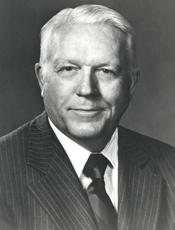
John Flynt Jr.
Former U.S. Representative · Georgia District 6 · 1953–1979 · Democratic
John Flynt Jr. represented Georgia's District 6 in the United States House of Representatives (1953–1979) for the Democratic party. The page below collects sourced biographical facts, term history, committee roles, and provenance for Jr..
Bioguide ID: F000229
Key facts
- Full name
- John Flynt Jr.
- State
- Georgia
- District
- District 6
- Party
- Democratic
- House service
- 1953–1979
- First House term
- 1953
- Status
- Left office
- Current term ends
- —
- Born
- 1914
- Bioguide ID
- F000229
- Committee assignments
- —
- Dataset version
- 1.20260605
Biographical narrative
998 words · sourced from the Wikipedia REST extract
John J. Flynt Jr. was an American politician who served as a Democratic member of the United States House of Representatives, representing Georgia's 6th congressional district from 1954 until 1979. Over his lengthy tenure, Flynt was known for his conservative stances on various issues and played a significant role in the political landscape of Georgia during a time of considerable change. His career was marked by both legislative accomplishments and challenges, particularly in the context of the evolving political dynamics of the South.
Early life and career
John James Walker Flynt Jr. was born on November 8, 1914, in Griffin, Georgia. He was the only son of John James Flynt and Susan Winn Banks Flynt. His early education took place in the public schools of Spalding County, after which he attended the Georgia Military Academy. Flynt later enrolled at the University of Georgia in Athens, where he earned an A.B. degree in 1936. During his time at the university, he became a member of the Phi Kappa Literary Society, which fostered his interest in public speaking and debate.
In 1936, Flynt received a commission in the United States Army Reserves, where he served with the 6th Horse Cavalry Regiment stationed at Fort Oglethorpe, Georgia. His military service continued during World War II, where he served as Aide-de-Camp for Brigadier General Robert W. Grow in the 3rd Armored Division in France. For his service, Flynt was awarded the Bronze Star Medal in 1944. After the war, he returned to the Army Reserve and eventually retired with the rank of Colonel.
Flynt pursued a legal education at several institutions, including the University of Georgia and Emory University, ultimately earning his LLB from George Washington University Law School in 1940. He began his legal career in private practice and served as an assistant United States attorney for the Northern District of Georgia from 1939 to 1941 and again in 1945 and 1946. His early political career included a term in the Georgia House of Representatives from 1947 to 1948, followed by his role as solicitor general for the Griffin Judicial Circuit from 1949 to 1954. He also served as president of the Georgia Bar Association from 1952 to 1954 and was active in state and national Democratic conventions during the 1940s and 1960s.
House tenure
Flynt was elected to the United States House of Representatives in a special election to fill the vacancy left by the death of Representative A. Sidney Camp. He was subsequently elected to the Eighty-fourth Congress and continued to serve in the House for a total of 13 terms, from November 2, 1954, until January 3, 1979. Throughout his congressional career, he was known for his conservative Democratic views and was a member of the House Committee on Standards of Official Conduct during the Ninety-fourth and Ninety-fifth Congresses.
His tenure in Congress was characterized by a strong alignment with the interests of his constituents in Georgia, particularly in the areas of agriculture and local industry. Flynt's voting record reflected his conservative stance on a variety of issues, including opposition to abortion, gun control, the Equal Rights Amendment, Medicare, and public housing initiatives. He expressed concerns about reciprocal trade agreements, fearing they could negatively impact the textile industry, which was significant in his district. Additionally, he supported agricultural price supports, reflecting the interests of farmers in his constituency.
Flynt's political career was marked by a strong presence in his district, as he was reelected nine times, often without serious opposition. Most of his elections were uncontested, with the Republican Party being relatively weak in Georgia during much of this period. However, in 1974, he faced a significant challenge from political newcomer Newt Gingrich, who was a professor at the University of West Georgia. This election was notable as it occurred during a national Republican downturn due to the Watergate scandal, yet Flynt's narrow victory indicated a shifting political landscape. He faced Gingrich again in a rematch in 1976, which was also closely contested.
By the late 1970s, demographic changes in Georgia began to influence electoral outcomes. The southern and western suburbs of Atlanta were increasingly becoming part of Flynt's district, leading to a shift in voter preferences. Recognizing these changes and the increasing competitiveness of his district, Flynt chose not to seek reelection in 1978. His decision paved the way for Newt Gingrich to win the seat, marking a significant transition in Georgia's political representation.
Legislative focus and committees
During his time in Congress, Flynt was involved in various legislative matters, with a focus on issues pertinent to his constituents. His conservative ideology often placed him at odds with more progressive elements within the Democratic Party, particularly on social issues. Flynt's opposition to civil rights legislation was particularly notable; he voted against several key pieces of legislation, including the Civil Rights Acts of 1957, 1960, 1964, and 1968, as well as the Voting Rights Act of 1965. His signature on the Southern Manifesto in 1956 further underscored his stance on segregation and civil rights.
Flynt's legislative priorities included supporting agricultural policies that benefited local farmers and opposing measures that he believed would harm the textile industry in his district. His voting record reflected a commitment to maintaining the economic interests of his constituents, often prioritizing local industry over broader national reforms.
In addition to his legislative work, Flynt's role as chair of the Committee on Standards of Official Conduct during the Ninety-fourth and Ninety-fifth Congresses highlighted his involvement in maintaining ethical standards within the House. This position allowed him to influence the conduct of fellow members and address issues of accountability and transparency in government.
After retiring from Congress, Flynt returned to his legal practice and engaged in farming, banking, and real estate ventures. He continued to reside in Griffin, Georgia, until his death on June 24, 2007. His long career in public service and law left a lasting impact on the political landscape of Georgia, particularly during a transformative period in the state's history.
Notable legislation
Sponsored and co-sponsored legislation for John Flynt Jr. is pending operator curation. The biographical narrative above carries the same provenance trail until per-bill rows are written.
Sources
- [1]https://en.wikipedia.org/wiki/John_FlyntWikipedia · retrieved 2026-06-05
Notable quotes
Sourced quotes for John Flynt Jr. are pending operator curation. Narrative-scope provenance remains attached below.
Sources
- [1]https://en.wikipedia.org/wiki/John_FlyntWikipedia · retrieved 2026-06-05
Key positions
Curated policy positions for John Flynt Jr. are pending operator review. The biographical narrative above carries the same provenance trail until per-topic positions are written.
Sources
- [1]https://en.wikipedia.org/wiki/John_FlyntWikipedia · retrieved 2026-06-05
Terms served
- 1953–1955U.S. House · Term 1 · Democratic
- 1955–1957U.S. House · Term 2 · Democratic
- 1957–1959U.S. House · Term 3 · Democratic
- 1959–1961U.S. House · Term 4 · Democratic
- 1961–1963U.S. House · Term 5 · Democratic
- 1963–1965U.S. House · Term 6 · Democratic
- 1965–1967U.S. House · Term 7 · Democratic
- 1967–1969U.S. House · Term 8 · Democratic
- 1969–1971U.S. House · Term 9 · Democratic
- 1971–1973U.S. House · Term 10 · Democratic
- 1973–1975U.S. House · Term 11 · Democratic
- 1975–1977U.S. House · Term 12 · Democratic
- 1977–1979U.S. House · Term 13 · Democratic
Sources & provenance
Every attributable claim above carries a per-section [N] marker that resolves to the corresponding URL below. Each entry records the upstream provider, the canonical URL, and the timestamp at which the source was retrieved by the ingest pipeline.
Key facts
- https://bioguide.congress.gov/search/bio/F000229bioguide · retrieved 2026-06-05
- https://www.govtrack.us/congress/members/404184govtrack · retrieved 2026-06-05
Biographical narrative
- https://en.wikipedia.org/wiki/John_Flyntwikipedia · retrieved 2026-06-05
Find your representative
Every U.S. state elects representatives by district. Browse Georgia’s delegation, the full former-representative roster, or explore the role and term length.
Related on The Candidate
- Preceded by Samuel RutherfordEarlier holder of the Georgia District 6 House seat · Democratic.Open
- Succeeded by Newton GingrichLater holder of the Georgia District 6 House seat · Republican.Open
- Andrew SloanFormer U.S. Representative · Georgia District 1 · RepublicanOpen
- Anthony WayneFormer U.S. Representative · Georgia District 1Open
- Archibald MacIntyreFormer U.S. Representative · Georgia District 1 · DemocraticOpen
- Bo GinnFormer U.S. Representative · Georgia District 1 · DemocraticOpen