
Historical · U.S. House · Georgia · District 7
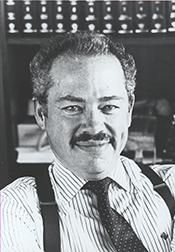
Bob Barr
Former U.S. Representative · Georgia District 7 · 1995–2003 · Republican
Bob Barr represented Georgia's District 7 in the United States House of Representatives (1995–2003) for the Republican party. The page below collects sourced biographical facts, term history, committee roles, and provenance for Barr.
Bioguide ID: B000169
Key facts
- Full name
- Bob Barr
- State
- Georgia
- District
- District 7
- Party
- Republican
- House service
- 1995–2003
- First House term
- 1995
- Status
- Left office
- Current term ends
- —
- Born
- 1948
- Bioguide ID
- B000169
- Committee assignments
- —
- Dataset version
- 1.20260605
Biographical narrative
1,128 words · sourced from the Wikipedia REST extract
Robert Laurence Barr Jr. is a former U.S. Representative who served Georgia's 7th congressional district from 1995 until 2003 as a member of the Republican Party. Known for his legal background and involvement in significant legislative actions, Barr gained national attention during his tenure, particularly for his role in the impeachment of President Bill Clinton and for authoring the Defense of Marriage Act. After leaving Congress, he transitioned to the Libertarian Party, where he was the party's nominee for the 2008 presidential election. Barr's career has also included leadership roles in various organizations, including a presidency at the National Rifle Association.
Early life and career
Bob Barr was born on November 5, 1948, in Iowa City, Iowa, to Robert Laurence Barr and Beatrice Barr. His father was a career military officer who graduated from West Point and worked in civil engineering, which led the family to live in various locations around the world. As the second of six children, Barr spent his formative years in several countries, including Malaysia, Pakistan, Panama, Peru, Baghdad, and Tehran, where he graduated from Community High School in 1966.
Following his high school graduation, Barr returned to the United States to pursue higher education at the University of Southern California (USC). While at USC, he became involved with the Tau Kappa Epsilon fraternity and developed an interest in conservative political thought, influenced by the writings of Ayn Rand, which were introduced to him by his mother. He graduated cum laude with a Bachelor of Arts degree in 1970. During this time, Barr married his first wife, but the couple divorced in 1976.
Barr continued his education in graduate school, earning a master's degree in International Affairs from George Washington University's Elliott School of International Affairs in 1972. He later attended Georgetown University Law Center, where he earned his Juris Doctor degree in 1977 while working at night. His early career included a position as an analyst for the Central Intelligence Agency (CIA), where he focused on Latin American issues from 1971 to 1978.
In 1976, Barr married his second wife, Gail, with whom he had two children. However, this marriage ended in divorce in 1986. After leaving the CIA, Barr relocated to northern Georgia, where he practiced law and became involved in local Republican politics, serving as county chair. He made an unsuccessful attempt to win a seat in the Georgia House of Representatives in 1984.
In 1986, Barr married his third wife, Jerilyn Dobbins, known as Jeri Barr. They had four children together and later welcomed six grandchildren. That same year, he was appointed by President Ronald Reagan as the U.S. Attorney for the Northern District of Georgia, a position he held until 1990. During his tenure, Barr's office was involved in high-profile prosecutions, including cases against state and local officials and members of the Medellin drug cartel. He also oversaw the indictment of a sitting Republican Congressman for perjury.
After his time as U.S. Attorney, Barr served as president of the Southeastern Legal Foundation, a law firm and policy center based in Atlanta, from 1990 to 1991. He continued to be active in Republican politics and sought the party's nomination for the U.S. Senate in 1992, narrowly losing to Paul Coverdell in a runoff election.
House tenure
Barr's political career took a significant turn when he was elected to the U.S. House of Representatives in 1994. He won the election to represent Georgia's 7th congressional district, defeating six-term incumbent Democrat Buddy Darden. This election was part of what was termed the "Republican Revolution," which resulted in the first Republican majority in the House of Representatives in 40 years. Barr was one of 73 Republican freshmen who entered Congress during this period.
During his time in the House, Barr served four consecutive terms, from 1995 until 2003. He was a senior member of the Judiciary Committee and held the position of vice-chairman of the Government Reform Committee. Additionally, he was a member of the Committee on Financial Services and the Committee on Veteran's Affairs. His legislative activities included a focus on issues related to law and order, government reform, and fiscal responsibility.
Barr's image in Congress was characterized by a serious demeanor, which he often described as necessary for effective governance. He expressed a belief that politicians should prioritize substantive issues over appearances, famously stating that he was not sent to Washington to smile. His approach to politics was marked by a commitment to constitutional principles, which he often emphasized in his public statements.
Throughout his congressional career, Barr faced scrutiny regarding his campaign financing practices. Following audits by the Federal Election Commission of his 1994 and 1996 campaigns, he was fined for illegal campaign payments. Despite these challenges, he was re-elected three times, maintaining a significant presence in Georgia politics.
Legislative focus and committees
During his tenure in the U.S. House of Representatives, Barr was involved in several key legislative initiatives and gained national recognition for his contributions. One of his most notable accomplishments was the authorship of the Defense of Marriage Act (DOMA), which defined marriage for federal purposes as the union of one man and one woman. Although DOMA was later deemed unconstitutional by the Supreme Court in 2013 and subsequently repealed by Congress, it remains a significant aspect of Barr's legislative legacy.
Barr also gained prominence as a leading figure in the impeachment proceedings against President Bill Clinton. His involvement in this high-profile political event further solidified his reputation as a prominent Republican voice during a contentious period in American politics.
Throughout his congressional career, Barr's legislative focus included issues related to civil liberties, government accountability, and fiscal conservatism. He was known for advocating limited government and individual rights, aligning with the broader principles of the Republican Party during the 1990s.
After his defeat in the 2002 congressional elections, Barr transitioned to the Libertarian Party, where he served on the National Committee and was the party's nominee for the 2008 presidential election. He later returned to the Republican Party in 2011 but faced challenges in subsequent political endeavors, including a failed primary bid for a congressional seat in 2014.
In addition to his political activities, Barr was appointed president of the National Rifle Association (NRA) in 2024, serving in that capacity for one year. His long-standing involvement with the NRA dates back to his service on its board from 2001 to 2007, reflecting his commitment to Second Amendment rights and gun ownership advocacy.
In summary, Bob Barr's career has encompassed significant roles in both the Republican and Libertarian parties, marked by his legislative contributions, legal background, and involvement in high-profile political events. His legacy includes a complex interplay of conservative principles, legal advocacy, and political engagement that has shaped his public persona over the decades.
Notable legislation
Sponsored and co-sponsored legislation for Bob Barr is pending operator curation. The biographical narrative above carries the same provenance trail until per-bill rows are written.
Sources
- [1]https://en.wikipedia.org/wiki/Bob_BarrWikipedia · retrieved 2026-06-05
Notable quotes
Sourced quotes for Bob Barr are pending operator curation. Narrative-scope provenance remains attached below.
Sources
- [1]https://en.wikipedia.org/wiki/Bob_BarrWikipedia · retrieved 2026-06-05
Key positions
Curated policy positions for Bob Barr are pending operator review. The biographical narrative above carries the same provenance trail until per-topic positions are written.
Sources
- [1]https://en.wikipedia.org/wiki/Bob_BarrWikipedia · retrieved 2026-06-05
Terms served
- 1995–1997U.S. House · Term 1 · Republican
- 1997–1999U.S. House · Term 2 · Republican
- 1999–2001U.S. House · Term 3 · Republican
- 2001–2003U.S. House · Term 4 · Republican
Sources & provenance
Every attributable claim above carries a per-section [N] marker that resolves to the corresponding URL below. Each entry records the upstream provider, the canonical URL, and the timestamp at which the source was retrieved by the ingest pipeline.
Key facts
- https://bioguide.congress.gov/search/bio/B000169bioguide · retrieved 2026-06-05
- https://www.govtrack.us/congress/members/400514govtrack · retrieved 2026-06-05
Biographical narrative
- https://en.wikipedia.org/wiki/Bob_Barrwikipedia · retrieved 2026-06-05
Find your representative
Every U.S. state elects representatives by district. Browse Georgia’s delegation, the full former-representative roster, or explore the role and term length.
Related on The Candidate
- Preceded by Buddy DardenEarlier holder of the Georgia District 7 House seat · Democratic.Open
- Succeeded by Rob WoodallLater holder of the Georgia District 7 House seat · Republican.Open
- Andrew SloanFormer U.S. Representative · Georgia District 1 · RepublicanOpen
- Anthony WayneFormer U.S. Representative · Georgia District 1Open
- Archibald MacIntyreFormer U.S. Representative · Georgia District 1 · DemocraticOpen
- Bo GinnFormer U.S. Representative · Georgia District 1 · DemocraticOpen