
Historical · U.S. House · Georgia · District 7
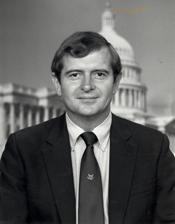
Buddy Darden
Former U.S. Representative · Georgia District 7 · 1983–1995 · Democratic
Buddy Darden represented Georgia's District 7 in the United States House of Representatives (1983–1995) for the Democratic party. The page below collects sourced biographical facts, term history, committee roles, and provenance for Darden.
Bioguide ID: D000051
Key facts
- Full name
- Buddy Darden
- State
- Georgia
- District
- District 7
- Party
- Democratic
- House service
- 1983–1995
- First House term
- 1983
- Status
- Left office
- Current term ends
- —
- Born
- 1943
- Bioguide ID
- D000051
- Committee assignments
- —
- Dataset version
- 1.20260605
Biographical narrative
958 words · sourced from the Wikipedia REST extract
George (Buddy) Darden is a former U.S. Representative from Georgia, affiliated with the Democratic Party. He served in the U.S. House of Representatives for six terms, beginning in 1983 and concluding in 1995. Darden's political career was marked by his involvement in various legislative efforts, particularly those related to defense and infrastructure, as well as his tenure in the Georgia state legislature prior to his congressional service.
Early life and career
Buddy Darden was born on November 22, 1943, in Hancock County, Georgia. He spent his formative years in Sparta, Georgia, where he attended public schools and graduated from Sparta High School in 1961. Darden pursued higher education at the University of Georgia in Athens, where he earned a Bachelor of Arts degree in 1965. He continued his studies at the University of Georgia School of Law, receiving his Bachelor of Laws degree in 1967, which was later converted to a Juris Doctor degree in 1969. During his time at the university, he was active in student government and served as the student body president.
Following his graduation from law school, Darden began his legal career as an assistant district attorney in Cobb County, Georgia, a position he held from 1968 to 1972. He then advanced to the role of County District Attorney, serving from 1973 until 1977. His legal background provided a foundation for his subsequent political career.
In 1980, Darden transitioned into politics, winning election to the Georgia House of Representatives as a Democrat, where he represented District 19-Post3 in Cobb County. He took office in January 1981 and served until 1983. During his time in the state legislature, he focused on various issues pertinent to his constituents and gained valuable experience that would serve him well in his future congressional role.
House tenure
Darden's congressional career began following the unexpected death of U.S. Representative Larry McDonald, who was killed in the 1983 downing of Korean Air Lines Flight 007. Darden won a special election to fill McDonald's seat for the remainder of the 98th Congress, marking the beginning of his six terms in the U.S. House of Representatives. He resigned from the Georgia General Assembly to pursue this opportunity.
Throughout his time in Congress, Darden was an active legislator, sponsoring a total of 61 bills. Notably, he was involved in legislation that authorized the National Park Service to assist the State of Georgia in relocating a highway affecting the Chickamauga and Chattanooga National Military Park. Darden played a significant role in supporting various initiatives, particularly those benefiting Lockheed Aeronautical Corporation, through his work on the Armed Services Committee. He also co-sponsored numerous bills, demonstrating his commitment to addressing a wide range of issues.
Darden's committee assignments included the Committee on Armed Services and the Committee on Interior and Insular Affairs. He was elected to the Standards of Official Conduct committee in 1991, reflecting his dedication to maintaining ethical standards in government. His legislative record indicated a blend of socially conservative positions, as he opposed federal funding for Medicaid abortions except in specific circumstances and supported the death penalty. Darden advocated for a strong national defense, emphasizing that any financial savings from improved East-West relations should be redirected toward deficit reduction.
Darden was re-elected to five additional terms in Congress, serving until 1995 when he was defeated by Republican candidate Bob Barr. After leaving office, he sought the Democratic nomination for his former seat, now designated as the 11th congressional district, in 2002 but was unsuccessful in that endeavor.
Legislative focus and committees
During his tenure in the U.S. House of Representatives, Darden's legislative focus encompassed a variety of issues, with a particular emphasis on defense, infrastructure, and ethical governance. His work on the Armed Services Committee allowed him to engage with matters related to national security and military readiness, which were significant concerns during his time in office. He was known for his pragmatic approach to legislation, believing that impactful contributions did not always require introducing high-profile bills.
Darden's involvement in the Committee on Interior and Insular Affairs highlighted his interest in environmental and land management issues, particularly those affecting national parks and historical sites. His efforts to assist the National Park Service in Georgia underscored his commitment to preserving the state's historical and cultural heritage.
Throughout his congressional career, Darden maintained a moderate stance on various social issues, which was reflected in his voting record. His positions garnered mixed evaluations from political organizations, with the Americans for Democratic Action rating his voting record at 40 out of 100, while the American Conservative Union assigned him a score of 35. This indicates a legislative approach that balanced Democratic principles with certain conservative viewpoints, particularly on social issues.
After his departure from Congress, Darden continued to engage in public service and civic activities. He served as a delegate to the Democratic National Conventions in 1996, 2000, and 2004, and was appointed by President Clinton to the Board of Directors of the Overseas Private Investment Corporation in 2000. He also held leadership roles in various organizations, including serving as chairman of the Judicial Nominating Commission under Georgia Governor Roy Barnes from 1999 to 2003.
Darden's contributions to education were recognized through his involvement with LaGrange College, where he served on the Board of Trustees and later as Chairman. His dedication to the institution was acknowledged with an honorary Doctor of Laws degree in 2007.
In summary, Buddy Darden's career as a U.S. Representative was characterized by a commitment to public service, a focus on defense and infrastructure, and a moderate legislative approach. His background as a lawyer and state legislator provided a solid foundation for his work in Congress, where he made significant contributions to various legislative efforts over his six terms in office.
Notable legislation
Sponsored and co-sponsored legislation for Buddy Darden is pending operator curation. The biographical narrative above carries the same provenance trail until per-bill rows are written.
Sources
- [1]https://en.wikipedia.org/wiki/Buddy_DardenWikipedia · retrieved 2026-06-05
Notable quotes
Sourced quotes for Buddy Darden are pending operator curation. Narrative-scope provenance remains attached below.
Sources
- [1]https://en.wikipedia.org/wiki/Buddy_DardenWikipedia · retrieved 2026-06-05
Key positions
Curated policy positions for Buddy Darden are pending operator review. The biographical narrative above carries the same provenance trail until per-topic positions are written.
Sources
- [1]https://en.wikipedia.org/wiki/Buddy_DardenWikipedia · retrieved 2026-06-05
Terms served
- 1983–1985U.S. House · Term 1 · Democratic
- 1985–1987U.S. House · Term 2 · Democratic
- 1987–1989U.S. House · Term 3 · Democratic
- 1989–1991U.S. House · Term 4 · Democratic
- 1991–1993U.S. House · Term 5 · Democratic
- 1993–1995U.S. House · Term 6 · Democratic
Sources & provenance
Every attributable claim above carries a per-section [N] marker that resolves to the corresponding URL below. Each entry records the upstream provider, the canonical URL, and the timestamp at which the source was retrieved by the ingest pipeline.
Key facts
- https://bioguide.congress.gov/search/bio/D000051bioguide · retrieved 2026-06-05
- https://www.govtrack.us/congress/members/403190govtrack · retrieved 2026-06-05
Biographical narrative
- https://en.wikipedia.org/wiki/Buddy_Dardenwikipedia · retrieved 2026-06-05
Find your representative
Every U.S. state elects representatives by district. Browse Georgia’s delegation, the full former-representative roster, or explore the role and term length.
Related on The Candidate
- Preceded by John DavisEarlier holder of the Georgia District 7 House seat · Democratic.Open
- Succeeded by Bob BarrLater holder of the Georgia District 7 House seat · Republican.Open
- Andrew SloanFormer U.S. Representative · Georgia District 1 · RepublicanOpen
- Anthony WayneFormer U.S. Representative · Georgia District 1Open
- Archibald MacIntyreFormer U.S. Representative · Georgia District 1 · DemocraticOpen
- Bo GinnFormer U.S. Representative · Georgia District 1 · DemocraticOpen