
Historical · U.S. House · Georgia · District 7
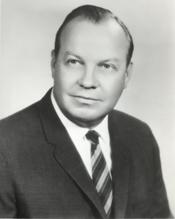
John Davis
Former U.S. Representative · Georgia District 7 · 1961–1975 · Democratic
John Davis represented Georgia's District 7 in the United States House of Representatives (1961–1975) for the Democratic party. The page below collects sourced biographical facts, term history, committee roles, and provenance for Davis.
Bioguide ID: D000122
Key facts
- Full name
- John Davis
- State
- Georgia
- District
- District 7
- Party
- Democratic
- House service
- 1961–1975
- First House term
- 1961
- Status
- Left office
- Current term ends
- —
- Born
- 1916
- Bioguide ID
- D000122
- Committee assignments
- —
- Dataset version
- 1.20260605
Biographical narrative
915 words · sourced from the Wikipedia REST extract
John W. Davis was an American politician and lawyer who served as a U.S. Representative for Georgia's 7th congressional district from 1961 until 1975. A member of the Democratic Party, Davis was known for his moderate political stance and his involvement in various legislative initiatives during a transformative period in American politics. His career spanned over three decades, during which he held several significant legal and political positions, including solicitor general and judge, before transitioning to Congress. Davis's tenure in the House of Representatives was marked by both legislative accomplishments and challenges, particularly in the context of the civil rights movement and changing demographics in his district.
Early life and career
John W. Davis was born on September 12, 1916, near Rome, Georgia. He pursued higher education at the University of Georgia in Athens, where he earned an A.B. degree in 1937. Following his undergraduate studies, he continued at the University of Georgia School of Law, graduating with a Bachelor of Laws (LL.B.) in 1939. After being admitted to the state bar in the same year, Davis began his legal career in Rome, Georgia, establishing a practice that would serve as a foundation for his future political endeavors.
Davis's life took a significant turn during World War II when he joined the United States War Department Headquarters in July 1942. His service extended until December 1945, during which he also worked with the Counter Intelligence Corps in South America. After the war, he returned to Georgia, settling in Summerville, where he resumed his law practice and continued to build his professional reputation.
In the realm of public service, Davis began his political career on December 27, 1950, when he was appointed as the solicitor general of the Rome Circuit. He held this position until January 1, 1953. Following this role, he was elected as a judge of the Lookout Mountain Judicial Circuit, serving from January 1, 1955, until his resignation on December 31, 1960. These positions not only enhanced his legal expertise but also provided him with valuable experience in the workings of the judicial system and the political landscape of Georgia.
House tenure
Davis entered the U.S. House of Representatives after winning election to the 87th Congress in 1960 as a Democrat representing Georgia's 7th congressional district. His first term began on January 3, 1961, and he would go on to serve a total of seven terms in Congress. Throughout his time in the House, Davis was regarded as a moderate voice, navigating the complexities of a rapidly changing political environment.
During his tenure, Davis was involved in various legislative efforts, particularly those aimed at addressing social issues such as poverty and unemployment. However, his political career was not without challenges. In 1974, he faced a significant defeat in the Democratic primary, losing to conservative activist Larry McDonald. This loss was attributed to several factors, including Davis's perceived lack of opposition to school busing, a contentious issue during that time. The demographic shifts in his district, particularly the growing influence of suburban voters in Cobb County who opposed mandatory desegregation, also played a crucial role in his electoral defeat.
Davis's political career was marked by a commitment to progressive initiatives, although he often took a nuanced stance on various issues. For instance, while he supported measures aimed at alleviating poverty, he was critical of the federal government's expansion of Great Society programs during his re-election campaign in 1966. Additionally, despite advocating for healthcare coverage, he opposed Medicare, arguing that it would impose a financial burden on taxpayers and the nation's payroll. His voting record reflected a blend of progressive ideals and fiscal conservatism, illustrating the complexities of his political philosophy.
Legislative focus and committees
Throughout his time in Congress, John W. Davis focused on a range of legislative issues that were significant to his constituents and the broader national agenda. His commitment to social welfare initiatives was evident in his support for unemployment compensation, food stamp programs, hospital funding, and minimum wage legislation. These efforts were aimed at addressing the needs of vulnerable populations and improving the quality of life for many Americans.
Davis's moderate approach allowed him to navigate the often contentious political landscape of the 1960s and early 1970s. He was known for his ability to work across party lines, which was particularly important during a time when the nation was grappling with issues related to civil rights, economic inequality, and social justice. His legislative contributions reflected a desire to find common ground and promote policies that would benefit his constituents and the country as a whole.
Despite his progressive inclinations, Davis faced criticism from various quarters, particularly regarding his stance on school busing and federal programs. His opposition to certain aspects of the Great Society initiatives, coupled with his resistance to Medicare, illustrated the tensions within the Democratic Party during this period. These positions ultimately contributed to his electoral challenges, particularly as the political landscape in Georgia shifted toward conservatism.
After leaving Congress, Davis returned to his legal practice and continued to reside in Georgia. He spent his later years on St. Simons Island, where he lived until his death on October 3, 1992. His legacy as a public servant is marked by his contributions to the legal and political fabric of Georgia, as well as his involvement in significant legislative debates during a pivotal era in American history. Davis's career reflects the complexities of navigating political change while striving to address the pressing issues of his time.
Notable legislation
Sponsored and co-sponsored legislation for John Davis is pending operator curation. The biographical narrative above carries the same provenance trail until per-bill rows are written.
Sources
- [1]https://en.wikipedia.org/wiki/John_William_Davis_(Georgia_politician)Wikipedia · retrieved 2026-06-05
Notable quotes
Sourced quotes for John Davis are pending operator curation. Narrative-scope provenance remains attached below.
Sources
- [1]https://en.wikipedia.org/wiki/John_William_Davis_(Georgia_politician)Wikipedia · retrieved 2026-06-05
Key positions
Curated policy positions for John Davis are pending operator review. The biographical narrative above carries the same provenance trail until per-topic positions are written.
Sources
- [1]https://en.wikipedia.org/wiki/John_William_Davis_(Georgia_politician)Wikipedia · retrieved 2026-06-05
Terms served
- 1961–1963U.S. House · Term 1 · Democratic
- 1963–1965U.S. House · Term 2 · Democratic
- 1965–1967U.S. House · Term 3 · Democratic
- 1967–1969U.S. House · Term 4 · Democratic
- 1969–1971U.S. House · Term 5 · Democratic
- 1971–1973U.S. House · Term 6 · Democratic
- 1973–1975U.S. House · Term 7 · Democratic
Sources & provenance
Every attributable claim above carries a per-section [N] marker that resolves to the corresponding URL below. Each entry records the upstream provider, the canonical URL, and the timestamp at which the source was retrieved by the ingest pipeline.
Key facts
- https://bioguide.congress.gov/search/bio/D000122bioguide · retrieved 2026-06-05
- https://www.govtrack.us/congress/members/403257govtrack · retrieved 2026-06-05
Biographical narrative
- https://en.wikipedia.org/wiki/John_William_Davis_(Georgia_politician)wikipedia · retrieved 2026-06-05
Find your representative
Every U.S. state elects representatives by district. Browse Georgia’s delegation, the full former-representative roster, or explore the role and term length.
Related on The Candidate
- Preceded by Harlan MitchellEarlier holder of the Georgia District 7 House seat · Democratic.Open
- Succeeded by Lawrence McDonaldLater holder of the Georgia District 7 House seat · Democratic.Open
- Andrew SloanFormer U.S. Representative · Georgia District 1 · RepublicanOpen
- Anthony WayneFormer U.S. Representative · Georgia District 1Open
- Archibald MacIntyreFormer U.S. Representative · Georgia District 1 · DemocraticOpen
- Bo GinnFormer U.S. Representative · Georgia District 1 · DemocraticOpen