
Historical · U.S. House · Georgia · District 7
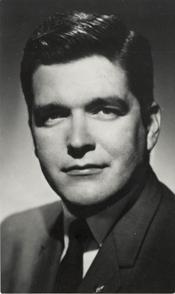
Lawrence McDonald
Former U.S. Representative · Georgia District 7 · 1975–1985 · Democratic
Lawrence McDonald represented Georgia's District 7 in the United States House of Representatives (1975–1985) for the Democratic party. The page below collects sourced biographical facts, term history, committee roles, and provenance for McDonald.
Bioguide ID: M000413
Key facts
- Full name
- Lawrence McDonald
- State
- Georgia
- District
- District 7
- Party
- Democratic
- House service
- 1975–1985
- First House term
- 1975
- Status
- Left office
- Current term ends
- —
- Born
- 1935
- Bioguide ID
- M000413
- Committee assignments
- —
- Dataset version
- 1.20260605
Biographical narrative
981 words · sourced from the Wikipedia REST extract
Lawrence P. McDonald was an American physician and politician who served as a U.S. Representative for Georgia's 7th congressional district from 1975 until his death in 1983. A member of the Democratic Party, McDonald was known for his conservative views, which were notable even among Southern Democrats. He was an outspoken anti-communist and held a significant role within the John Birch Society, becoming its chairman shortly before his untimely death. McDonald was killed when Korean Air Lines Flight 007 was shot down by Soviet interceptors, an event that marked a tragic end to his political career and life.
Early life and career
Lawrence Patton McDonald was born on April 1, 1935, in Atlanta, Georgia, specifically in the eastern part of the city located in DeKalb County. He was a descendant of General George S. Patton, which added a historical note to his family background. During his formative years, McDonald attended various private and parochial schools before completing his high school education at a non-denominational institution, graduating in 1951. He then pursued higher education at Davidson College, where he studied history from 1951 to 1953.
At the age of 17, McDonald entered the Emory University School of Medicine, where he completed his medical degree in 1957. Following his graduation, he interned at Grady Memorial Hospital in Atlanta and later specialized in urology at the University of Michigan Hospital, completing his training in 1966. Upon returning to Atlanta, he joined his father in medical practice at the McDonald Urology Clinic.
From 1959 to 1961, McDonald served as a flight surgeon in the United States Navy, stationed at the Keflavík naval base in Iceland. During his time there, he married Anna Tryggvadottir, an Icelandic national, with whom he had three children: Tryggvi Paul, Callie Grace, and Mary Elizabeth. His experiences in Iceland were formative; he expressed concerns about U.S. diplomatic actions that he believed favored communist interests, a sentiment that would shape his political ideology.
After his military service, McDonald returned to his medical practice but became increasingly involved in political activism. He joined the John Birch Society, an organization known for its staunch anti-communism, in the late 1960s. His dedication to the society led him to host numerous lectures and discussions in his home, although his political engagement ultimately contributed to a personal divorce. McDonald was also recognized for his anti-abortion activism. He made an unsuccessful bid for Congress in 1972 before winning election to the House of Representatives in 1974. In 1975, he married Kathryn Jackson, whom he had met while delivering a speech in California.
House tenure
McDonald’s political career in the U.S. House of Representatives began when he won the Democratic primary in 1974 against incumbent John W. Davis. His campaign focused on opposing mandatory federal school integration programs and criticizing Davis for his support of school busing, which was a contentious issue in Georgia at the time. McDonald’s victory in the primary was considered an upset, and he was subsequently elected to represent Georgia's 7th congressional district, which encompassed much of Atlanta's northwestern suburbs, including Marietta.
Throughout his tenure, McDonald was known for his conservative stance on various issues, which set him apart from many of his Democratic colleagues. He identified himself as a traditional Democrat, drawing inspiration from historical figures like Thomas Jefferson and Andrew Jackson. Despite the shifting political landscape in Georgia, where many constituents began to lean Republican, McDonald maintained his position as a prominent figure within the Democratic Party, particularly among conservative voters.
His voting record was noted for its conservatism, earning him a perfect score from the American Conservative Union for most of his time in office. He was recognized as one of the most conservative members of Congress, even among his peers. His legislative actions reflected his strong beliefs, including opposition to the welfare state, which he described as a "disaster," and advocacy for significant cuts to foreign aid. McDonald also took a firm stance against special protections for homosexual acts, co-sponsoring resolutions that opposed such measures.
During his time in Congress, McDonald was a vocal critic of communism, viewing it as a global conspiracy. He admired figures like Senator Joseph McCarthy and employed former staffers from the House Committee on Un-American Activities to assist in his research on left-wing organizations. His commitment to conservative economic principles was evident in his advocacy for tight monetary policy and a return to the gold standard during a period of economic uncertainty.
Legislative focus and committees
McDonald’s legislative focus was characterized by a blend of social conservatism and fiscal restraint. He was an active member of several committees during his time in the House, where he sought to influence policy in line with his beliefs. His positions on various issues included strong opposition to abortion and advocacy for the use of alternative treatments for cancer, such as laetrile, despite widespread medical skepticism regarding its efficacy. His promotion of laetrile led to legal challenges, including a malpractice lawsuit.
In addition to his legislative work, McDonald was involved in various political organizations and movements that aligned with his conservative ideology. His leadership role within the John Birch Society culminated in his appointment as chairman in 1983, reflecting his commitment to the organization's principles.
McDonald’s tenure in Congress ended abruptly when he was killed on September 1, 1983, as a passenger on Korean Air Lines Flight 007, which was shot down by Soviet interceptors. His death was a significant event that resonated within the conservative community, leading to his posthumous recognition as a martyr by some factions of American conservatism.
Overall, Lawrence P. McDonald’s career in the U.S. House of Representatives was marked by his unwavering commitment to conservative principles, his active engagement in anti-communist activities, and his efforts to shape policy in accordance with his beliefs. His legacy remains a point of interest in discussions about the evolution of conservative politics in the United States.
Notable legislation
Sponsored and co-sponsored legislation for Lawrence McDonald is pending operator curation. The biographical narrative above carries the same provenance trail until per-bill rows are written.
Sources
- [1]https://en.wikipedia.org/wiki/Larry_McDonaldWikipedia · retrieved 2026-06-05
Notable quotes
Sourced quotes for Lawrence McDonald are pending operator curation. Narrative-scope provenance remains attached below.
Sources
- [1]https://en.wikipedia.org/wiki/Larry_McDonaldWikipedia · retrieved 2026-06-05
Key positions
Curated policy positions for Lawrence McDonald are pending operator review. The biographical narrative above carries the same provenance trail until per-topic positions are written.
Sources
- [1]https://en.wikipedia.org/wiki/Larry_McDonaldWikipedia · retrieved 2026-06-05
Terms served
- 1975–1977U.S. House · Term 1 · Democratic
- 1977–1979U.S. House · Term 2 · Democratic
- 1979–1981U.S. House · Term 3 · Democratic
- 1981–1983U.S. House · Term 4 · Democratic
- 1983–1985U.S. House · Term 5 · Democratic
Sources & provenance
Every attributable claim above carries a per-section [N] marker that resolves to the corresponding URL below. Each entry records the upstream provider, the canonical URL, and the timestamp at which the source was retrieved by the ingest pipeline.
Key facts
- https://bioguide.congress.gov/search/bio/M000413bioguide · retrieved 2026-06-05
- https://www.govtrack.us/congress/members/407413govtrack · retrieved 2026-06-05
Biographical narrative
- https://en.wikipedia.org/wiki/Larry_McDonaldwikipedia · retrieved 2026-06-05
Find your representative
Every U.S. state elects representatives by district. Browse Georgia’s delegation, the full former-representative roster, or explore the role and term length.
Related on The Candidate
- Preceded by John DavisEarlier holder of the Georgia District 7 House seat · Democratic.Open
- Succeeded by John LinderLater holder of the Georgia District 7 House seat · Republican.Open
- Andrew SloanFormer U.S. Representative · Georgia District 1 · RepublicanOpen
- Anthony WayneFormer U.S. Representative · Georgia District 1Open
- Archibald MacIntyreFormer U.S. Representative · Georgia District 1 · DemocraticOpen
- Bo GinnFormer U.S. Representative · Georgia District 1 · DemocraticOpen