
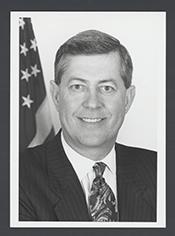
Historical · U.S. House · Georgia · District 7
John Linder
Former U.S. Representative · Georgia District 7 · 1993–2011 · Republican
John Linder represented Georgia's District 7 in the United States House of Representatives (1993–2011) for the Republican party. The page below collects sourced biographical facts, term history, committee roles, and provenance for Linder.
Bioguide ID: L000321
Key facts
- Full name
- John Linder
- State
- Georgia
- District
- District 7
- Party
- Republican
- House service
- 1993–2011
- First House term
- 1993
- Status
- Left office
- Current term ends
- —
- Born
- 1942
- Bioguide ID
- L000321
- Committee assignments
- —
- Dataset version
- 1.20260605
Biographical narrative
916 words · sourced from the Wikipedia REST extract
John Linder is a former American politician who served as a member of the United States House of Representatives from 1993 until 2011. Representing Georgia's 7th congressional district, Linder was a member of the Republican Party and held various leadership roles during his tenure. His legislative focus included tax reform, particularly through his advocacy for the Fair Tax Act, which aimed to overhaul the U.S. tax system. Linder's political career was marked by his commitment to conservative principles, including opposition to abortion and various social policies.
Early life and career
John Linder was born on September 9, 1942, in Deer River, Minnesota. He pursued higher education at the University of Minnesota Duluth, where he laid the foundation for his future career. Following his education, Linder served in the United States Air Force, gaining valuable experience and discipline that would later inform his public service.
After his military service, Linder transitioned into the field of dentistry, establishing himself as a dentist. His professional journey included significant involvement in business, as he became the president of a lending institution. This experience in both healthcare and finance provided him with a unique perspective on economic and social issues.
Linder's political career began at the state level, where he served in the Georgia House of Representatives for seven terms. His tenure in the state legislature allowed him to build a network and gain insights into the legislative process, preparing him for his future role in Congress.
House tenure
John Linder was first elected to the United States House of Representatives in 1993, representing Georgia's 4th congressional district. Over the years, the district number changed, with Linder serving the 11th district from 1997 to 2003 and the 7th district from 2003 until the end of his congressional career in 2011. Throughout his nine terms in office, Linder became known for his active participation in various legislative initiatives and his leadership within the Republican Party.
During his time in Congress, Linder held several key committee assignments. He served on the Committee on Ways and Means, which is one of the most influential committees in the House, dealing with taxation and revenue generation. Within this committee, he was involved in several subcommittees, including the Subcommittee on Oversight, the Subcommittee on Income Security and Family Support, where he served as the Ranking Member, and the Subcommittee on Select Revenue Measures. His work on these committees allowed him to influence significant fiscal policies and engage in discussions surrounding tax reform.
Linder's leadership extended beyond committee assignments. He was a member of the Republican Steering Committee and chaired the National Republican Congressional Committee during the 105th Congress. His tenure as chair was marked by challenges, as he was not re-elected for a second term following disappointing results in the 1998 mid-term elections.
Legislative focus and committees
John Linder's legislative focus was heavily centered on tax reform, particularly through his advocacy for the Fair Tax Act. He first introduced this legislation in July 1999 and continued to reintroduce it in subsequent sessions of Congress. The Fair Tax Act aimed to replace the existing federal tax system, including personal income taxes, payroll taxes, and various other taxes, with a national retail sales tax. The proposal also included provisions for monthly tax rebates to households, designed to alleviate the financial burden on citizens and legal residents.
Linder's efforts to promote the Fair Tax Act garnered significant attention and support, making it one of the most cosponsored tax reform proposals in Congress. Despite its popularity among certain factions, the bill faced challenges in gaining traction within the broader legislative framework, as it did not receive a vote in either chamber during his tenure.
In addition to his work on tax reform, Linder's voting record reflected his conservative values. He consistently opposed abortion and voted in favor of anti-abortion legislation. He also voted against various measures, including the minimum wage increase in 2007, the Dodd-Frank Wall Street Reform and Consumer Protection Act, and the Patient Protection and Affordable Care Act. His positions on social issues included voting against the reauthorization of the Voting Rights Act and the Local Law Enforcement Hate Crimes Prevention Act.
Linder's alignment with conservative interest groups was evident throughout his career. He maintained a strong relationship with organizations such as Americans for Fair Taxation and the National Taxpayers Union. His voting record indicated unwavering support for the National Right to Life Committee and the U.S. Chamber of Commerce, reflecting his commitment to conservative economic and social policies.
In 2006, Linder co-sponsored a measure to repeal the estate tax and voted in favor of the Federal Marriage Amendment, which sought to define marriage as a union between one man and one woman. His positions on issues related to civil rights and social policy often aligned with traditional conservative viewpoints.
After serving nine terms in Congress, Linder announced his retirement at the conclusion of the 111th Congress in 2011. Following his departure from the House, he was nominated by President Donald Trump in March 2019 to serve as the United States Representative to the Association of Southeast Asian Nations, although he was not confirmed before the end of the Trump administration.
Throughout his political career, John Linder was recognized for his steadfast commitment to his principles and his active engagement in legislative processes, particularly in the realm of tax reform and conservative social policies. His legacy includes a significant focus on tax legislation and a consistent alignment with Republican Party values during his time in office.
Notable legislation
Sponsored and co-sponsored legislation for John Linder is pending operator curation. The biographical narrative above carries the same provenance trail until per-bill rows are written.
Sources
- [1]https://en.wikipedia.org/wiki/John_LinderWikipedia · retrieved 2026-06-05
Notable quotes
Sourced quotes for John Linder are pending operator curation. Narrative-scope provenance remains attached below.
Sources
- [1]https://en.wikipedia.org/wiki/John_LinderWikipedia · retrieved 2026-06-05
Key positions
Curated policy positions for John Linder are pending operator review. The biographical narrative above carries the same provenance trail until per-topic positions are written.
Sources
- [1]https://en.wikipedia.org/wiki/John_LinderWikipedia · retrieved 2026-06-05
Terms served
- 1993–1995U.S. House · Term 1 · Republican
- 1995–1997U.S. House · Term 2 · Republican
- 1997–1999U.S. House · Term 3 · Republican
- 1999–2001U.S. House · Term 4 · Republican
- 2001–2003U.S. House · Term 5 · Republican
- 2003–2005U.S. House · Term 6 · Republican
- 2005–2007U.S. House · Term 7 · Republican
- 2007–2009U.S. House · Term 8 · Republican
- 2009–2011U.S. House · Term 9 · Republican
Sources & provenance
Every attributable claim above carries a per-section [N] marker that resolves to the corresponding URL below. Each entry records the upstream provider, the canonical URL, and the timestamp at which the source was retrieved by the ingest pipeline.
Key facts
- https://bioguide.congress.gov/search/bio/L000321bioguide · retrieved 2026-06-05
- http://linder.house.govhouse.gov · retrieved 2026-06-05
Biographical narrative
- https://en.wikipedia.org/wiki/John_Linderwikipedia · retrieved 2026-06-05
Find your representative
Every U.S. state elects representatives by district. Browse Georgia’s delegation, the full former-representative roster, or explore the role and term length.
Related on The Candidate
- Preceded by Lawrence McDonaldEarlier holder of the Georgia District 7 House seat · Democratic.Open
- Succeeded by Rob WoodallLater holder of the Georgia District 7 House seat · Republican.Open
- Andrew SloanFormer U.S. Representative · Georgia District 1 · RepublicanOpen
- Anthony WayneFormer U.S. Representative · Georgia District 1Open
- Archibald MacIntyreFormer U.S. Representative · Georgia District 1 · DemocraticOpen
- Bo GinnFormer U.S. Representative · Georgia District 1 · DemocraticOpen