
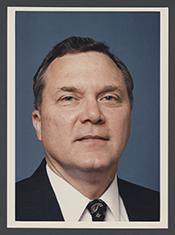
Historical · U.S. House · Georgia · District 9
Nathan Deal
Former U.S. Representative · Georgia District 9 · 1993–2010 · Republican
Nathan Deal represented Georgia's District 9 in the United States House of Representatives (1993–2010) for the Republican party. The page below collects sourced biographical facts, term history, committee roles, and provenance for Deal.
Bioguide ID: D000168
Key facts
- Full name
- Nathan Deal
- State
- Georgia
- District
- District 9
- Party
- Republican
- House service
- 1993–2010
- First House term
- 1993
- Status
- Left office
- Current term ends
- —
- Born
- 1942
- Bioguide ID
- D000168
- Committee assignments
- —
- Dataset version
- 1.20260605
Biographical narrative
948 words · sourced from the Wikipedia REST extract
John Nathan Deal is a former American politician who served as a U.S. Representative for Georgia's 9th congressional district from 1993 until 2010. A member of the Republican Party, Deal transitioned from the Democratic Party shortly after the Republicans gained control of the House of Representatives in the mid-1990s. His political career spanned nearly two decades in Congress, during which he became known for his work on health care policy and entitlement reform. Following his tenure in the House, Deal served as the 82nd governor of Georgia from 2011 to 2019, further solidifying his influence in Georgia politics.
Early life and career
Nathan Deal was born on August 25, 1942, in Millen, Georgia, and he spent his formative years on a farm in Sandersville, Georgia. His upbringing was shaped by his parents, Mary and Noah Jordan Deal, both of whom were educators. This educational background likely influenced Deal's own academic pursuits. He attended Mercer University in Macon, where he excelled academically, earning both his bachelor's degree and Juris Doctor degree with honors. After completing his law degree in 1966, Deal joined the United States Army, where he achieved the rank of captain.
Upon leaving the military, Deal embarked on a lengthy career in law, practicing for twenty-three years in private practice. His legal career included roles as a criminal prosecutor and as a judge in various capacities, including serving as a Hall County juvenile court judge and a superior court judge for the Northeastern Judicial Circuit. His legal experience provided him with a strong foundation for his later political career.
In 1980, Deal entered the political arena by winning a seat in the Georgia State Senate as a Democrat, representing District 49. His political acumen quickly became evident, and in November 1990, he was elected President Pro Tempore of the Senate, the second-highest position in the chamber. However, his tenure in the state senate came to an end when he was succeeded by Democrat Jane Hemmer, who was later defeated by Republican Casey Cagle in 1992.
House tenure
Nathan Deal was first elected to the U.S. House of Representatives in November 1992, succeeding long-serving incumbent Ed Jenkins in Georgia's 9th congressional district. Initially a member of the Democratic Party, Deal was re-elected in 1994. However, a significant shift in his political alignment occurred on April 11, 1995, when he switched parties to join the Republican Party, coinciding with the Republicans' assumption of control over the House for the first time in four decades. This decision was influenced by his support for the Republican agenda, particularly the "Contract With America," championed by Speaker Newt Gingrich, who was also from Georgia.
Following his party switch, Deal faced a competitive political landscape but was re-elected in 1996, marking the first time a Republican had been elected to represent the district for a full term since the Reconstruction era. His political career continued to flourish as he secured re-election in subsequent years, often unopposed or facing only minor opposition. Notably, he was unopposed in the elections of 1998, 2002, and 2004, and he defeated a less-funded Democratic candidate in 2000. The district underwent redistricting in 2003, renumbering it as the 10th District, but it reverted to the 9th District after further changes in 2006.
Throughout his time in Congress, Deal's district became increasingly Republican at the federal level. By the mid-2000s, the district was firmly in Republican hands, with Democrats struggling to gain traction in local and state elections. In November 2006, Deal was re-elected with a significant majority, receiving 77% of the vote against his Democratic opponent, John Bradbury, a former elementary school teacher.
Legislative focus and committees
During his 17 years in the U.S. House, Nathan Deal's legislative focus evolved significantly. In his early tenure, he maintained a relatively moderate voting record, receiving ratings in the 60s from the American Conservative Union (ACU). However, after switching to the Republican Party, his voting patterns shifted markedly to the right, culminating in consistently high ratings from the ACU, often exceeding 90.
Deal's expertise in health care policy and entitlement reform became a hallmark of his congressional career. He rose to prominence as the chair of the Health Subcommittee of the Energy and Commerce Committee, where he played a key role in shaping legislation related to health care. One of his notable legislative initiatives was the introduction of the Citizenship Reform Act, which aimed to eliminate birthright citizenship for undocumented immigrants, arguing that such individuals and their children should not be considered subject to U.S. jurisdiction as defined by the 14th Amendment.
In addition to his role on the Energy and Commerce Committee, Deal served on several subcommittees, including the Subcommittee on Communications, Technology and the Internet, the Subcommittee on Health, where he held the position of Ranking Member, and the Subcommittee on Oversight and Investigations. His involvement in these committees allowed him to influence a wide range of policy areas, particularly those related to health care and communication technologies.
Despite his legislative achievements, Deal's career was not without controversy. In March 2010, the Office of Congressional Ethics released a report indicating that he may have improperly used his congressional staff to influence Georgia officials regarding a state vehicle inspection program that benefitted his family's auto salvage business. Deal maintained his innocence, asserting that he had done nothing wrong and would not allow the allegations to tarnish his record of public service.
Nathan Deal's congressional career concluded on March 22, 2010, after serving a total of nine terms in the House. His transition from the House to the governorship marked a new chapter in his political journey, where he continued to influence Georgia politics until his term ended in 2019.
Notable legislation
Sponsored and co-sponsored legislation for Nathan Deal is pending operator curation. The biographical narrative above carries the same provenance trail until per-bill rows are written.
Sources
- [1]https://en.wikipedia.org/wiki/Nathan_DealWikipedia · retrieved 2026-06-05
Notable quotes
Sourced quotes for Nathan Deal are pending operator curation. Narrative-scope provenance remains attached below.
Sources
- [1]https://en.wikipedia.org/wiki/Nathan_DealWikipedia · retrieved 2026-06-05
Key positions
Curated policy positions for Nathan Deal are pending operator review. The biographical narrative above carries the same provenance trail until per-topic positions are written.
Sources
- [1]https://en.wikipedia.org/wiki/Nathan_DealWikipedia · retrieved 2026-06-05
Terms served
- 1993–1995U.S. House · Term 1 · Democratic
- 1995–1997U.S. House · Term 2 · Republican
- 1997–1999U.S. House · Term 3 · Republican
- 1999–2001U.S. House · Term 4 · Republican
- 2001–2003U.S. House · Term 5 · Republican
- 2003–2005U.S. House · Term 6 · Republican
- 2005–2007U.S. House · Term 7 · Republican
- 2007–2009U.S. House · Term 8 · Republican
- 2009–2010U.S. House · Term 9 · Republican
Sources & provenance
Every attributable claim above carries a per-section [N] marker that resolves to the corresponding URL below. Each entry records the upstream provider, the canonical URL, and the timestamp at which the source was retrieved by the ingest pipeline.
Key facts
- https://bioguide.congress.gov/search/bio/D000168bioguide · retrieved 2026-06-05
- http://www.house.gov/dealhouse.gov · retrieved 2026-06-05
Biographical narrative
- https://en.wikipedia.org/wiki/Nathan_Dealwikipedia · retrieved 2026-06-05
Find your representative
Every U.S. state elects representatives by district. Browse Georgia’s delegation, the full former-representative roster, or explore the role and term length.
Related on The Candidate
- Preceded by Ed JenkinsEarlier holder of the Georgia District 9 House seat · Democratic.Open
- Succeeded by Doug CollinsLater holder of the Georgia District 9 House seat · Republican.Open
- Andrew SloanFormer U.S. Representative · Georgia District 1 · RepublicanOpen
- Anthony WayneFormer U.S. Representative · Georgia District 1Open
- Archibald MacIntyreFormer U.S. Representative · Georgia District 1 · DemocraticOpen
- Bo GinnFormer U.S. Representative · Georgia District 1 · DemocraticOpen