
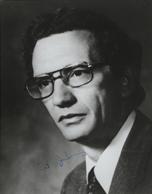
Historical · U.S. House · Georgia · District 9
Ed Jenkins
Former U.S. Representative · Georgia District 9 · 1977–1993 · Democratic
Ed Jenkins represented Georgia's District 9 in the United States House of Representatives (1977–1993) for the Democratic party. The page below collects sourced biographical facts, term history, committee roles, and provenance for Jenkins.
Bioguide ID: J000083
Key facts
- Full name
- Ed Jenkins
- State
- Georgia
- District
- District 9
- Party
- Democratic
- House service
- 1977–1993
- First House term
- 1977
- Status
- Left office
- Current term ends
- —
- Born
- 1933
- Bioguide ID
- J000083
- Committee assignments
- —
- Dataset version
- 1.20260605
Biographical narrative
1,034 words · sourced from the Wikipedia REST extract
Edgar L. Jenkins was an American politician who represented Georgia's 9th congressional district in the U.S. House of Representatives from 1977 until 1993. A member of the Democratic Party, Jenkins served a total of eight terms in Congress. His legislative career was marked by a focus on issues pertinent to his constituents, particularly in the textile industry, and he was involved in various leadership contests during his tenure.
Early life and career
Edgar Lanier Jenkins was born on January 4, 1933, in Young Harris, Georgia. Growing up in a region known for its picturesque landscapes and small-town atmosphere, Jenkins developed a sense of community and public service early in his life. After completing his education, he enlisted in the United States Coast Guard, serving from 1952 to 1955. This experience in the military likely shaped his views on service and leadership, as well as his commitment to his country.
Following his military service, Jenkins transitioned into a political career, working as an administrative assistant to Congressman Phillip M. Landrum from 1959 to 1962. This role provided him with valuable insights into the workings of Congress and the legislative process, as well as the opportunity to build connections within the political sphere. His time in Landrum's office helped him develop a foundation in public policy and governance, which would later inform his own legislative priorities when he entered Congress.
Jenkins's early career laid the groundwork for his future in politics, as he became increasingly involved in the Democratic Party and the issues affecting his home state of Georgia. His understanding of local concerns and national policies would become crucial as he sought to represent the interests of his constituents in Washington, D.C.
House tenure
In 1976, Jenkins was elected to the U.S. House of Representatives, marking the beginning of his eight-term career in Congress. He took office in January 1977, representing Georgia's 9th congressional district, which encompasses a diverse area in the northern part of the state. Throughout his time in office, Jenkins worked to address the needs and concerns of his constituents, focusing on issues that were particularly relevant to the region.
During his tenure, Jenkins became known for his support of the textile industry, which was a significant part of Georgia's economy. He advocated for policies that would protect and promote this industry, recognizing its importance to local jobs and economic stability. His commitment to the textile sector was reflective of his broader approach to economic issues, as he sought to balance the interests of his constituents with the complexities of national economic policy.
In addition to his focus on the textile industry, Jenkins was also involved in discussions surrounding tax policy, particularly capital gains tax cuts. His support for such measures indicated his alignment with certain economic principles that favored tax relief for individuals and businesses, which he believed would foster growth and investment.
In 1989, Jenkins sought to elevate his leadership role within the Democratic Party by challenging Richard Gephardt for the position of Majority Leader. Although he ultimately lost the contest, this attempt demonstrated his ambition and desire to play a more significant role in shaping party strategy and legislative direction.
Throughout his congressional career, Jenkins was known for his dedication to his constituents and his willingness to engage in the legislative process. He served on various committees, contributing to discussions and decisions that impacted not only Georgia but the nation as a whole. His ability to navigate the complexities of Congress and advocate for his district's needs was a hallmark of his time in office.
Jenkins's tenure in Congress came to an end in January 1993 when he left office. His eight terms in the House reflected a sustained commitment to public service and the representation of his constituents' interests. Following his departure from Congress, Jenkins continued to be involved in various civic activities, though he remained largely out of the political spotlight.
Legislative focus and committees
During his time in the U.S. House of Representatives, Edgar L. Jenkins focused on a range of legislative issues that were critical to his constituents in Georgia's 9th congressional district. His advocacy for the textile industry was a defining aspect of his legislative agenda. Jenkins recognized the challenges faced by this sector, particularly in the context of globalization and competition from foreign markets. He worked to support policies that would protect jobs and promote growth within the industry, reflecting the economic realities of his district.
In addition to his focus on textiles, Jenkins was also involved in broader economic issues, including tax policy. His support for capital gains tax cuts indicated his belief in the importance of encouraging investment and economic development. Jenkins's positions on these matters were shaped by his understanding of the economic landscape in Georgia and the needs of his constituents, who relied on a stable and thriving local economy.
Throughout his congressional career, Jenkins served on various committees, which allowed him to influence legislation in areas that mattered to his district. His committee assignments provided him with platforms to advocate for the interests of his constituents and engage with other lawmakers on key issues. While specific committee details are not provided, it is common for representatives to serve on committees related to their district's primary industries, such as agriculture, commerce, or labor.
Jenkins's legislative focus was characterized by a pragmatic approach to governance. He sought to balance the needs of his constituents with the realities of national policy-making, often navigating complex political landscapes to achieve his goals. His ability to build coalitions and work across party lines was essential in advancing his legislative priorities.
In summary, Edgar L. Jenkins's career in the U.S. House of Representatives was marked by a commitment to public service and a focus on the economic well-being of his constituents. His advocacy for the textile industry and support for tax policies reflect his understanding of the challenges facing his district. Jenkins's tenure in Congress spanned over a decade, during which he played a significant role in shaping the legislative landscape for Georgia's 9th congressional district. After leaving office in 1993, he remained a respected figure in his community until his passing on January 1, 2012, just days before his 79th birthday.
Notable legislation
Sponsored and co-sponsored legislation for Ed Jenkins is pending operator curation. The biographical narrative above carries the same provenance trail until per-bill rows are written.
Sources
- [1]https://en.wikipedia.org/wiki/Ed_Jenkins_(politician)Wikipedia · retrieved 2026-06-05
Notable quotes
Sourced quotes for Ed Jenkins are pending operator curation. Narrative-scope provenance remains attached below.
Sources
- [1]https://en.wikipedia.org/wiki/Ed_Jenkins_(politician)Wikipedia · retrieved 2026-06-05
Key positions
Curated policy positions for Ed Jenkins are pending operator review. The biographical narrative above carries the same provenance trail until per-topic positions are written.
Sources
- [1]https://en.wikipedia.org/wiki/Ed_Jenkins_(politician)Wikipedia · retrieved 2026-06-05
Terms served
- 1977–1979U.S. House · Term 1 · Democratic
- 1979–1981U.S. House · Term 2 · Democratic
- 1981–1983U.S. House · Term 3 · Democratic
- 1983–1985U.S. House · Term 4 · Democratic
- 1985–1987U.S. House · Term 5 · Democratic
- 1987–1989U.S. House · Term 6 · Democratic
- 1989–1991U.S. House · Term 7 · Democratic
- 1991–1993U.S. House · Term 8 · Democratic
Sources & provenance
Every attributable claim above carries a per-section [N] marker that resolves to the corresponding URL below. Each entry records the upstream provider, the canonical URL, and the timestamp at which the source was retrieved by the ingest pipeline.
Key facts
- https://bioguide.congress.gov/search/bio/J000083bioguide · retrieved 2026-06-05
- https://www.govtrack.us/congress/members/405985govtrack · retrieved 2026-06-05
Biographical narrative
- https://en.wikipedia.org/wiki/Ed_Jenkins_(politician)wikipedia · retrieved 2026-06-05
Find your representative
Every U.S. state elects representatives by district. Browse Georgia’s delegation, the full former-representative roster, or explore the role and term length.
Related on The Candidate
- Preceded by Phillip LandrumEarlier holder of the Georgia District 9 House seat · Democratic.Open
- Succeeded by Nathan DealLater holder of the Georgia District 9 House seat · Republican.Open
- Andrew SloanFormer U.S. Representative · Georgia District 1 · RepublicanOpen
- Anthony WayneFormer U.S. Representative · Georgia District 1Open
- Archibald MacIntyreFormer U.S. Representative · Georgia District 1 · DemocraticOpen
- Bo GinnFormer U.S. Representative · Georgia District 1 · DemocraticOpen