
Historical · U.S. House · Georgia · District 9
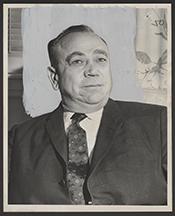
Phillip Landrum
Former U.S. Representative · Georgia District 9 · 1953–1977 · Democratic
Phillip Landrum represented Georgia's District 9 in the United States House of Representatives (1953–1977) for the Democratic party. The page below collects sourced biographical facts, term history, committee roles, and provenance for Landrum.
Bioguide ID: L000054
Key facts
- Full name
- Phillip Landrum
- State
- Georgia
- District
- District 9
- Party
- Democratic
- House service
- 1953–1977
- First House term
- 1953
- Status
- Left office
- Current term ends
- —
- Born
- 1907
- Bioguide ID
- L000054
- Committee assignments
- —
- Dataset version
- 1.20260605
Biographical narrative
901 words · sourced from the Wikipedia REST extract
Phil M. Landrum was an American lawyer and politician who served as a Democratic U.S. Representative for Georgia's 9th congressional district from 1953 until 1977. With a career spanning twelve terms in the House of Representatives, Landrum was a prominent figure in Georgia politics during a transformative period in American history. His legislative work included significant involvement in labor relations and economic policy, although his tenure was also marked by his staunch support for segregationist policies.
Early life and career
Phil M. Landrum was born on September 10, 1907, in Martin, Georgia. He received his early education in the public school system before attending Mercer University in Macon, Georgia. He later graduated from Piedmont College in Demorest, Georgia, with a Bachelor of Arts degree in 1939. Following his undergraduate studies, Landrum pursued a law degree at Atlanta Law School, earning his LL.B. in 1941. During his time in college and law school, he gained experience in education by serving as the Superintendent of Nelson High School in Georgia from 1937 to 1941.
After being admitted to the bar in 1941, Landrum began practicing law in Canton, Georgia. His legal career was interrupted by World War II, during which he enlisted in the United States Army Air Corps on October 2, 1942. He served in Europe throughout the conflict and was discharged on June 1, 1945, with the rank of first lieutenant. Following his military service, Landrum briefly worked for the Veterans' Administration before returning to the legal profession.
In the years immediately following the war, Landrum held several important positions in Georgia state government. He served as the assistant attorney general for the State of Georgia from 1946 to 1947. Subsequently, he was appointed as the executive secretary to Governor Melvin E. Thompson, a role he occupied from 1947 to 1948. These experiences in both law and government provided Landrum with a solid foundation for his future political career.
House tenure
Phil M. Landrum's political career in the U.S. House of Representatives began when he was elected as a Democrat to the Eighty-third Congress, which convened in January 1953. He would go on to serve a total of twelve consecutive terms, concluding his tenure on January 3, 1977. Throughout his time in Congress, Landrum was known for his ability to win general elections with relative ease. However, he faced significant challenges during several primary elections, notably from a young Zell Miller in the mid-1960s.
During his congressional career, Landrum was involved in various legislative initiatives and was recognized for his work in labor relations. He was a primary sponsor of the Labor Management Reporting and Disclosure Act, commonly referred to as the Landrum-Griffin Act. This legislation aimed to regulate labor unions and ensure transparency in their operations. Additionally, Landrum played a key role in the development of the Economic Opportunity Act of 1964, which was a cornerstone of President Lyndon Johnson's War on Poverty initiative.
Despite his legislative accomplishments, Landrum's tenure was also characterized by his strong opposition to civil rights advancements. He signed "The Southern Manifesto" in 1956, which opposed the Supreme Court's decision in Brown v. Board of Education that mandated the desegregation of public schools. Throughout his time in Congress, Landrum consistently voted against significant civil rights legislation, including the Civil Rights Acts of 1957, 1960, 1964, and 1968, as well as the Voting Rights Act of 1965 and the 24th Amendment to the U.S. Constitution.
Landrum's political stance on segregation and civil rights drew criticism and highlighted the contentious social climate of the era. His alignment with segregationist policies positioned him at odds with the growing civil rights movement, which sought to dismantle systemic racism and promote equality for African Americans.
Legislative focus and committees
During his time in the House of Representatives, Phil M. Landrum served on various committees that shaped his legislative focus. His work on labor issues was particularly notable, as he sought to address the complexities of labor-management relations through legislation. The Labor Management Reporting and Disclosure Act, which he co-sponsored, aimed to enhance accountability within labor unions and protect the rights of union members.
In addition to labor relations, Landrum's involvement in economic policy was significant, particularly through his support for the Economic Opportunity Act of 1964. This act was a critical element of President Johnson's War on Poverty, which aimed to reduce poverty and improve economic conditions for disadvantaged populations. Landrum's contributions to this legislation reflected his commitment to addressing economic disparities, even as his overall record on civil rights remained controversial.
Throughout his congressional career, Landrum maintained a focus on issues pertinent to his constituents in Georgia. His legislative priorities often aligned with the interests of his district, which included rural and suburban areas. However, his opposition to civil rights legislation and his support for segregationist policies ultimately defined a significant aspect of his legacy.
After serving twelve terms in the House, Landrum chose not to seek re-election in 1976. He returned to his home in Jasper, Georgia, where he lived until his death on November 19, 1990. His contributions to Georgia politics and his role in the U.S. Congress remain part of the historical narrative of the mid-20th century, a period marked by significant social change and political upheaval. In recognition of his impact, Interstate 575 in Georgia was named in his honor, serving as a reminder of his long-standing presence in the state's political landscape.
Notable legislation
Sponsored and co-sponsored legislation for Phillip Landrum is pending operator curation. The biographical narrative above carries the same provenance trail until per-bill rows are written.
Sources
- [1]https://en.wikipedia.org/wiki/Phillip_M._LandrumWikipedia · retrieved 2026-06-05
Notable quotes
Sourced quotes for Phillip Landrum are pending operator curation. Narrative-scope provenance remains attached below.
Sources
- [1]https://en.wikipedia.org/wiki/Phillip_M._LandrumWikipedia · retrieved 2026-06-05
Key positions
Curated policy positions for Phillip Landrum are pending operator review. The biographical narrative above carries the same provenance trail until per-topic positions are written.
Sources
- [1]https://en.wikipedia.org/wiki/Phillip_M._LandrumWikipedia · retrieved 2026-06-05
Terms served
- 1953–1955U.S. House · Term 1 · Democratic
- 1955–1957U.S. House · Term 2 · Democratic
- 1957–1959U.S. House · Term 3 · Democratic
- 1959–1961U.S. House · Term 4 · Democratic
- 1961–1963U.S. House · Term 5 · Democratic
- 1963–1965U.S. House · Term 6 · Democratic
- 1965–1967U.S. House · Term 7 · Democratic
- 1967–1969U.S. House · Term 8 · Democratic
- 1969–1971U.S. House · Term 9 · Democratic
- 1971–1973U.S. House · Term 10 · Democratic
- 1973–1975U.S. House · Term 11 · Democratic
- 1975–1977U.S. House · Term 12 · Democratic
Sources & provenance
Every attributable claim above carries a per-section [N] marker that resolves to the corresponding URL below. Each entry records the upstream provider, the canonical URL, and the timestamp at which the source was retrieved by the ingest pipeline.
Key facts
- https://bioguide.congress.gov/search/bio/L000054bioguide · retrieved 2026-06-05
- https://www.govtrack.us/congress/members/406563govtrack · retrieved 2026-06-05
Biographical narrative
- https://en.wikipedia.org/wiki/Phillip_M._Landrumwikipedia · retrieved 2026-06-05
Find your representative
Every U.S. state elects representatives by district. Browse Georgia’s delegation, the full former-representative roster, or explore the role and term length.
Related on The Candidate
- Preceded by John WoodEarlier holder of the Georgia District 9 House seat · Democratic.Open
- Succeeded by Ed JenkinsLater holder of the Georgia District 9 House seat · Democratic.Open
- Andrew SloanFormer U.S. Representative · Georgia District 1 · RepublicanOpen
- Anthony WayneFormer U.S. Representative · Georgia District 1Open
- Archibald MacIntyreFormer U.S. Representative · Georgia District 1 · DemocraticOpen
- Bo GinnFormer U.S. Representative · Georgia District 1 · DemocraticOpen