
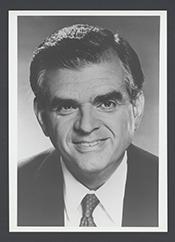
Historical · U.S. House · Illinois · District 18
Ray LaHood
Former U.S. Representative · Illinois District 18 · 1995–2009 · Republican
Ray LaHood represented Illinois's District 18 in the United States House of Representatives (1995–2009) for the Republican party. The page below collects sourced biographical facts, term history, committee roles, and provenance for LaHood.
Bioguide ID: L000552
Key facts
- Full name
- Ray LaHood
- State
- Illinois
- District
- District 18
- Party
- Republican
- House service
- 1995–2009
- First House term
- 1995
- Status
- Left office
- Current term ends
- —
- Born
- 1945
- Bioguide ID
- L000552
- Committee assignments
- —
- Dataset version
- 1.20260605
Biographical narrative
937 words · sourced from the Wikipedia REST extract
Ray LaHood is a former American politician who served as a U.S. Representative for Illinois's 18th congressional district from 1995 until 2009. A member of the Republican Party, he is notable for his moderate political stance and his role as a bipartisan leader during his time in Congress. Following his tenure in the House, LaHood was appointed as the 16th United States Secretary of Transportation, serving under President Barack Obama from 2009 to 2013. His career has been marked by a commitment to infrastructure, transportation issues, and a focus on bipartisan cooperation.
Early life and career
Ray LaHood was born on December 6, 1945, in Peoria, Illinois. He is the son of Edward M. LaHood, a Lebanese American who managed a restaurant, and Mary A. LaHood, who was of German descent. Growing up in Peoria, LaHood attended Spalding Institute, which is now known as Peoria Notre Dame High School. He pursued higher education at Canton Junior College and later at Bradley University in Peoria, where he earned a Bachelor of Science degree in education and sociology in 1971.
After completing his education, LaHood began his professional career as a middle school social studies teacher in both public and Catholic schools. His experiences in the classroom, particularly teaching students about the Constitution and government, sparked his interest in politics. He transitioned into public service, first serving as the director of the Rock Island County Youth Services Bureau. Subsequently, he worked as a district administrative assistant for U.S. Representative Tom Railsback, a Republican from Moline, Illinois, from 1977 until 1982.
In 1982, LaHood was appointed to fill a vacant seat in the Illinois House of Representatives, where he served for a brief period of nine months. He later ran for the seat in November of that year but was defeated by Democratic candidate Bob DeJaegher. Following this, LaHood became the administrative assistant and eventually the chief of staff to U.S. House Minority Leader Robert Michel, holding this position from 1982 until 1994. His work in these roles helped to establish his reputation within the Republican Party and prepared him for his future congressional career.
House tenure
LaHood's congressional career began when he successfully ran for the U.S. House of Representatives in 1994, representing Illinois's 18th congressional district. He took office in January 1995 and served a total of seven terms in the House until January 2009. Notably, LaHood was one of only three Republicans elected to the House that year who did not endorse the "Contract with America," a campaign platform promoted by Newt Gingrich aimed at securing a Republican majority. Instead, he aligned himself with the moderate Republican Main Street Partnership, which sought to promote bipartisan cooperation.
During his time in Congress, LaHood became well-known for his frequent role as Speaker Pro Tempore of the House, presiding over numerous debates and discussions. He gained particular recognition for overseeing the contentious impeachment proceedings against President Bill Clinton in 1998. LaHood was also an advocate for preserving the legacy of Abraham Lincoln, as his congressional district encompassed much of the area Lincoln represented during his own term in the House. He played a significant role in establishing the Abraham Lincoln Bicentennial Commission, which was responsible for planning celebrations for Lincoln's 200th birthday in 2009. Additionally, he was a strong supporter of the Lincoln Presidential Library located in Springfield, Illinois.
Throughout his congressional tenure, LaHood served on several important committees, including the House Transportation and Infrastructure Committee from 1995 to 2000, the House Permanent Select Committee on Intelligence starting in 1998, and the House Appropriations Committee from 2000 onward. His voting record included a notable opposition to the renewal of the PATRIOT Act in 2005, where he expressed concerns about the extension of its intrusive police powers.
In 2006, LaHood considered running for the governorship of Illinois but ultimately decided to seek re-election to Congress. He won the 2006 election against Democratic challenger Steve Waterworth with a significant margin. However, in July 2007, he announced that he would not seek re-election in 2008. LaHood's congressional career concluded with his last term ending on January 3, 2009.
Legislative focus and committees
Throughout his time in the House, LaHood's legislative focus was primarily on issues related to transportation, infrastructure, and bipartisan cooperation. His involvement in the House Transportation and Infrastructure Committee allowed him to advocate for significant transportation initiatives and projects that benefited his district and the nation. His ability to work across party lines was a hallmark of his approach, as he organized bipartisan retreats for members of Congress to foster collaboration and understanding among lawmakers.
LaHood's tenure on the House Appropriations Committee further solidified his role as a key player in shaping federal funding priorities. He was recognized for his skills in navigating complex legislative negotiations and for his ability to bridge partisan divides. However, his record also faced scrutiny, with some critics alleging a tendency toward pork barrel spending, particularly in relation to securing earmarks for his district.
In the lead-up to the 2008 presidential election, LaHood supported Republican candidate John McCain but expressed concerns about the campaign tactics employed by McCain's running mate, Sarah Palin. His comments reflected his commitment to maintaining a level of decorum in political discourse, which aligned with his overall approach to governance.
In summary, Ray LaHood's career as a U.S. Representative was characterized by his moderate Republican stance, dedication to bipartisan cooperation, and advocacy for transportation and infrastructure issues. His legacy includes significant contributions to the preservation of Abraham Lincoln's legacy and his role in shaping federal transportation policy, culminating in his appointment as Secretary of Transportation in the Obama administration.
Notable legislation
Sponsored and co-sponsored legislation for Ray LaHood is pending operator curation. The biographical narrative above carries the same provenance trail until per-bill rows are written.
Sources
- [1]https://en.wikipedia.org/wiki/Ray_LaHoodWikipedia · retrieved 2026-06-05
Notable quotes
Sourced quotes for Ray LaHood are pending operator curation. Narrative-scope provenance remains attached below.
Sources
- [1]https://en.wikipedia.org/wiki/Ray_LaHoodWikipedia · retrieved 2026-06-05
Key positions
Curated policy positions for Ray LaHood are pending operator review. The biographical narrative above carries the same provenance trail until per-topic positions are written.
Sources
- [1]https://en.wikipedia.org/wiki/Ray_LaHoodWikipedia · retrieved 2026-06-05
Terms served
- 1995–1997U.S. House · Term 1 · Republican
- 1997–1999U.S. House · Term 2 · Republican
- 1999–2001U.S. House · Term 3 · Republican
- 2001–2003U.S. House · Term 4 · Republican
- 2003–2005U.S. House · Term 5 · Republican
- 2005–2007U.S. House · Term 6 · Republican
- 2007–2009U.S. House · Term 7 · Republican
Sources & provenance
Every attributable claim above carries a per-section [N] marker that resolves to the corresponding URL below. Each entry records the upstream provider, the canonical URL, and the timestamp at which the source was retrieved by the ingest pipeline.
Key facts
- https://bioguide.congress.gov/search/bio/L000552bioguide · retrieved 2026-06-05
- http://www.house.gov/lahoodhouse.gov · retrieved 2026-06-05
Biographical narrative
- https://en.wikipedia.org/wiki/Ray_LaHoodwikipedia · retrieved 2026-06-05
Find your representative
Every U.S. state elects representatives by district. Browse Illinois’s delegation, the full former-representative roster, or explore the role and term length.
Related on The Candidate
- Preceded by Robert MichelEarlier holder of the Illinois District 18 House seat · Republican.Open
- Succeeded by Aaron SchockLater holder of the Illinois District 18 House seat · Republican.Open
- Abner TaylorFormer U.S. Representative · Illinois District 1 · RepublicanOpen
- Adam SnyderFormer U.S. Representative · Illinois District 1 · DemocraticOpen
- Arthur MitchellFormer U.S. Representative · Illinois District 1 · DemocraticOpen
- Bennett StewartFormer U.S. Representative · Illinois District 1 · DemocraticOpen