
Historical · U.S. House · Indiana · District 2
Philip Sharp
Former U.S. Representative · Indiana District 2 · 1975–1995 · Democratic
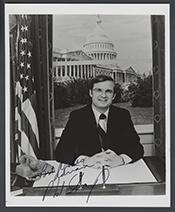
Philip Sharp represented Indiana's District 2 in the United States House of Representatives (1975–1995) for the Democratic party. The page below collects sourced biographical facts, term history, committee roles, and provenance for Sharp.
Bioguide ID: S000294
Key facts
- Full name
- Philip Sharp
- State
- Indiana
- District
- District 2
- Party
- Democratic
- House service
- 1975–1995
- First House term
- 1975
- Status
- Left office
- Current term ends
- —
- Born
- 1942
- Bioguide ID
- S000294
- Committee assignments
- —
- Dataset version
- 1.20260605
Biographical narrative
876 words · sourced from the Wikipedia REST extract
Philip R. Sharp is a former American politician who served as a Democratic member of the United States House of Representatives, representing Indiana's 2nd congressional district from 1975 until 1995. Over the course of his ten terms in office, Sharp became known for his involvement in significant energy legislation and his leadership roles within various congressional committees. Following his tenure in Congress, he transitioned to a career in academia and nonprofit leadership, focusing on energy policy and environmental issues.
Early life and career
Philip R. Sharp was born on July 15, 1942, in Baltimore, Maryland. He spent his formative years in Elwood, Indiana, where he demonstrated academic excellence, graduating as valedictorian from Wendell Willkie High School in 1960. Sharp pursued higher education at DePauw University before transferring to Georgetown University, where he graduated cum laude from the Edmund A. Walsh School of Foreign Service in 1964.
After completing his undergraduate studies, Sharp began a career in public service as a Legislative Aide to Democratic Senator Vance Hartke from 1964 to 1969. His early political engagement laid the groundwork for his future endeavors in elected office. Sharp made his initial attempts to enter Congress in the early 1970s, running as the Democratic candidate for Indiana's 10th congressional district in both the 1970 and 1972 elections, though he was unsuccessful in these bids.
Sharp's academic pursuits continued alongside his political ambitions. He enrolled in graduate courses at Exeter College, Oxford University, in 1966 and later returned to Georgetown University, where he earned a Ph.D. in 1974. During this period, he also contributed to academia by teaching political science at Ball State University, first as an assistant professor and later as an associate professor from 1967 until 1974.
House tenure
In 1974, Sharp was elected to the United States House of Representatives as part of a wave of new Democratic members, often referred to as the "Watergate Babies," who were elected in the aftermath of the Watergate scandal that led to President Richard Nixon's resignation. Sharp's tenure in Congress began in January 1975, and he quickly established himself as a significant figure in legislative matters, particularly in the realm of energy policy.
Throughout his time in office, Sharp was involved in the passage of key energy legislation. He served as the chairman of the Energy and Power Subcommittee, where he played a crucial role in shaping the 1990 Clean Air Act Amendments and the 1992 Energy Policy Act. His leadership in these areas underscored his commitment to addressing energy and environmental challenges facing the nation.
In addition to his legislative work, Sharp was appointed to various committees and task forces that focused on energy efficiency and environmental standards. He was a member of the National Research Council Committee on the Effectiveness and Impact of Corporate Average Fuel Economy (CAFE) Standards, which released a significant report in 2001. Furthermore, he chaired the Secretary of Energy's Electric Systems Reliability Task Force, which published its major findings in 1998.
Sharp chose not to seek re-election in the 1994 elections, concluding his congressional career on January 3, 1995. He was succeeded by Republican David M. McIntosh.
Legislative focus and committees
During his time in the House of Representatives, Sharp's legislative focus was primarily centered on energy policy, environmental protection, and regulatory measures related to energy production and consumption. His role as chairman of the Energy and Power Subcommittee placed him at the forefront of critical discussions regarding the nation's energy strategy and environmental legislation.
Sharp's involvement in the 1990 Clean Air Act Amendments was particularly notable, as this legislation aimed to address air pollution and improve air quality across the United States. The amendments represented a significant step in federal efforts to regulate emissions and protect public health. Similarly, the 1992 Energy Policy Act encompassed a wide range of provisions aimed at promoting energy efficiency, renewable energy sources, and the development of cleaner technologies.
In addition to his legislative achievements, Sharp's participation in various committees and task forces demonstrated his commitment to advancing energy policy beyond the legislative arena. His work with the National Research Council and the Secretary of Energy's Electric Systems Reliability Task Force highlighted his dedication to ensuring the reliability and sustainability of the nation's energy systems.
Following his departure from Congress, Sharp continued to influence energy policy through his leadership roles in academia and nonprofit organizations. He served as the director of the Institute of Politics at Harvard University's John F. Kennedy School of Government and later became president of the nonpartisan think tank Resources for the Future in Washington, D.C. His expertise in energy issues was further recognized through his involvement with various boards and commissions focused on energy policy and climate change.
Sharp's contributions to energy policy and environmental issues have been acknowledged through several honors, including honorary degrees from DePauw University and Ball State University. In 2016, he was awarded the James R. Schlesinger Medal for Energy Security by the U.S. Department of Energy, recognizing his significant impact on energy legislation during his congressional career.
Overall, Philip R. Sharp's legacy as a U.S. Representative is marked by his commitment to addressing critical energy and environmental challenges, his leadership within Congress, and his ongoing influence in the fields of energy policy and public service.
Notable legislation
Sponsored and co-sponsored legislation for Philip Sharp is pending operator curation. The biographical narrative above carries the same provenance trail until per-bill rows are written.
Sources
- [1]https://en.wikipedia.org/wiki/Philip_Sharp_(politician)Wikipedia · retrieved 2026-06-05
Notable quotes
Sourced quotes for Philip Sharp are pending operator curation. Narrative-scope provenance remains attached below.
Sources
- [1]https://en.wikipedia.org/wiki/Philip_Sharp_(politician)Wikipedia · retrieved 2026-06-05
Key positions
Curated policy positions for Philip Sharp are pending operator review. The biographical narrative above carries the same provenance trail until per-topic positions are written.
Sources
- [1]https://en.wikipedia.org/wiki/Philip_Sharp_(politician)Wikipedia · retrieved 2026-06-05
Terms served
- 1975–1977U.S. House · Term 1 · Democratic
- 1977–1979U.S. House · Term 2 · Democratic
- 1979–1981U.S. House · Term 3 · Democratic
- 1981–1983U.S. House · Term 4 · Democratic
- 1983–1985U.S. House · Term 5 · Democratic
- 1985–1987U.S. House · Term 6 · Democratic
- 1987–1989U.S. House · Term 7 · Democratic
- 1989–1991U.S. House · Term 8 · Democratic
- 1991–1993U.S. House · Term 9 · Democratic
- 1993–1995U.S. House · Term 10 · Democratic
Sources & provenance
Every attributable claim above carries a per-section [N] marker that resolves to the corresponding URL below. Each entry records the upstream provider, the canonical URL, and the timestamp at which the source was retrieved by the ingest pipeline.
Key facts
- https://bioguide.congress.gov/search/bio/S000294bioguide · retrieved 2026-06-05
- https://www.govtrack.us/congress/members/409793govtrack · retrieved 2026-06-05
Biographical narrative
- https://en.wikipedia.org/wiki/Philip_Sharp_(politician)wikipedia · retrieved 2026-06-05
Find your representative
Every U.S. state elects representatives by district. Browse Indiana’s delegation, the full former-representative roster, or explore the role and term length.
Related on The Candidate
- Preceded by Earl LandgrebeEarlier holder of the Indiana District 2 House seat · Republican.Open
- Succeeded by David McIntoshLater holder of the Indiana District 2 House seat · Republican.Open
- Adam Benjamin Jr.Former U.S. Representative · Indiana District 1 · DemocraticOpen
- Alvin HoveyFormer U.S. Representative · Indiana District 1 · RepublicanOpen
- Arthur TaylorFormer U.S. Representative · Indiana District 1 · DemocraticOpen
- Benoni FullerFormer U.S. Representative · Indiana District 1 · DemocraticOpen