
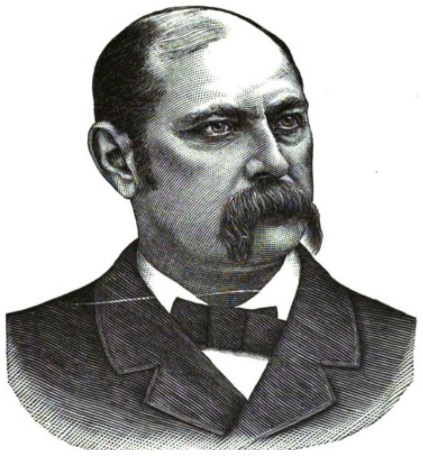
Historical · U.S. House · Indiana · District 5
Courtland Matson
Former U.S. Representative · Indiana District 5 · 1881–1889 · Democratic
Courtland Matson represented Indiana's District 5 in the United States House of Representatives (1881–1889) for the Democratic party. The page below collects sourced biographical facts, term history, committee roles, and provenance for Matson.
Bioguide ID: M000248
Key facts
- Full name
- Courtland Matson
- State
- Indiana
- District
- District 5
- Party
- Democratic
- House service
- 1881–1889
- First House term
- 1881
- Status
- Left office
- Current term ends
- —
- Born
- 1841
- Bioguide ID
- M000248
- Committee assignments
- —
- Dataset version
- 1.20260606
Biographical narrative
977 words · sourced from the Wikipedia REST extract
Courtland Matson was an American lawyer and politician who served as a U.S. Representative for Indiana's 5th congressional district from 1881 to 1889. A member of the Democratic Party, Matson's political career was marked by his involvement in various capacities within the state and national political landscape. His background as a Civil War veteran and his legal career contributed to his reputation and effectiveness as a legislator. After completing four terms in the U.S. House of Representatives, Matson returned to his legal practice and continued to engage in public service until his death in 1915.
Early life and career
Courtland Cushing Matson was born on April 25, 1841, in Brookville, Indiana. He grew up in a region that was rapidly developing during the mid-19th century, which likely influenced his later pursuits in law and politics. Matson attended Indiana Asbury University, now known as DePauw University, where he graduated in 1862. His education at this institution provided him with a strong foundation in the liberal arts and prepared him for his future endeavors in law and public service.
Following his graduation, Matson chose to pursue a career in law. He undertook the necessary studies to prepare for the bar examination and was subsequently admitted to practice law. His legal career began in Greencastle, Indiana, where he established a law practice that would serve as the basis for his future political career. Matson's legal expertise and reputation in the community were enhanced by his active involvement in local politics.
During the American Civil War, Matson enlisted in the Sixteenth Regiment of the Indiana Volunteers, where he served as a private. His commitment to the Union cause led him to transfer to the Sixth Regiment of the Indiana Volunteer Cavalry, also known as the Seventy-first Volunteers. Throughout his military service, Matson demonstrated leadership qualities and resilience, ultimately earning a promotion to the rank of colonel by the end of the war in October 1865. His experiences during the Civil War not only shaped his character but also provided him with a unique perspective on issues of governance and public service.
After the war, Matson returned to Greencastle and resumed his law practice. His legal career flourished, and he became a prominent figure in the community. He was elected as the prosecuting attorney of Putnam County, Indiana, three times, reflecting his strong standing among his peers and constituents. In 1878, he took on a leadership role as the chairman of the Democratic State Central Committee, further solidifying his influence within the Democratic Party in Indiana.
House tenure
Courtland Matson's political career reached a significant milestone when he was elected as a Democrat to the U.S. House of Representatives. His first term began on March 4, 1881, as he assumed office representing Indiana's 5th congressional district. Matson was re-elected to three consecutive terms, serving in total for four terms until March 3, 1889. His tenure in Congress was marked by active participation in legislative discussions and committee work.
During his time in the House, Matson served as the chairman of the Committee on Invalid Pensions for the Forty-eighth through Fiftieth Congresses. This role placed him at the forefront of discussions related to veterans' benefits and pension issues, which were particularly relevant given his background as a Civil War veteran. His leadership on this committee allowed him to advocate for policies that supported those who had served in the military, reflecting his commitment to the welfare of veterans and their families.
Despite his successful tenure in the House, Matson chose not to seek renomination after his fourth term. His decision to step away from Congress came during a time when he was also involved in a bid for higher office. In 1888, he ran as a Democratic candidate for the governorship of Indiana, although this campaign was ultimately unsuccessful. His political career in the House concluded with his departure in 1889, marking the end of a significant chapter in his public service.
Legislative focus and committees
Throughout his congressional career, Courtland Matson was involved in various legislative initiatives, with a particular emphasis on issues affecting veterans. As chairman of the Committee on Invalid Pensions, he played a crucial role in shaping policies that addressed the needs of veterans who had been injured or disabled during their service. This committee was responsible for overseeing pension laws and ensuring that veterans received the support they deserved, a cause that Matson was likely passionate about given his own military background.
Matson's legislative focus extended beyond veterans' issues, as he participated in broader discussions on various topics pertinent to his constituents and the nation. His work in Congress reflected the priorities of the Democratic Party during the late 19th century, which often included advocating for social reforms and addressing the economic challenges faced by many Americans during that period.
In addition to his committee work, Matson's role as a U.S. Representative involved engaging with his constituents and addressing their concerns. He was responsible for representing the interests of the people in Indiana's 5th congressional district, which encompassed a diverse population with varying needs and priorities. His ability to navigate the complexities of legislative processes and advocate for his constituents contributed to his reputation as a dedicated public servant.
After concluding his congressional service, Matson returned to Greencastle, where he resumed his law practice. His involvement in public service continued, as he served on the board of tax commissioners from 1909 to 1913, further demonstrating his commitment to civic engagement and governance.
Courtland Matson passed away on September 4, 1915, in Chicago, Illinois. His legacy as a lawyer, veteran, and public servant remains a part of Indiana's political history, reflecting the contributions of individuals who have shaped the state's governance and civic life. He was interred in Forest Hill Cemetery in Greencastle, Indiana, where he is remembered for his service to his country and community.
Notable legislation
Sponsored and co-sponsored legislation for Courtland Matson is pending operator curation. The biographical narrative above carries the same provenance trail until per-bill rows are written.
Sources
- [1]https://en.wikipedia.org/wiki/Courtland_C._MatsonWikipedia · retrieved 2026-06-06
Notable quotes
Sourced quotes for Courtland Matson are pending operator curation. Narrative-scope provenance remains attached below.
Sources
- [1]https://en.wikipedia.org/wiki/Courtland_C._MatsonWikipedia · retrieved 2026-06-06
Key positions
Curated policy positions for Courtland Matson are pending operator review. The biographical narrative above carries the same provenance trail until per-topic positions are written.
Sources
- [1]https://en.wikipedia.org/wiki/Courtland_C._MatsonWikipedia · retrieved 2026-06-06
Terms served
- 1881–1883U.S. House · Term 1 · Democratic
- 1883–1885U.S. House · Term 2 · Democratic
- 1885–1887U.S. House · Term 3 · Democratic
- 1887–1889U.S. House · Term 4 · Democratic
Sources & provenance
Every attributable claim above carries a per-section [N] marker that resolves to the corresponding URL below. Each entry records the upstream provider, the canonical URL, and the timestamp at which the source was retrieved by the ingest pipeline.
Key facts
- https://bioguide.congress.gov/search/bio/M000248bioguide · retrieved 2026-06-06
- https://www.govtrack.us/congress/members/407266govtrack · retrieved 2026-06-06
Biographical narrative
- https://en.wikipedia.org/wiki/Courtland_C._Matsonwikipedia · retrieved 2026-06-06
Find your representative
Every U.S. state elects representatives by district. Browse Indiana’s delegation, the full former-representative roster, or explore the role and term length.
Related on The Candidate
- Preceded by John CoburnEarlier holder of the Indiana District 5 House seat · Republican.Open
- Succeeded by George CooperLater holder of the Indiana District 5 House seat · Democratic.Open
- Adam Benjamin Jr.Former U.S. Representative · Indiana District 1 · DemocraticOpen
- Alvin HoveyFormer U.S. Representative · Indiana District 1 · RepublicanOpen
- Arthur TaylorFormer U.S. Representative · Indiana District 1 · DemocraticOpen
- Benoni FullerFormer U.S. Representative · Indiana District 1 · DemocraticOpen