
Historical · U.S. House · Louisiana · District 1
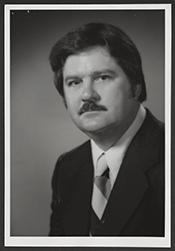
Richard Tonry
Former U.S. Representative · Louisiana District 1 · 1977–1979 · Democratic
Richard Tonry represented Louisiana's District 1 in the United States House of Representatives (1977–1979) for the Democratic party. The page below collects sourced biographical facts, term history, committee roles, and provenance for Tonry.
Bioguide ID: T000310
Key facts
- Full name
- Richard Tonry
- State
- Louisiana
- District
- District 1
- Party
- Democratic
- House service
- 1977–1979
- First House term
- 1977
- Status
- Left office
- Current term ends
- —
- Born
- 1935
- Bioguide ID
- T000310
- Committee assignments
- —
- Dataset version
- 1.20260605
Biographical narrative
875 words · sourced from the Wikipedia REST extract
Richard A. Tonry was an American politician and member of the Democratic Party who served as a U.S. Representative for Louisiana's 1st congressional district. His tenure in the House of Representatives began in 1977 and was marked by a brief but impactful career in politics. Tonry's political journey was characterized by his strong advocacy for organized labor and his involvement in significant legislative battles at both the state and federal levels. However, his time in office was cut short due to legal troubles that ultimately led to his resignation. Tonry's life and career reflect the complexities of political service and the challenges that can arise within it.
Early life and career
Richard A. Tonry was born on June 25, 1935. He pursued higher education at Spring Hill College in Mobile, Alabama, where he graduated in 1962. Following his undergraduate studies, Tonry continued his education at Loyola University New Orleans College of Law, earning his Juris Doctor degree in 1967. After completing his law degree, he practiced law in the New Orleans area for nearly a decade, during which he developed a reputation for his legal acumen and engagement in community issues.
Tonry's entry into politics began in the mid-1970s when he was elected to the Louisiana House of Representatives in the fall of 1975. This election was notable as it was the first-ever nonpartisan blanket primary held at the state level. He represented District 103 and served a single year in the state legislature, where he quickly established himself as a proponent of organized labor. His close relationship with Victor Bussie, the leader of the Louisiana AFL-CIO, underscored his commitment to labor issues. During his time in the state House, Tonry was actively involved in legislative efforts to oppose a right-to-work bill, which ultimately passed despite his efforts and those of other labor advocates. This legislation marked a significant moment in Louisiana's labor history, as the state became the last in the South to adopt such a law.
House tenure
Tonry's political career advanced when he declared his candidacy for the United States Congress following the retirement announcement of long-serving Democratic incumbent F. Edward Hébert. In the Democratic primary for Louisiana's 1st congressional district, Tonry faced off against New Orleans City Councilman James Moreau. In a surprising turn of events, Tonry won the primary and subsequently went on to defeat Republican candidate Bob Livingston in the general election. This election was one of the last held before the state adopted its nonpartisan blanket primary system for congressional races in 1978.
Tonry's congressional term began in 1977, but it was a brief tenure that lasted only a few months. His time in office was overshadowed by serious allegations of misconduct. He faced an investigation led by U.S. Attorney Gerald J. Gallinghouse, which centered on accusations of allowing subordinates to engage in vote tampering through ballot box stuffing in St. Bernard Parish, a suburb of New Orleans. Additionally, Tonry was charged with accepting illegal campaign contributions that exceeded the federal limit at the time. These allegations culminated in his resignation from Congress after just four months in office, marking a rapid decline in his political career.
Following his resignation, a special election was called to fill the vacancy in Louisiana's 1st congressional district. Tonry attempted to regain his position by running in the Democratic primary for this special election. However, he was unsuccessful, losing to Ron Faucheux, a former colleague from the state legislature. The special election ultimately resulted in a victory for Republican Bob Livingston, who would go on to hold the seat for many years. Since Tonry's departure, the district has remained in Republican hands, with notable successors including David Vitter and Bobby Jindal, and currently, Steve Scalise.
Legislative focus and committees
During his brief time in the U.S. House of Representatives, Tonry's legislative focus was heavily influenced by his background in labor law and his commitment to organized labor. His advocacy for labor rights was a defining aspect of his political identity, and he aimed to represent the interests of workers in his district. However, the specifics of his legislative initiatives and committee assignments during his time in Congress are not extensively documented, reflecting the limited duration of his service.
Tonry's political career was significantly impacted by the legal challenges he faced, which overshadowed his legislative contributions. The allegations of vote tampering and campaign finance violations not only led to his resignation but also affected his reputation and future political aspirations. After leaving Congress, he made an attempt to return to the Louisiana House in 1983 but was unsuccessful, finishing last in the nonpartisan blanket primary. This defeat marked the end of his political ambitions, as he was unable to regain a foothold in the political landscape of Louisiana.
Richard A. Tonry passed away on July 3, 2012, at the age of 77. His death was attributed to natural causes, and he was interred at St. Bernard Memorial Gardens in Chalmette, Louisiana. Tonry's life and career serve as a reminder of the complexities and challenges faced by public officials, as well as the impact of legal and ethical considerations in the realm of politics. His story reflects the broader narrative of American political life, where aspirations, achievements, and setbacks often intertwine.
Notable legislation
Sponsored and co-sponsored legislation for Richard Tonry is pending operator curation. The biographical narrative above carries the same provenance trail until per-bill rows are written.
Sources
- [1]https://en.wikipedia.org/wiki/Richard_A._TonryWikipedia · retrieved 2026-06-05
Notable quotes
Sourced quotes for Richard Tonry are pending operator curation. Narrative-scope provenance remains attached below.
Sources
- [1]https://en.wikipedia.org/wiki/Richard_A._TonryWikipedia · retrieved 2026-06-05
Key positions
Curated policy positions for Richard Tonry are pending operator review. The biographical narrative above carries the same provenance trail until per-topic positions are written.
Sources
- [1]https://en.wikipedia.org/wiki/Richard_A._TonryWikipedia · retrieved 2026-06-05
Terms served
- 1977–1979U.S. House · Term 1 · Democratic
Sources & provenance
Every attributable claim above carries a per-section [N] marker that resolves to the corresponding URL below. Each entry records the upstream provider, the canonical URL, and the timestamp at which the source was retrieved by the ingest pipeline.
Key facts
- https://bioguide.congress.gov/search/bio/T000310bioguide · retrieved 2026-06-05
- https://www.govtrack.us/congress/members/410883govtrack · retrieved 2026-06-05
Biographical narrative
- https://en.wikipedia.org/wiki/Richard_A._Tonrywikipedia · retrieved 2026-06-05
Find your representative
Every U.S. state elects representatives by district. Browse Louisiana’s delegation, the full former-representative roster, or explore the role and term length.
Related on The Candidate
- Preceded by Felix HébertEarlier holder of the Louisiana District 1 House seat · Democratic.Open
- Succeeded by Bobby JindalLater holder of the Louisiana District 1 House seat · Republican.Open
- Adolph MeyerFormer U.S. Representative · Louisiana District 1 · DemocraticOpen
- Albert EstopinalFormer U.S. Representative · Louisiana District 1 · DemocraticOpen
- Benjamin FlandersFormer U.S. Representative · Louisiana District 1 · UnionistOpen
- Democratic PartyFederal candidates and office holders on the Democratic line.Open