
Historical · U.S. House · Louisiana · District 2
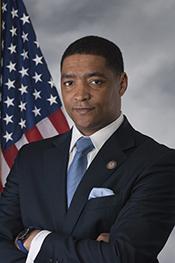
Cedric Richmond
Former U.S. Representative · Louisiana District 2 · 2011–2021 · Democratic
Cedric Richmond represented Louisiana's District 2 in the United States House of Representatives (2011–2021) for the Democratic party. The page below collects sourced biographical facts, term history, committee roles, and provenance for Richmond.
Bioguide ID: R000588
Key facts
- Full name
- Cedric Richmond
- State
- Louisiana
- District
- District 2
- Party
- Democratic
- House service
- 2011–2021
- First House term
- 2011
- Status
- Left office
- Current term ends
- —
- Born
- 1973
- Bioguide ID
- R000588
- Committee assignments
- —
- Dataset version
- 1.20260604
Biographical narrative
1,021 words · sourced from the Wikipedia REST extract
Cedric L. Richmond is a former American politician and attorney who served as a U.S. Representative for Louisiana's 2nd congressional district from 2011 until 2021. A member of the Democratic Party, Richmond's congressional career followed a decade-long tenure in the Louisiana House of Representatives, where he was known for his leadership roles and legislative initiatives. After leaving Congress, he took on a significant role as a senior advisor to the Democratic National Committee and served as a senior advisor to President Joe Biden, reflecting his continued influence in American politics.
Early life and career
Cedric L. Richmond was born on September 13, 1973, in New Orleans, Louisiana. He grew up in New Orleans East, where he attended local public schools. Richmond faced personal challenges early in life, including the death of his father when he was just seven years old. His mother, a public school teacher and small business owner, played a pivotal role in his upbringing, instilling in him the values of education and hard work.
Richmond completed his secondary education at Benjamin Franklin High School, known for its academic rigor. He then pursued higher education at Morehouse College, where he earned a Bachelor of Arts degree. During his time at Morehouse, he also played college baseball as a pitcher for the Maroon Tigers, competing in the Southern Intercollegiate Athletic Conference. Following his undergraduate studies, Richmond attended Tulane University, where he obtained his Juris Doctor degree. He furthered his education by completing an executive program at Harvard University's John F. Kennedy School of Government.
Richmond's political career began in the Louisiana House of Representatives, where he was elected to represent the 101st district, encompassing parts of Orleans Parish. He took office in 2000, shortly after turning 27, making him one of the youngest legislators in Louisiana's history. During his time in the state legislature, he held several key positions, including chairman of the House Committee on Judiciary and membership on the House Ways and Means Committee, the House Executive Committee, and the Legislative Audit Advisory Council. His legislative work in Louisiana laid the foundation for his later congressional career.
House tenure
Richmond transitioned to federal politics when he ran for the U.S. House of Representatives in 2010, seeking to represent Louisiana's 2nd congressional district. His campaign was notable for its early endorsement by President Barack Obama, who appeared in a television advertisement on Richmond's behalf. Richmond's candidacy was well-received, and he won the election on November 2, 2010, with a significant majority, securing 65% of the vote against Republican incumbent Joseph Cao.
Richmond officially took office in January 2011 and was subsequently reelected multiple times, serving a total of six terms in the House. His tenure was marked by active participation in various legislative initiatives and committee assignments. Notably, he served on the Committee on Homeland Security and the Committee on the Judiciary, where he contributed to discussions and decisions on a range of issues affecting his constituents and the nation.
Throughout his congressional career, Richmond was involved in several key legislative efforts. In 2012, he publicly opposed a proposal to redirect federal hurricane-recovery funds for renovations to the Superdome, expressing concerns about the priorities of the funding allocation. He introduced the Honor Flight Act in 2014, aimed at ensuring expedited screening for veterans traveling to visit war memorials. Richmond also took a bipartisan approach at times, defending a Republican colleague during a personal scandal, emphasizing the need for civility in political discourse.
Richmond's legislative record included a mix of support for various initiatives, including a controversial vote to authorize the Keystone XL pipeline. His financial ties to the fossil fuel industry were notable, as he ranked among the top recipients of donations from that sector among House Democrats. This aspect of his career drew scrutiny from environmental advocacy groups, which rated him lower than many of his Democratic peers.
In addition to his legislative work, Richmond played a significant role in the Congressional Black Caucus, serving as its chair during the 115th Congress. His leadership within this influential group highlighted his commitment to addressing issues affecting the African American community and advocating for policies that promote equity and justice.
Legislative focus and committees
During his time in the U.S. House of Representatives, Richmond served on several important committees that shaped his legislative focus. He was a member of the Committee on Homeland Security, where he chaired the Subcommittee on Cybersecurity, Infrastructure Protection, and Security Technologies. This role allowed him to address pressing issues related to national security and technological advancements in the face of evolving threats.
Richmond also served on the Committee on the Judiciary, where he participated in discussions on legal and constitutional matters. Within this committee, he was involved in the Subcommittee on Courts, Intellectual Property, and the Internet, as well as the Subcommittee on Crime, Terrorism, and Homeland Security. His work on these committees reflected his commitment to addressing a wide range of issues, from civil rights to public safety.
Richmond's legislative priorities included advocating for the needs of his constituents in Louisiana, particularly those in New Orleans, which was a significant part of his district. His focus on local issues, combined with his national legislative responsibilities, allowed him to navigate complex political landscapes effectively.
In December 2019, Richmond voted in favor of the first impeachment of President Donald Trump, aligning himself with the Democratic majority in the House. This vote was a pivotal moment in his congressional career, as it underscored his commitment to holding the executive branch accountable.
As his congressional tenure came to a close, Richmond announced his decision to leave the House in January 2021 to take on a new role as Senior Advisor to President Joe Biden and director of the White House Office of Public Engagement. This transition marked a new chapter in his career, allowing him to continue influencing national policy and political discourse from a different vantage point.
Richmond's career in public service reflects a commitment to his constituents and the broader goals of the Democratic Party. His legislative work, leadership roles, and subsequent advisory positions underscore his ongoing involvement in American politics and governance.
Notable legislation
Sponsored and co-sponsored legislation for Cedric Richmond is pending operator curation. The biographical narrative above carries the same provenance trail until per-bill rows are written.
Sources
- [1]https://en.wikipedia.org/wiki/Cedric_RichmondWikipedia · retrieved 2026-06-04
Notable quotes
Sourced quotes for Cedric Richmond are pending operator curation. Narrative-scope provenance remains attached below.
Sources
- [1]https://en.wikipedia.org/wiki/Cedric_RichmondWikipedia · retrieved 2026-06-04
Key positions
Curated policy positions for Cedric Richmond are pending operator review. The biographical narrative above carries the same provenance trail until per-topic positions are written.
Sources
- [1]https://en.wikipedia.org/wiki/Cedric_RichmondWikipedia · retrieved 2026-06-04
Terms served
- 2011–2013U.S. House · Term 1 · Democratic
- 2013–2015U.S. House · Term 2 · Democratic
- 2015–2017U.S. House · Term 3 · Democratic
- 2017–2019U.S. House · Term 4 · Democratic
- 2019–2021U.S. House · Term 5 · Democratic
- 2021–2021U.S. House · Term 6 · Democratic
Sources & provenance
Every attributable claim above carries a per-section [N] marker that resolves to the corresponding URL below. Each entry records the upstream provider, the canonical URL, and the timestamp at which the source was retrieved by the ingest pipeline.
Key facts
- https://bioguide.congress.gov/search/bio/R000588bioguide · retrieved 2026-06-04
- https://richmond.house.govhouse.gov · retrieved 2026-06-04
Biographical narrative
- https://en.wikipedia.org/wiki/Cedric_Richmondwikipedia · retrieved 2026-06-04
Find your representative
Every U.S. state elects representatives by district. Browse Louisiana’s delegation, the full former-representative roster, or explore the role and term length.
Related on The Candidate
- Preceded by Joseph CaoEarlier holder of the Louisiana District 2 House seat · Republican.Open
- Adolph MeyerFormer U.S. Representative · Louisiana District 1 · DemocraticOpen
- Albert EstopinalFormer U.S. Representative · Louisiana District 1 · DemocraticOpen
- Benjamin FlandersFormer U.S. Representative · Louisiana District 1 · UnionistOpen
- Bobby JindalFormer U.S. Representative · Louisiana District 1 · RepublicanOpen
- Democratic PartyFederal candidates and office holders on the Democratic line.Open