
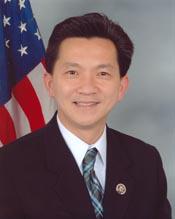
Historical · U.S. House · Louisiana · District 2
Joseph Cao
Former U.S. Representative · Louisiana District 2 · 2009–2011 · Republican
Joseph Cao represented Louisiana's District 2 in the United States House of Representatives (2009–2011) for the Republican party. The page below collects sourced biographical facts, term history, committee roles, and provenance for Cao.
Bioguide ID: C001079
Key facts
- Full name
- Joseph Cao
- State
- Louisiana
- District
- District 2
- Party
- Republican
- House service
- 2009–2011
- First House term
- 2009
- Status
- Left office
- Current term ends
- —
- Born
- 1967
- Bioguide ID
- C001079
- Committee assignments
- —
- Dataset version
- 1.20260605
Biographical narrative
974 words · sourced from the Wikipedia REST extract
Ánh Quang "Joseph" Cao is a former U.S. Representative who served Louisiana's 2nd congressional district from 2009 to 2011. A member of the Republican Party, he made history as the first Vietnamese American and the first native of Vietnam to serve in the United States Congress. His tenure was marked by a unique position within a predominantly Democratic district and a willingness to engage with bipartisan issues, including healthcare reform and campaign finance.
Early life and career
Joseph Cao was born on March 13, 1967, in Saigon, South Vietnam, into a family with a military background; his father, My Quang Cao, served as a lieutenant in the South Vietnamese Army. The end of the Vietnam War in 1975 brought significant upheaval to his family. At the age of eight, Cao was among the first to flee the country, escaping with his uncle alongside two siblings. This decision came after his father was captured by the North Vietnamese Army and subsequently imprisoned in a Communist re-education camp for seven years. During this time, Cao's mother remained in Vietnam with five of his siblings, only able to visit her husband a limited number of times.
The Cao family resettled in Houston, Texas, where they began to rebuild their lives as refugees. In 1982, after his release from prison, Cao's father joined the family in the United States, where he faced challenges related to post-traumatic stress disorder and diabetes. Growing up in a Catholic household, Cao initially pursued a path toward the priesthood. He attended public schools and graduated from Jersey Village High School before earning a Bachelor of Science degree in physics from Baylor University in Waco, Texas.
Cao's educational journey continued as he studied for six years as a Jesuit seminarian, ultimately deciding that the ministry was not his calling. He later obtained a Master of Arts in philosophy from Fordham University in New York City and earned a Juris Doctor degree from Loyola University School of Law in New Orleans in 2000. While attending law school, he also taught undergraduate courses in philosophy.
Following his legal education, Cao focused on immigration law, leveraging his background to assist Vietnamese refugees and immigrants. He volunteered with Boat People SOS (BPSOS), an organization dedicated to helping Vietnamese communities achieve self-sufficiency. His involvement with BPSOS included serving on its board from 1996 to 2002. After working with Waltzer & Associates, he established his own law practice in New Orleans, specializing in immigration issues. His experiences during Hurricane Katrina, particularly his dissatisfaction with the government's response to the disaster, motivated him to engage more actively in politics, particularly in advocating for the residents of New Orleans East against a proposed landfill.
House tenure
Cao entered the U.S. House of Representatives after winning a special election in 2008, marking a significant milestone as the first Vietnamese American and the first native of Vietnam to hold a congressional seat. His election was notable as he became the first Republican to represent Louisiana's 2nd congressional district since 1890, a district that had historically leaned Democratic. He won the election against an incumbent who had faced legal challenges, reflecting a shift in the political landscape of the area.
Cao was sworn into office on January 6, 2009, in a ceremony attended by family and members of the Vietnamese American community. He quickly established his congressional office and staff, securing committee assignments for the 111th Congress. His first speech on the House floor, delivered on March 24, 2009, supported a bill expressing congressional support for Welcome Home Vietnam Veterans Day. This marked the beginning of his active participation in legislative discussions.
During his time in Congress, Cao focused on securing federal funding for projects in his district, requesting earmarks totaling approximately $1.2 billion, significantly higher than the average for his Louisiana colleagues. His efforts garnered bipartisan support, including from Democratic Senator Mary Landrieu and former Congressman Bob Livingston, who assisted in the approval of several projects. Cao's background in law and his commitment to his constituents were evident as he sought to address their needs through federal resources.
Cao's engagement with environmental issues was also notable. He acknowledged the importance of addressing global warming and participated in discussions on related topics. His commitment to his district was further demonstrated when he attended a White House reception in April 2009, where he presented President Obama with a letter requesting substantial funding for the post-Katrina restoration of Charity Hospital in New Orleans.
Legislative focus and committees
Cao's legislative record included a willingness to cross party lines on certain issues. Notably, he was the only Republican congressman to vote in favor of the Patient Protection and Affordable Care Act, commonly referred to as "Obamacare," in November 2009. This decision underscored his approach to healthcare reform and his recognition of its potential impact on his constituents.
In June 2010, he was one of only two Republicans to support the DISCLOSE Act, which aimed to impose stricter regulations on political spending by corporations following the Supreme Court's ruling in Citizens United v. Federal Election Commission. This vote reflected his interest in campaign finance reform and transparency in political processes.
Despite his efforts and unique position within Congress, Cao faced challenges in the political landscape. After serving one term, he ran for re-election but was ultimately defeated in 2010. Following his congressional tenure, he briefly pursued a candidacy for attorney general of Louisiana in 2011 before withdrawing. In 2016, he attempted to secure a seat in the U.S. Senate but did not advance past the primary election.
Cao's time in the U.S. House of Representatives was characterized by his commitment to his constituents, his historical significance as a Vietnamese American politician, and his engagement in bipartisan legislative efforts. His career reflects the complexities of navigating a diverse political landscape while addressing the needs of a varied constituency.
Notable legislation
Sponsored and co-sponsored legislation for Joseph Cao is pending operator curation. The biographical narrative above carries the same provenance trail until per-bill rows are written.
Sources
- [1]https://en.wikipedia.org/wiki/Joseph_CaoWikipedia · retrieved 2026-06-05
Notable quotes
Sourced quotes for Joseph Cao are pending operator curation. Narrative-scope provenance remains attached below.
Sources
- [1]https://en.wikipedia.org/wiki/Joseph_CaoWikipedia · retrieved 2026-06-05
Key positions
Curated policy positions for Joseph Cao are pending operator review. The biographical narrative above carries the same provenance trail until per-topic positions are written.
Sources
- [1]https://en.wikipedia.org/wiki/Joseph_CaoWikipedia · retrieved 2026-06-05
Terms served
- 2009–2011U.S. House · Term 1 · Republican
Sources & provenance
Every attributable claim above carries a per-section [N] marker that resolves to the corresponding URL below. Each entry records the upstream provider, the canonical URL, and the timestamp at which the source was retrieved by the ingest pipeline.
Key facts
- https://bioguide.congress.gov/search/bio/C001079bioguide · retrieved 2026-06-05
- http://josephcao.house.govhouse.gov · retrieved 2026-06-05
Biographical narrative
- https://en.wikipedia.org/wiki/Joseph_Caowikipedia · retrieved 2026-06-05
Find your representative
Every U.S. state elects representatives by district. Browse Louisiana’s delegation, the full former-representative roster, or explore the role and term length.
Related on The Candidate
- Preceded by William JeffersonEarlier holder of the Louisiana District 2 House seat · Democratic.Open
- Succeeded by Cedric RichmondLater holder of the Louisiana District 2 House seat · Democratic.Open
- Adolph MeyerFormer U.S. Representative · Louisiana District 1 · DemocraticOpen
- Albert EstopinalFormer U.S. Representative · Louisiana District 1 · DemocraticOpen
- Benjamin FlandersFormer U.S. Representative · Louisiana District 1 · UnionistOpen
- Bobby JindalFormer U.S. Representative · Louisiana District 1 · RepublicanOpen