
Historical · U.S. House · Louisiana · District 2
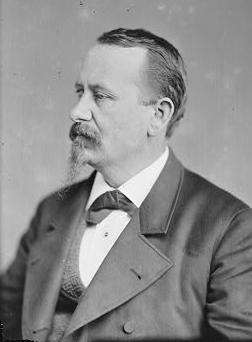
Ezekiel Ellis
Former U.S. Representative · Louisiana District 2 · 1875–1885 · Democratic
Ezekiel Ellis represented Louisiana's District 2 in the United States House of Representatives (1875–1885) for the Democratic party. The page below collects sourced biographical facts, term history, committee roles, and provenance for Ellis.
Bioguide ID: E000134
Key facts
- Full name
- Ezekiel Ellis
- State
- Louisiana
- District
- District 2
- Party
- Democratic
- House service
- 1875–1885
- First House term
- 1875
- Status
- Left office
- Current term ends
- —
- Born
- 1840
- Bioguide ID
- E000134
- Committee assignments
- —
- Dataset version
- 1.20260606
Biographical narrative
976 words · sourced from the Wikipedia REST extract
Ezekiel Ellis was a prominent political figure in Louisiana during the late 19th century, serving as a U.S. Representative for the state’s 2nd congressional district. A member of the Democratic Party, he held office for a decade, from 1875 to 1885, after a career that included military service in the Confederate Army during the American Civil War and a term in the Louisiana State Senate. His contributions to both state and national politics were shaped by his experiences in the military and his legal background, which he utilized throughout his political career.
Early life and career
Ezekiel John Ellis was born on October 15, 1840, in Covington, Louisiana, located in St. Tammany Parish. He was the son of Ezekiel Parke Ellis and Tabitha Emily Warner. His early education took place in private schools in Covington and Clinton, Louisiana, where he laid the groundwork for his future academic pursuits. From 1855 to 1858, he attended Centenary College of Louisiana, which at that time was situated in Jackson, Louisiana. This educational background provided him with a solid foundation in the liberal arts, which would later serve him well in his professional endeavors.
In 1861, Ellis graduated from the law department of Louisiana State University at Pineville, which is now located in Baton Rouge. His legal education equipped him with the skills necessary for a career in law and politics. Shortly after completing his studies, the Civil War broke out, and Ellis enlisted in the Confederate States Army. He began his military service as a first lieutenant and quickly rose to the rank of captain in the Sixteenth Regiment, Louisiana Infantry. His military career was marked by significant challenges, including his capture during the Battle of Missionary Ridge in Tennessee around November 25, 1863. Following his capture, he was imprisoned at Johnson's Island in Lake Erie, where he remained until the conclusion of the war. During his time as a prisoner of war, Ellis documented his experiences in a diary titled "A Retrospect," providing insights into the life of a soldier during this tumultuous period.
After the Civil War, Ellis returned to Louisiana, where he was admitted to the bar in 1866, allowing him to practice law in Covington. His legal career began to flourish, and he soon transitioned into politics, serving as a member of the Louisiana State Senate from 1866 to 1870. This position marked the beginning of his formal political career, during which he gained valuable experience in governance and legislative processes.
House tenure
Ezekiel Ellis's congressional career began when he was elected to the U.S. House of Representatives, representing Louisiana's 2nd congressional district. He was first elected to the Forty-fourth Congress, which commenced on March 4, 1875. Over the course of his political career, he was re-elected to four additional terms, serving in total for ten years until his last term ended on March 3, 1885. His tenure in Congress was characterized by his active participation in various legislative matters, particularly those affecting his home state of Louisiana.
During his time in the House, Ellis was involved in numerous discussions and decisions that shaped the legislative landscape of the post-Civil War United States. His experience as a former soldier and his legal background informed his perspectives on issues related to reconstruction, civil rights, and economic development in the South. He was particularly focused on matters that would benefit his constituents and the broader region of Louisiana.
In the Forty-fourth Congress, Ellis served as the chairman of the Committee on Mississippi Levees, a role that underscored his commitment to addressing the challenges posed by flooding and water management in the Mississippi River basin. This position allowed him to advocate for infrastructure improvements and flood control measures that were crucial for the agricultural economy of Louisiana, which relied heavily on the fertile lands along the river.
Despite his successes in Congress, Ellis chose not to seek renomination in 1884, marking the end of his congressional career. After leaving office, he returned to his legal practice, this time in Washington, D.C., where he continued to apply his legal expertise and engage with the political community.
Legislative focus and committees
Throughout his congressional tenure, Ezekiel Ellis's legislative focus was shaped by the needs of his constituents and the broader context of post-Civil War America. His work on the Committee on Mississippi Levees highlighted his commitment to addressing the pressing issues of flood management and infrastructure development in Louisiana. The Mississippi River was a critical artery for commerce and agriculture, and Ellis's leadership in this area reflected his understanding of the economic challenges faced by his state.
In addition to his work on levee management, Ellis's legislative efforts were likely influenced by the broader political climate of the time, which included debates over civil rights, economic recovery, and the reintegration of Southern states into the Union. The post-war period was marked by significant social and political upheaval, and Ellis's experiences as a soldier and a member of the state legislature provided him with a unique perspective on these issues.
While specific details of his legislative initiatives and voting record are not extensively documented, it is clear that Ellis's background in law and his commitment to his constituents guided his actions in Congress. His ability to navigate the complexities of federal legislation and advocate for the interests of Louisiana positioned him as a significant figure in the political landscape of his time.
After concluding his congressional service, Ellis continued to practice law in Washington, D.C., where he remained engaged in legal and political matters until his death on April 25, 1889. He was interred in the Ellis family cemetery at "Ingleside," located near Amite in Tangipahoa Parish, Louisiana. His legacy as a public servant and a soldier reflects the multifaceted nature of his contributions to both his state and the nation during a critical period in American history.
Notable legislation
Sponsored and co-sponsored legislation for Ezekiel Ellis is pending operator curation. The biographical narrative above carries the same provenance trail until per-bill rows are written.
Sources
- [1]https://en.wikipedia.org/wiki/E._John_EllisWikipedia · retrieved 2026-06-06
Notable quotes
Sourced quotes for Ezekiel Ellis are pending operator curation. Narrative-scope provenance remains attached below.
Sources
- [1]https://en.wikipedia.org/wiki/E._John_EllisWikipedia · retrieved 2026-06-06
Key positions
Curated policy positions for Ezekiel Ellis are pending operator review. The biographical narrative above carries the same provenance trail until per-topic positions are written.
Sources
- [1]https://en.wikipedia.org/wiki/E._John_EllisWikipedia · retrieved 2026-06-06
Terms served
- 1875–1877U.S. House · Term 1 · Democratic
- 1877–1879U.S. House · Term 2 · Democratic
- 1879–1881U.S. House · Term 3 · Democratic
- 1881–1883U.S. House · Term 4 · Democratic
- 1883–1885U.S. House · Term 5 · Democratic
Sources & provenance
Every attributable claim above carries a per-section [N] marker that resolves to the corresponding URL below. Each entry records the upstream provider, the canonical URL, and the timestamp at which the source was retrieved by the ingest pipeline.
Key facts
- https://bioguide.congress.gov/search/bio/E000134bioguide · retrieved 2026-06-06
- https://www.govtrack.us/congress/members/403825govtrack · retrieved 2026-06-06
Biographical narrative
- https://en.wikipedia.org/wiki/E._John_Elliswikipedia · retrieved 2026-06-06
Find your representative
Every U.S. state elects representatives by district. Browse Louisiana’s delegation, the full former-representative roster, or explore the role and term length.
Related on The Candidate
- Preceded by Lionel SheldonEarlier holder of the Louisiana District 2 House seat · Republican.Open
- Succeeded by Nathaniel WallaceLater holder of the Louisiana District 2 House seat · Democratic.Open
- Adolph MeyerFormer U.S. Representative · Louisiana District 1 · DemocraticOpen
- Albert EstopinalFormer U.S. Representative · Louisiana District 1 · DemocraticOpen
- Benjamin FlandersFormer U.S. Representative · Louisiana District 1 · UnionistOpen
- Bobby JindalFormer U.S. Representative · Louisiana District 1 · RepublicanOpen