
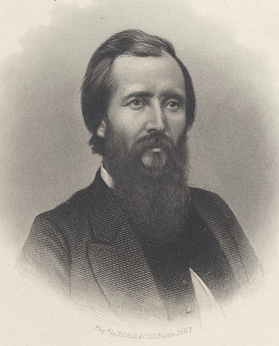
Historical · U.S. House · Louisiana · District 2
Lionel Sheldon
Former U.S. Representative · Louisiana District 2 · 1869–1875 · Republican
Lionel Sheldon represented Louisiana's District 2 in the United States House of Representatives (1869–1875) for the Republican party. The page below collects sourced biographical facts, term history, committee roles, and provenance for Sheldon.
Bioguide ID: S000322
Key facts
- Full name
- Lionel Sheldon
- State
- Louisiana
- District
- District 2
- Party
- Republican
- House service
- 1869–1875
- First House term
- 1869
- Status
- Left office
- Current term ends
- —
- Born
- 1828
- Bioguide ID
- S000322
- Committee assignments
- —
- Dataset version
- 1.20260606
Biographical narrative
875 words · sourced from the Wikipedia REST extract
Lionel Allen Sheldon was a prominent figure in American politics during the late 19th century, serving as a U.S. Representative from Louisiana and later as the governor of the New Mexico Territory. A member of the Republican Party, Sheldon played a significant role in both military and civil service, particularly during the tumultuous years of the American Civil War and the subsequent reconstruction era. His career spanned various roles, including military leadership and political appointments, reflecting a commitment to public service that extended beyond his congressional tenure.
Early life and career
Lionel Sheldon was born on August 30, 1828, in Worcester, New York, to parents Allen and Anna Marie (Des Les Dernier) Sheldon. His early life was marked by a move to Lagrange, Ohio, where he continued his education. Sheldon attended local district schools before enrolling at Oberlin College in Oberlin, Ohio, from 1848 to 1850. Following his time at Oberlin, he graduated from Fowler's State and National Law School in Poughkeepsie, New York, in 1853. After being admitted to the bar in the same year, Sheldon began his legal practice in Elyria, Ohio.
Sheldon’s early career included a brief stint as the probate judge of Lorain County, Ohio, serving in this capacity during 1856 and 1857. His legal background and involvement in local governance laid the groundwork for his future political endeavors. In 1858, he was appointed a brigadier general in the Ohio militia by Governor Salmon P. Chase, indicating his early engagement in both military and civic responsibilities.
House tenure
Sheldon’s political career took a significant turn when he was elected to the United States House of Representatives as a Republican. His first term began on March 4, 1869, and he continued to serve in the House for three consecutive terms, concluding his service on March 3, 1875. During his time in Congress, Sheldon was involved in various legislative activities and was appointed as the chairman of the Committee on Militia during the Forty-second Congress. This position allowed him to influence military-related legislation, reflecting his background and experience in military service.
Throughout his congressional tenure, Sheldon participated in the political landscape of the post-Civil War era, a time characterized by significant changes and challenges in American society. His legislative focus and the issues he championed were likely influenced by his military background and the needs of his constituents in Louisiana. However, despite his active participation in Congress, Sheldon was not successful in his bid for re-election to the Forty-fourth Congress in 1874, which marked the end of his time in the House.
After leaving Congress, Sheldon returned to Ohio in 1879, where he remained politically active. He played a role in the presidential campaign of James Garfield, a fellow Republican and personal friend. Following Garfield's election, Sheldon was appointed governor of the New Mexico Territory, a position he held from 1881 until his resignation in 1885.
Legislative focus and committees
During his time in the House of Representatives, Lionel Sheldon was primarily focused on issues related to military affairs, as evidenced by his role as chairman of the Committee on Militia. This committee was responsible for overseeing legislation related to the organization, training, and funding of the military forces of the United States. Given the context of the post-Civil War period, such oversight was crucial as the nation sought to rebuild and redefine its military structure.
Sheldon’s legislative activities were likely influenced by his experiences as a military officer during the Civil War. He had served as a lieutenant colonel of the 42nd Ohio Volunteer Infantry Regiment, where he demonstrated leadership in various significant battles, including Middle Creek, Chickasaw Bayou, and the siege of Vicksburg. His military service not only provided him with firsthand knowledge of military operations but also shaped his perspective on the importance of a well-organized and adequately funded military.
In addition to his legislative work, Sheldon was also involved in various political activities outside of Congress. He served as a delegate to the Republican National Convention in 1856, 1880, and 1896, representing different states at each convention: Ohio, Louisiana, and California. This involvement in national politics further illustrates his commitment to the Republican Party and his adaptability to different political landscapes throughout his career.
After his congressional tenure, Sheldon’s appointment as governor of the New Mexico Territory marked a significant transition in his career. As governor, he faced challenges, including resistance from local officials and citizens. Despite these obstacles, he focused on strengthening the territorial militia and addressing issues related to law enforcement and public safety. His administration was marked by efforts to initiate construction projects, including the establishment of a penitentiary, which reflected his commitment to improving the infrastructure and governance of the territory.
In his later years, Sheldon relocated to Los Angeles, California, in 1888, where he continued to practice law. He eventually moved to Pasadena, California, where he lived until his death on January 17, 1917. Throughout his life, Sheldon’s career was characterized by a blend of military service, legal practice, and political engagement, reflecting the diverse roles he played in shaping the governance of his time. His legacy includes his contributions to both military and civil service, as well as his involvement in the political developments of the post-Civil War United States.
Notable legislation
Sponsored and co-sponsored legislation for Lionel Sheldon is pending operator curation. The biographical narrative above carries the same provenance trail until per-bill rows are written.
Sources
- [1]https://en.wikipedia.org/wiki/Lionel_Allen_SheldonWikipedia · retrieved 2026-06-06
Notable quotes
Sourced quotes for Lionel Sheldon are pending operator curation. Narrative-scope provenance remains attached below.
Sources
- [1]https://en.wikipedia.org/wiki/Lionel_Allen_SheldonWikipedia · retrieved 2026-06-06
Key positions
Curated policy positions for Lionel Sheldon are pending operator review. The biographical narrative above carries the same provenance trail until per-topic positions are written.
Sources
- [1]https://en.wikipedia.org/wiki/Lionel_Allen_SheldonWikipedia · retrieved 2026-06-06
Terms served
- 1869–1871U.S. House · Term 1 · Republican
- 1871–1873U.S. House · Term 2 · Republican
- 1873–1875U.S. House · Term 3 · Republican
Sources & provenance
Every attributable claim above carries a per-section [N] marker that resolves to the corresponding URL below. Each entry records the upstream provider, the canonical URL, and the timestamp at which the source was retrieved by the ingest pipeline.
Key facts
- https://bioguide.congress.gov/search/bio/S000322bioguide · retrieved 2026-06-06
- https://www.govtrack.us/congress/members/409819govtrack · retrieved 2026-06-06
Biographical narrative
- https://en.wikipedia.org/wiki/Lionel_Allen_Sheldonwikipedia · retrieved 2026-06-06
Find your representative
Every U.S. state elects representatives by district. Browse Louisiana’s delegation, the full former-representative roster, or explore the role and term length.
Related on The Candidate
- Preceded by James MannEarlier holder of the Louisiana District 2 House seat · Democratic.Open
- Succeeded by Ezekiel EllisLater holder of the Louisiana District 2 House seat · Democratic.Open
- Adolph MeyerFormer U.S. Representative · Louisiana District 1 · DemocraticOpen
- Albert EstopinalFormer U.S. Representative · Louisiana District 1 · DemocraticOpen
- Benjamin FlandersFormer U.S. Representative · Louisiana District 1 · UnionistOpen
- Bobby JindalFormer U.S. Representative · Louisiana District 1 · RepublicanOpen