
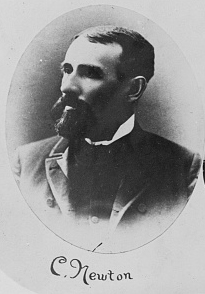
Historical · U.S. House · Louisiana · District 5
Cherubusco Newton
Former U.S. Representative · Louisiana District 5 · 1887–1889 · Democratic
Cherubusco Newton represented Louisiana's District 5 in the United States House of Representatives (1887–1889) for the Democratic party. The page below collects sourced biographical facts, term history, committee roles, and provenance for Newton.
Bioguide ID: N000074
Key facts
- Full name
- Cherubusco Newton
- State
- Louisiana
- District
- District 5
- Party
- Democratic
- House service
- 1887–1889
- First House term
- 1887
- Status
- Left office
- Current term ends
- —
- Born
- 1848
- Bioguide ID
- N000074
- Committee assignments
- —
- Dataset version
- 1.20260606
Biographical narrative
946 words · sourced from the Wikipedia REST extract
Cherubusco Newton was an American lawyer and politician who served as a U.S. Representative for Louisiana's 5th congressional district from 1887 to 1889. A member of the Democratic Party, he had a brief but notable political career during a period of significant change in the United States. His contributions to the legislative process, as well as his earlier roles in state politics, reflect the complexities of the political landscape of the late 19th century.
Early life and career
Cherubusco Newton was born on May 15, 1848, in Greensburg, located in St. Helena Parish, Louisiana. His early education took place in private schools in Bastrop, Louisiana, where he developed a foundation for his future endeavors. Following his primary education, he attended Louisiana State University, which at the time was situated in Alexandria, Louisiana. This educational background provided him with the knowledge and skills necessary for his later career in law and politics.
While pursuing his studies, Newton also took on the responsibility of teaching school, an experience that likely enhanced his communication skills and understanding of public service. His commitment to education and self-improvement culminated in his admission to the bar in 1870, allowing him to begin his legal practice in Bastrop. This transition marked the beginning of his professional career, where he would establish himself as a prominent figure in the local legal community.
In addition to his legal work, Newton's political aspirations began to take shape when he was elected to the Louisiana State Senate, where he served from 1879 to 1883. His tenure in the state legislature provided him with valuable insights into governance and legislative processes. During this period, he engaged with various issues pertinent to Louisiana and its citizens, building a reputation as a dedicated public servant. In 1885, he was offered a judgeship, which he ultimately declined, indicating his preference to remain active in the political arena rather than take on a judicial role.
House tenure
Cherubusco Newton's congressional career began when he was elected as a Democrat to the Fiftieth Congress, which convened on March 4, 1887. His election to the U.S. House of Representatives represented a significant milestone in his political journey, as he transitioned from state politics to a national platform. During his time in Congress, he served the constituents of Louisiana's 5th congressional district, a region characterized by its diverse population and economic activities.
Newton's term in the House lasted until March 3, 1889. Throughout this period, he participated in the legislative discussions and decisions that shaped the nation during the late 19th century. His role as a U.S. Representative would have involved addressing a variety of issues, including economic policies, civil rights, and the challenges faced by his home state of Louisiana. However, his congressional career was relatively short-lived, as he was unsuccessful in his bid for renomination in 1888. This defeat marked the end of his time in Congress, but it did not signify the end of his involvement in public life.
In addition to his congressional duties, Newton was also a delegate to the Democratic National Convention in 1888. This role allowed him to engage with party leaders and contribute to the broader political discourse of the time. His participation in the convention underscored his commitment to the Democratic Party and its values, as well as his desire to remain active in political circles even after his congressional term concluded.
Legislative focus and committees
While specific details regarding Cherubusco Newton's legislative focus and committee assignments during his time in Congress are not extensively documented, it can be inferred that his background as a lawyer and his experience in the Louisiana State Senate influenced his approach to legislation. As a member of the Democratic Party, he likely aligned with the party's platform, which during this era emphasized issues such as economic development, civil rights, and social justice.
Newton's legal expertise would have been beneficial in navigating the complexities of legislative matters, allowing him to contribute meaningfully to discussions on various bills and policies. His role in the House would have involved collaboration with fellow legislators, engaging in debates, and advocating for the interests of his constituents. The late 19th century was a time of significant transformation in the United States, with issues such as industrialization, immigration, and civil rights coming to the forefront of national discourse. As a representative from Louisiana, Newton would have been particularly attuned to the unique challenges faced by his state, including the legacy of the Civil War and the ongoing struggles for civil rights among African Americans.
After his congressional tenure, Newton returned to his legal practice in Bastrop, where he continued to serve his community until he relocated to Monroe, Ouachita Parish, Louisiana. His decision to continue practicing law after leaving Congress suggests a commitment to public service and a desire to contribute to the legal and civic life of his community. He remained active in the legal field until his death on May 26, 1910, at the age of 62. Following his passing, he was interred in the New Cemetery in Bastrop, Louisiana, leaving behind a legacy as a lawyer and politician who engaged with the evolving political landscape of his time.
Cherubusco Newton's life and career reflect the experiences of many individuals who navigated the complexities of American politics during the late 19th century. His journey from a small-town lawyer to a U.S. Representative illustrates the opportunities and challenges faced by politicians of that era. Through his service in the Louisiana State Senate and the U.S. House of Representatives, he contributed to the political discourse of his time, advocating for the interests of his constituents and engaging with the pressing issues of the day.
Notable legislation
Sponsored and co-sponsored legislation for Cherubusco Newton is pending operator curation. The biographical narrative above carries the same provenance trail until per-bill rows are written.
Sources
- [1]https://en.wikipedia.org/wiki/Cherubusco_NewtonWikipedia · retrieved 2026-06-06
Notable quotes
Sourced quotes for Cherubusco Newton are pending operator curation. Narrative-scope provenance remains attached below.
Sources
- [1]https://en.wikipedia.org/wiki/Cherubusco_NewtonWikipedia · retrieved 2026-06-06
Key positions
Curated policy positions for Cherubusco Newton are pending operator review. The biographical narrative above carries the same provenance trail until per-topic positions are written.
Sources
- [1]https://en.wikipedia.org/wiki/Cherubusco_NewtonWikipedia · retrieved 2026-06-06
Terms served
- 1887–1889U.S. House · Term 1 · Democratic
Sources & provenance
Every attributable claim above carries a per-section [N] marker that resolves to the corresponding URL below. Each entry records the upstream provider, the canonical URL, and the timestamp at which the source was retrieved by the ingest pipeline.
Key facts
- https://bioguide.congress.gov/search/bio/N000074bioguide · retrieved 2026-06-06
- https://www.govtrack.us/congress/members/408161govtrack · retrieved 2026-06-06
Biographical narrative
- https://en.wikipedia.org/wiki/Cherubusco_Newtonwikipedia · retrieved 2026-06-06
Find your representative
Every U.S. state elects representatives by district. Browse Louisiana’s delegation, the full former-representative roster, or explore the role and term length.
Related on The Candidate
- Preceded by John KingEarlier holder of the Louisiana District 5 House seat · Democratic.Open
- Succeeded by Charles BoatnerLater holder of the Louisiana District 5 House seat · Democratic.Open
- Adolph MeyerFormer U.S. Representative · Louisiana District 1 · DemocraticOpen
- Albert EstopinalFormer U.S. Representative · Louisiana District 1 · DemocraticOpen
- Benjamin FlandersFormer U.S. Representative · Louisiana District 1 · UnionistOpen
- Bobby JindalFormer U.S. Representative · Louisiana District 1 · RepublicanOpen