
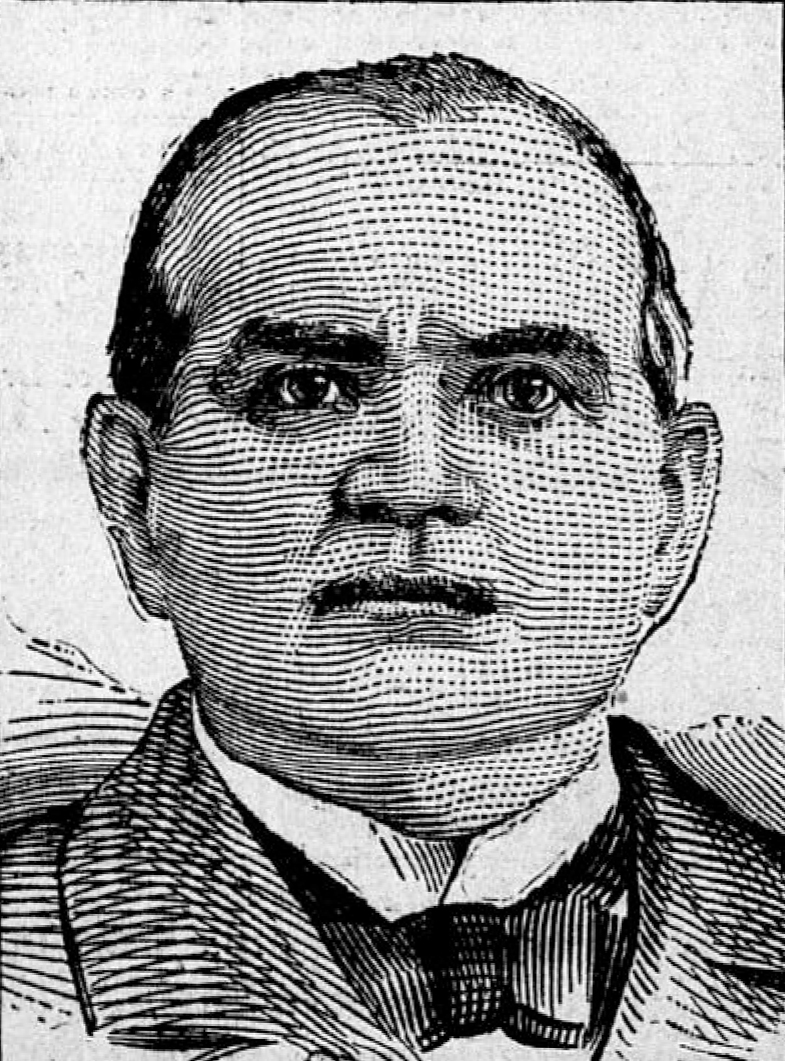
Historical · U.S. House · Louisiana · District 5
John King
Former U.S. Representative · Louisiana District 5 · 1879–1887 · Democratic
John King represented Louisiana's District 5 in the United States House of Representatives (1879–1887) for the Democratic party. The page below collects sourced biographical facts, term history, committee roles, and provenance for King.
Bioguide ID: K000206
Key facts
- Full name
- John King
- State
- Louisiana
- District
- District 5
- Party
- Democratic
- House service
- 1879–1887
- First House term
- 1879
- Status
- Left office
- Current term ends
- —
- Born
- 1842
- Bioguide ID
- K000206
- Committee assignments
- —
- Dataset version
- 1.20260606
Biographical narrative
896 words · sourced from the Wikipedia REST extract
John King was a U.S. Representative from Louisiana, serving as a member of the Democratic Party. His congressional career spanned four terms from 1879 to 1887, during which he represented Louisiana's 5th congressional district. Born in 1842, King had a diverse background that included military service, law, and local governance before his tenure in Congress. He was involved in various civic and professional roles throughout his life, contributing to his community and the state of Louisiana until his death in 1915.
Early life and career
John Floyd King was born on April 20, 1842, on St. Simons Island, located off the coast of Georgia. He was born into a politically engaged family, being the son of Thomas Butler King, a Congressman from Georgia. Additionally, he was the nephew of Henry King, who also served as a Congressman, indicating a family legacy of political involvement.
King's education included attendance at several institutions, such as the Russell School in New Haven, Connecticut, and the Bartlett's College Hill School in Poughkeepsie, New York. He also studied at the Military Institute of Georgia and the University of Virginia in Charlottesville. This varied educational background provided him with a foundation that would serve him in his future endeavors.
With the onset of the Civil War, King enlisted in the Confederate States Army, where he served in the Army of Virginia. Throughout the conflict, he rose to the rank of colonel of Artillery, demonstrating leadership and military capability during a tumultuous period in American history. Following the war, King relocated to Louisiana, where he engaged in agricultural pursuits, specifically planting.
In addition to his work in agriculture, King pursued a legal career. He studied law and was admitted to the bar in 1872, beginning his legal practice in Vidalia, Louisiana. His involvement in the community extended beyond law; he was appointed as brigadier general of state troops, reflecting his continued commitment to public service and leadership.
King's civic engagement included various roles, such as serving as inspector of levees and president of the board of school directors in his district. He also held a position as a trustee of the University of the South, further illustrating his dedication to education and community development.
House tenure
John King was elected to the U.S. House of Representatives as a Democrat, beginning his first term on March 4, 1879. He served a total of four consecutive terms, concluding his congressional career on March 3, 1887. During his time in the House, King represented Louisiana's 5th congressional district, a role that allowed him to influence legislation and advocate for the interests of his constituents.
Throughout his tenure, King was involved in various legislative matters, particularly those related to his district and the broader needs of Louisiana. His experience in local governance and understanding of regional issues likely informed his approach to federal legislation.
King's leadership capabilities were recognized when he was appointed as chairman of the Committee on Levees and Improvements of the Mississippi River during the Forty-eighth and Forty-ninth Congresses. This committee was crucial given the importance of levee systems in managing the Mississippi River, which was vital for flood control and navigation. His role in this committee underscored his commitment to addressing infrastructure and environmental challenges that affected his state.
Despite his contributions, King faced challenges in maintaining his position. He was an unsuccessful candidate for renomination in 1886, which marked the end of his congressional career. Following his departure from Congress, King continued to engage in various professional pursuits.
Legislative focus and committees
During his time in the U.S. House of Representatives, John King focused on issues pertinent to his constituents and the state of Louisiana. His role as chairman of the Committee on Levees and Improvements of the Mississippi River was particularly significant, as it involved overseeing critical infrastructure projects that impacted the livelihoods of many in his district. The Mississippi River is a central artery for commerce and transportation in the region, making the management of its levees and improvements essential for economic stability and safety.
King's legislative priorities likely reflected the needs of his district, which included agricultural interests, flood management, and education. His background in law and local governance provided him with insights into the legislative process and the importance of effective public policy. His previous roles in local government, such as his position as president of the board of school directors, would have informed his understanding of educational issues and community needs.
While specific legislative achievements during King's tenure are not detailed, his involvement in the committee focused on levees indicates a commitment to addressing significant regional challenges. The Mississippi River's management was a pressing concern for many lawmakers from Louisiana, and King's leadership in this area would have been crucial in advocating for necessary funding and legislative support.
After leaving Congress, King continued his professional journey, engaging in mining operations and holding a position as the Assistant Register of the United States Treasury from May 1914 until his death. His diverse career reflects a continued commitment to public service and community engagement throughout his life.
John King passed away on May 8, 1915, in Washington, D.C. He was interred at Arlington National Cemetery, a testament to his service and contributions to the nation. His life and career illustrate the multifaceted roles that individuals can play in public service, from military service to legislative leadership.
Notable legislation
Sponsored and co-sponsored legislation for John King is pending operator curation. The biographical narrative above carries the same provenance trail until per-bill rows are written.
Sources
- [1]https://en.wikipedia.org/wiki/J._Floyd_KingWikipedia · retrieved 2026-06-06
Notable quotes
Sourced quotes for John King are pending operator curation. Narrative-scope provenance remains attached below.
Sources
- [1]https://en.wikipedia.org/wiki/J._Floyd_KingWikipedia · retrieved 2026-06-06
Key positions
Curated policy positions for John King are pending operator review. The biographical narrative above carries the same provenance trail until per-topic positions are written.
Sources
- [1]https://en.wikipedia.org/wiki/J._Floyd_KingWikipedia · retrieved 2026-06-06
Terms served
- 1879–1881U.S. House · Term 1 · Democratic
- 1881–1883U.S. House · Term 2 · Democratic
- 1883–1885U.S. House · Term 3 · Democratic
- 1885–1887U.S. House · Term 4 · Democratic
Sources & provenance
Every attributable claim above carries a per-section [N] marker that resolves to the corresponding URL below. Each entry records the upstream provider, the canonical URL, and the timestamp at which the source was retrieved by the ingest pipeline.
Key facts
- https://bioguide.congress.gov/search/bio/K000206bioguide · retrieved 2026-06-06
- https://www.govtrack.us/congress/members/406367govtrack · retrieved 2026-06-06
Biographical narrative
- https://en.wikipedia.org/wiki/J._Floyd_Kingwikipedia · retrieved 2026-06-06
Find your representative
Every U.S. state elects representatives by district. Browse Louisiana’s delegation, the full former-representative roster, or explore the role and term length.
Related on The Candidate
- Preceded by John LeonardEarlier holder of the Louisiana District 5 House seat · Republican.Open
- Succeeded by Cherubusco NewtonLater holder of the Louisiana District 5 House seat · Democratic.Open
- Adolph MeyerFormer U.S. Representative · Louisiana District 1 · DemocraticOpen
- Albert EstopinalFormer U.S. Representative · Louisiana District 1 · DemocraticOpen
- Benjamin FlandersFormer U.S. Representative · Louisiana District 1 · UnionistOpen
- Bobby JindalFormer U.S. Representative · Louisiana District 1 · RepublicanOpen