
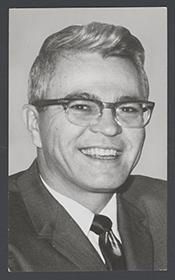
Historical · U.S. House · Louisiana · District 6
John Rarick
Former U.S. Representative · Louisiana District 6 · 1967–1975 · Democratic
John Rarick represented Louisiana's District 6 in the United States House of Representatives (1967–1975) for the Democratic party. The page below collects sourced biographical facts, term history, committee roles, and provenance for Rarick.
Bioguide ID: R000065
Key facts
- Full name
- John Rarick
- State
- Louisiana
- District
- District 6
- Party
- Democratic
- House service
- 1967–1975
- First House term
- 1967
- Status
- Left office
- Current term ends
- —
- Born
- 1924
- Bioguide ID
- R000065
- Committee assignments
- —
- Dataset version
- 1.20260605
Biographical narrative
913 words · sourced from the Wikipedia REST extract
John R. Rarick was an American lawyer and politician who served as a U.S. Representative for Louisiana's 6th congressional district from 1967 until 1975. A member of the Democratic Party, Rarick was known for his controversial views and rhetoric during his time in office. His political career followed a distinguished military service in World War II, where he earned commendations for his bravery. After leaving Congress, Rarick remained active in Louisiana politics and law until his death in 2009.
Early life and career
John Richard Rarick was born on January 29, 1924, in Waterford, Indiana, to Mae Caroline Clover and Merl Rarick. He completed his secondary education at Goshen High School before enlisting in the United States Army during World War II. As a cadet, he was stationed at barracks established at Louisiana State University in Baton Rouge, Louisiana. Rarick's military service was marked by his participation in the Battle of the Bulge, a significant engagement during the war. He was captured by German forces and subsequently held as a prisoner of war. For his service, Rarick received the Bronze Star and the Purple Heart, recognizing his bravery and sacrifices during the conflict.
After the war, Rarick returned to Louisiana, where he pursued higher education at Louisiana State University. He graduated and went on to attend Tulane University School of Law, earning his Juris Doctor degree in 1949. Following his graduation, he successfully passed the Louisiana bar exam and began practicing law in the state. His legal career progressed when he was elected as a district judge in Louisiana's Twentieth Judicial District in 1961. He served in this judicial capacity until May 15, 1966, when he resigned to pursue a congressional seat.
Rarick's tenure as a judge was not without controversy. During this time, he faced criticism for racially charged comments made in a courtroom setting. Despite these controversies, he transitioned into politics, motivated by a desire to represent his constituents in Congress.
House tenure
Rarick announced his candidacy for the U.S. House of Representatives in 1966, seeking to represent Louisiana's 6th congressional district. His campaign was largely a reaction to the perceived moderation of the incumbent Democratic Congressman James Morrison, who had supported the Voting Rights Act of 1965. Rarick positioned himself as a more conservative alternative, criticizing Morrison for his alignment with President Lyndon B. Johnson's policies, which were increasingly unpopular among Southern Democrats.
The Democratic primary was contentious, with Morrison narrowly missing an outright victory in the first round. Rarick's campaign capitalized on Morrison's vulnerabilities, particularly his support for civil rights legislation, which Rarick framed as a betrayal of Southern values. Ultimately, Rarick won the primary runoff, securing 51.2% of the vote. This victory effectively guaranteed his election in the heavily Democratic district, where he subsequently defeated Republican nominee Crayton G. Hall in the general election.
Rarick took office in January 1967 as a member of the 90th U.S. Congress and was re-elected in 1968, 1970, and 1972. Throughout his congressional tenure, Rarick became known for his racially charged rhetoric. He frequently made headlines for inserting criticisms of prominent Black and Jewish leaders into the Congressional Record, which drew significant attention and condemnation. His comments included personal attacks on figures such as Supreme Court Justice Thurgood Marshall and civil rights leader Martin Luther King Jr. In 1972, fellow Congressman Charles Diggs labeled Rarick "the leading racist in Congress" after Rarick expressed concerns that self-governance for Washington, D.C., could lead to control by groups he deemed undesirable.
In addition to his controversial statements, Rarick also made an unsuccessful bid for the governorship of Louisiana in 1967, where he lost to incumbent Democrat John McKeithen by a significant margin.
Legislative focus and committees
During his time in Congress, Rarick's legislative focus reflected his conservative stance on various issues. He was particularly vocal on matters related to civil rights, often opposing measures that aimed to expand rights for marginalized communities. His rhetoric and positions often aligned with the sentiments of a segment of his constituents who were resistant to the changes brought about by the civil rights movement.
Rarick's tenure was marked by a series of contentious elections, culminating in his defeat in the 1974 Democratic primary. He lost to 29-year-old challenger Jeff LaCaze, which opened the door for Republican candidate Henson Moore to win the general election. The election was notable for its narrow margins, leading to a court-ordered rerun in which Moore ultimately prevailed.
After leaving Congress, Rarick returned to Louisiana, where he resumed his legal practice and engaged in local community initiatives. He made attempts to re-enter the political arena, running as an independent candidate for his former congressional seat in 1976, though this effort was unsuccessful. Additionally, he sought the presidency in 1980 under the American Independent Party banner, but did not achieve significant traction.
Rarick's later political affiliations included support for David Duke, a former Grand Wizard of the Ku Klux Klan, during Duke's campaign for governor of Louisiana in 1991. Rarick's involvement in Duke's campaign further underscored his controversial legacy and the polarizing nature of his political views.
John R. Rarick passed away on September 14, 2009, in St. Francisville, Louisiana, at the age of 85. He was preceded in death by his first wife, Marguerite Pierce Rarick, and is survived by his second wife, Frances Eldred Campbell Rarick, along with three children. His life and career remain a subject of discussion regarding the complexities of race, politics, and representation in the United States.
Notable legislation
Sponsored and co-sponsored legislation for John Rarick is pending operator curation. The biographical narrative above carries the same provenance trail until per-bill rows are written.
Sources
- [1]https://en.wikipedia.org/wiki/John_RarickWikipedia · retrieved 2026-06-05
Notable quotes
Sourced quotes for John Rarick are pending operator curation. Narrative-scope provenance remains attached below.
Sources
- [1]https://en.wikipedia.org/wiki/John_RarickWikipedia · retrieved 2026-06-05
Key positions
Curated policy positions for John Rarick are pending operator review. The biographical narrative above carries the same provenance trail until per-topic positions are written.
Sources
- [1]https://en.wikipedia.org/wiki/John_RarickWikipedia · retrieved 2026-06-05
Terms served
- 1967–1969U.S. House · Term 1 · Democratic
- 1969–1971U.S. House · Term 2 · Democratic
- 1971–1973U.S. House · Term 3 · Democratic
- 1973–1975U.S. House · Term 4 · Democratic
Sources & provenance
Every attributable claim above carries a per-section [N] marker that resolves to the corresponding URL below. Each entry records the upstream provider, the canonical URL, and the timestamp at which the source was retrieved by the ingest pipeline.
Key facts
- https://bioguide.congress.gov/search/bio/R000065bioguide · retrieved 2026-06-05
- https://www.govtrack.us/congress/members/409045govtrack · retrieved 2026-06-05
Biographical narrative
- https://en.wikipedia.org/wiki/John_Rarickwikipedia · retrieved 2026-06-05
Find your representative
Every U.S. state elects representatives by district. Browse Louisiana’s delegation, the full former-representative roster, or explore the role and term length.
Related on The Candidate
- Preceded by James MorrisonEarlier holder of the Louisiana District 6 House seat · Democratic.Open
- Succeeded by William Moore IIILater holder of the Louisiana District 6 House seat · Republican.Open
- Adolph MeyerFormer U.S. Representative · Louisiana District 1 · DemocraticOpen
- Albert EstopinalFormer U.S. Representative · Louisiana District 1 · DemocraticOpen
- Benjamin FlandersFormer U.S. Representative · Louisiana District 1 · UnionistOpen
- Bobby JindalFormer U.S. Representative · Louisiana District 1 · RepublicanOpen