
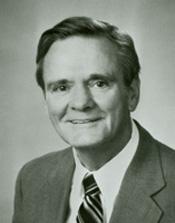
Historical · U.S. House · Louisiana · District 8
Gillis Long
Former U.S. Representative · Louisiana District 8 · 1963–1987 · Democratic
Gillis Long represented Louisiana's District 8 in the United States House of Representatives (1963–1987) for the Democratic party. The page below collects sourced biographical facts, term history, committee roles, and provenance for Long.
Bioguide ID: L000417
Key facts
- Full name
- Gillis Long
- State
- Louisiana
- District
- District 8
- Party
- Democratic
- House service
- 1963–1987
- First House term
- 1963
- Status
- Left office
- Current term ends
- —
- Born
- 1923
- Bioguide ID
- L000417
- Committee assignments
- —
- Dataset version
- 1.20260605
Biographical narrative
1,043 words · sourced from the Wikipedia REST extract
Gillis W. Long was an American politician and lawyer who served as a U.S. Representative for Louisiana's 8th congressional district. A member of the prominent Long political family, he was known for his liberal views within the context of Southern Democratic politics. Long's congressional career spanned over two decades, during which he held various leadership roles, including Chair of the House Democratic Caucus. His tenure in the House concluded with his passing in 1985, after which his wife succeeded him in office.
Early life and career
Gillis William Long was born on May 4, 1923, in Winnfield, Louisiana, to Floyd Harrison Long and Birdie Long. He was raised in a politically active family, which would later influence his own career in politics. When he was a teenager, the family relocated to Pineville, Louisiana, where he attended Bolton High School. Long's early exposure to politics came through his involvement in his cousin Earl Long's campaign for the office of Lieutenant Governor of Louisiana. During this time, he participated in giving campaign speeches at his school, showcasing his early interest in public service and political engagement.
In 1939, Long began his studies at Louisiana State University, where he pursued a law degree. However, his academic journey was interrupted when he enlisted in the United States Army in 1941, shortly before the United States entered World War II. Long served as a private and quickly rose through the ranks, ultimately being discharged as a captain in 1947. His military service was distinguished; he received a Bronze Star, five campaign stars, and the Purple Heart for his bravery and contributions during the war. Notably, he also participated in the Nuremberg trials, which were held to prosecute prominent leaders of Nazi Germany for war crimes.
After returning from military service, Long married Catherine Small in 1947. He resumed his education and completed his undergraduate studies, earning both a bachelor's degree and a Juris Doctor degree. This educational background laid the foundation for his future career in law and politics.
House tenure
Gillis Long's political career began in earnest in 1962 when he was elected to the U.S. House of Representatives from Louisiana's 8th congressional district. His election marked the beginning of a significant congressional tenure that would last until 1987. Upon entering the House, he was selected to serve as the assistant Democratic Whip, a role that involved assisting the party leadership in managing legislative business and ensuring party discipline among members.
In 1963, Long sought to expand his political influence by entering the Democratic primary for the Louisiana gubernatorial race. However, he finished in third place, receiving approximately 15% of the vote. This early setback did not deter him from continuing his political ambitions. In 1964, he attempted to secure re-election to the House but was defeated by his cousin, Speedy Long, who held more segregationist views. Despite this defeat, Long remained active in Louisiana politics.
Long's political aspirations led him to run for governor again in 1971, but he faced another defeat, finishing third with about 13% of the vote. These experiences shaped his understanding of the political landscape in Louisiana and the challenges faced by candidates in a rapidly changing social environment.
After Speedy Long retired from his congressional seat, Gillis Long decided to run for the House again. He successfully won the election and was re-elected six additional times, demonstrating a strong support base in his district. His political career was marked by a commitment to liberal policies, which often set him apart from many of his contemporaries in the Southern Democratic Party. Long's leadership abilities were recognized when he was appointed Chair of the House Democratic Caucus, a position he held from 1981 to 1984. This role placed him in a significant position within the party, allowing him to influence legislative priorities and strategies.
Throughout his tenure, Long was known for his willingness to engage in bipartisan efforts and for advocating for progressive policies, particularly in areas such as civil rights and social welfare. His political positions were generally more liberal than those of many of his Southern Democratic colleagues, reflecting a commitment to addressing the needs of his constituents and the broader American public.
Legislative focus and committees
During his time in the House of Representatives, Gillis Long was involved in various legislative initiatives and served on multiple committees that aligned with his interests and expertise. His focus on liberal policies was evident in his support for civil rights legislation and social programs aimed at improving the lives of his constituents. Long's legislative agenda often included efforts to address issues such as education, healthcare, and economic development, reflecting the needs of the diverse population in Louisiana.
As Chair of the House Democratic Caucus, Long played a crucial role in shaping the party's legislative strategy during a period of significant political change in the United States. His leadership in this capacity allowed him to advocate for policies that aligned with his liberal values while also navigating the complexities of a divided political landscape. Long's ability to work collaboratively with colleagues from both parties was a hallmark of his approach to governance.
In addition to his committee work, Long was actively engaged in the broader political discourse of his time. He endorsed former Vice President Walter Mondale during the 1984 presidential primaries, aligning himself with a candidate who shared his progressive vision for the country. This endorsement reflected Long's commitment to advancing liberal policies at the national level and his desire to influence the direction of the Democratic Party.
Gillis Long's career in the U.S. House of Representatives came to an end with his passing on January 20, 1985, due to heart failure in Washington, D.C. His contributions to Louisiana politics and his role as a liberal voice within the Southern Democratic Party were recognized posthumously. A moment of silence was observed in his honor during Ronald Reagan's second presidential inauguration, underscoring the impact he had on his colleagues and the political landscape of his time. Following his death, his wife, Cathy Long, won a special election to succeed him, serving one term in Congress. In 1994, Gillis Long was inducted into the Louisiana Political Museum and Hall of Fame, commemorating his legacy and contributions to the state and the nation.
Notable legislation
Sponsored and co-sponsored legislation for Gillis Long is pending operator curation. The biographical narrative above carries the same provenance trail until per-bill rows are written.
Sources
- [1]https://en.wikipedia.org/wiki/Gillis_William_LongWikipedia · retrieved 2026-06-05
Notable quotes
Sourced quotes for Gillis Long are pending operator curation. Narrative-scope provenance remains attached below.
Sources
- [1]https://en.wikipedia.org/wiki/Gillis_William_LongWikipedia · retrieved 2026-06-05
Key positions
Curated policy positions for Gillis Long are pending operator review. The biographical narrative above carries the same provenance trail until per-topic positions are written.
Sources
- [1]https://en.wikipedia.org/wiki/Gillis_William_LongWikipedia · retrieved 2026-06-05
Terms served
- 1963–1965U.S. House · Term 1 · Democratic
- 1973–1975U.S. House · Term 2 · Democratic
- 1975–1977U.S. House · Term 3 · Democratic
- 1977–1979U.S. House · Term 4 · Democratic
- 1979–1981U.S. House · Term 5 · Democratic
- 1981–1983U.S. House · Term 6 · Democratic
- 1983–1985U.S. House · Term 7 · Democratic
- 1985–1987U.S. House · Term 8 · Democratic
Sources & provenance
Every attributable claim above carries a per-section [N] marker that resolves to the corresponding URL below. Each entry records the upstream provider, the canonical URL, and the timestamp at which the source was retrieved by the ingest pipeline.
Key facts
- https://bioguide.congress.gov/search/bio/L000417bioguide · retrieved 2026-06-05
- https://www.govtrack.us/congress/members/406908govtrack · retrieved 2026-06-05
Biographical narrative
- https://en.wikipedia.org/wiki/Gillis_William_Longwikipedia · retrieved 2026-06-05
Find your representative
Every U.S. state elects representatives by district. Browse Louisiana’s delegation, the full former-representative roster, or explore the role and term length.
Related on The Candidate
- Preceded by Harold McSweenEarlier holder of the Louisiana District 8 House seat · Democratic.Open
- Succeeded by Clyde HollowayLater holder of the Louisiana District 8 House seat · Republican.Open
- Adolph MeyerFormer U.S. Representative · Louisiana District 1 · DemocraticOpen
- Albert EstopinalFormer U.S. Representative · Louisiana District 1 · DemocraticOpen
- Benjamin FlandersFormer U.S. Representative · Louisiana District 1 · UnionistOpen
- Bobby JindalFormer U.S. Representative · Louisiana District 1 · RepublicanOpen