
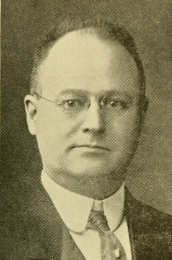
Historical · U.S. House · Massachusetts · District 9
Charles Underhill
Former U.S. Representative · Massachusetts District 9 · 1921–1933 · Republican
Charles Underhill represented Massachusetts's District 9 in the United States House of Representatives (1921–1933) for the Republican party. The page below collects sourced biographical facts, term history, committee roles, and provenance for Underhill.
Bioguide ID: U000006
Key facts
- Full name
- Charles Underhill
- State
- Massachusetts
- District
- District 9
- Party
- Republican
- House service
- 1921–1933
- First House term
- 1921
- Status
- Left office
- Current term ends
- —
- Born
- 1867
- Bioguide ID
- U000006
- Committee assignments
- —
- Dataset version
- 1.20260606
Biographical narrative
970 words · sourced from the Wikipedia REST extract
Charles Underhill was a United States Representative from Massachusetts, serving as a member of the Republican Party. His congressional career spanned six terms from 1921 to 1933, during which he held significant positions within various committees. Born on July 20, 1867, in Richmond, Virginia, Underhill's early life and career were marked by a diverse range of occupations before he transitioned into politics. He was known for his opposition to women's suffrage while simultaneously advocating for voting rights for women in the Philippines, reflecting a complex stance on issues of representation and rights. After leaving Congress, he engaged in real estate development until his retirement in 1941, passing away in New York City in 1946.
Early life and career
Charles Underhill was born in Richmond, Virginia, and moved to Massachusetts with his family in 1872, settling in Somerville. His early education was through the common schools, where he laid the foundation for his later endeavors. In his youth, Underhill worked in various roles, including as an office boy, a coal teamster, and a blacksmith. These experiences contributed to his understanding of labor and industry, which would later inform his political views and legislative priorities.
Underhill's professional life transitioned into the manufacturing and sale of hardware, a business that likely provided him with insights into commerce and trade. His involvement in local business and community affairs paved the way for his entry into politics. He began his political career in the Massachusetts House of Representatives, where he served two non-consecutive terms from 1902 to 1903 and again from 1908 to 1913. His legislative experience at the state level allowed him to build a network and gain recognition within the Republican Party.
In addition to his service in the state legislature, Underhill was a member of the Massachusetts constitutional convention from 1917 to 1918. This role further solidified his political credentials and understanding of governance, as he participated in discussions that shaped the state's constitution. His political activities during this time also included involvement in various organizations, notably the Men's Association Opposed to Woman Suffrage, which reflected his stance against women's voting rights in the United States.
House tenure
Underhill was elected to the United States House of Representatives in 1921, representing Massachusetts's 9th congressional district. He served in this capacity for six consecutive terms, from March 4, 1921, until March 3, 1933. Throughout his tenure, Underhill was a member of the Republican Party, which was a dominant political force during this period.
During his time in Congress, Underhill held significant leadership roles, including serving as the chairman of the Committee on Claims during the Sixty-ninth and Seventieth Congresses. This committee was responsible for reviewing claims against the United States, which often involved issues related to veterans, military personnel, and other claims for compensation. His leadership in this capacity indicated a level of trust and respect from his peers, as well as a commitment to addressing the concerns of constituents who sought redress through the federal government.
In addition to his role on the Committee on Claims, Underhill also chaired the Committee on Accounts during the Seventy-first Congress. This committee dealt with the financial management of the House of Representatives, overseeing expenditures and ensuring accountability in the use of public funds. His involvement in these committees allowed him to influence important legislative matters and contribute to the governance of the House.
Underhill's congressional career came to an end when he chose not to seek renomination for the Seventy-third Congress. His decision to step away from politics marked a transition in his professional life, leading him to pursue opportunities in real estate development in Washington, D.C. This shift allowed him to apply his skills and experience in a different sector, further diversifying his career.
Legislative focus and committees
Throughout his time in Congress, Charles Underhill's legislative focus was shaped by his background and the political climate of the era. His opposition to women's suffrage was a defining aspect of his political identity. Underhill actively participated in the Men's Association Opposed to Woman Suffrage, which sought to prevent women from gaining the right to vote. This position was consistent with the views held by many in his party and reflected broader societal attitudes of the time.
Interestingly, Underhill's stance on suffrage was not uniform. He advocated for voting rights for women in the Philippines, then an American territory. He introduced legislation that proposed allowing Filipina women to vote, which was met with skepticism from local suffragists who feared it could set a precedent for American interference in Philippine affairs. This duality in his views on suffrage highlights the complexities of his political ideology and the differing contexts of suffrage movements in the United States and its territories.
In addition to his positions on suffrage, Underhill's committee work allowed him to engage with various issues affecting his constituents and the nation. His leadership roles in the Committee on Claims and the Committee on Accounts provided him with a platform to influence legislation related to veterans' affairs and the financial operations of the House. These committees were crucial in addressing the needs of those who sought assistance from the federal government and ensuring that the legislative process operated smoothly.
After leaving Congress in 1933, Underhill transitioned into real estate development, a field in which he remained active until his retirement in 1941. His post-congressional career reflected a continued engagement with business and community development, demonstrating his adaptability and commitment to contributing to society in different ways.
Charles Underhill passed away on January 28, 1946, in New York City. His remains were interred at Mount Auburn Cemetery in Cambridge, Massachusetts. His life and career encapsulate a period of significant political and social change in the United States, marked by debates over suffrage, governance, and the role of representatives in addressing the needs of their constituents.
Notable legislation
Sponsored and co-sponsored legislation for Charles Underhill is pending operator curation. The biographical narrative above carries the same provenance trail until per-bill rows are written.
Sources
- [1]https://en.wikipedia.org/wiki/Charles_L._UnderhillWikipedia · retrieved 2026-06-06
Notable quotes
Sourced quotes for Charles Underhill are pending operator curation. Narrative-scope provenance remains attached below.
Sources
- [1]https://en.wikipedia.org/wiki/Charles_L._UnderhillWikipedia · retrieved 2026-06-06
Key positions
Curated policy positions for Charles Underhill are pending operator review. The biographical narrative above carries the same provenance trail until per-topic positions are written.
Sources
- [1]https://en.wikipedia.org/wiki/Charles_L._UnderhillWikipedia · retrieved 2026-06-06
Terms served
- 1921–1923U.S. House · Term 1 · Republican
- 1923–1925U.S. House · Term 2 · Republican
- 1925–1927U.S. House · Term 3 · Republican
- 1927–1929U.S. House · Term 4 · Republican
- 1929–1931U.S. House · Term 5 · Republican
- 1931–1933U.S. House · Term 6 · Republican
Sources & provenance
Every attributable claim above carries a per-section [N] marker that resolves to the corresponding URL below. Each entry records the upstream provider, the canonical URL, and the timestamp at which the source was retrieved by the ingest pipeline.
Key facts
- https://bioguide.congress.gov/search/bio/U000006bioguide · retrieved 2026-06-06
- https://www.govtrack.us/congress/members/411030govtrack · retrieved 2026-06-06
Biographical narrative
- https://en.wikipedia.org/wiki/Charles_L._Underhillwikipedia · retrieved 2026-06-06
Find your representative
Every U.S. state elects representatives by district. Browse Massachusetts’s delegation, the full former-representative roster, or explore the role and term length.
Related on The Candidate
- Preceded by Alvan FullerEarlier holder of the Massachusetts District 9 House seat · Republican.Open
- Succeeded by Richard RussellLater holder of the Massachusetts District 9 House seat · Democratic.Open
- Abbott LawrenceFormer U.S. Representative · Massachusetts District 1 · WhigOpen
- Allen TreadwayFormer U.S. Representative · Massachusetts District 1 · RepublicanOpen
- Artemas Ward Jr.Former U.S. Representative · Massachusetts District 1 · FederalistOpen
- Ashley WrightFormer U.S. Representative · Massachusetts District 1 · RepublicanOpen