
Historical · U.S. House · Massachusetts · District 9
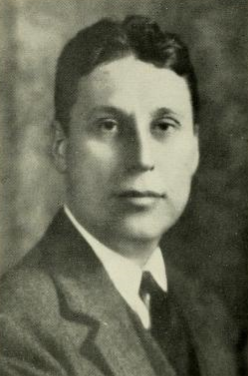
Richard Russell
Former U.S. Representative · Massachusetts District 9 · 1935–1937 · Democratic
Richard Russell represented Massachusetts's District 9 in the United States House of Representatives (1935–1937) for the Democratic party. The page below collects sourced biographical facts, term history, committee roles, and provenance for Russell.
Bioguide ID: R000537
Key facts
- Full name
- Richard Russell
- State
- Massachusetts
- District
- District 9
- Party
- Democratic
- House service
- 1935–1937
- First House term
- 1935
- Status
- Left office
- Current term ends
- —
- Born
- 1891
- Bioguide ID
- R000537
- Committee assignments
- —
- Dataset version
- 1.20260605
Biographical narrative
920 words · sourced from the Wikipedia REST extract
Richard Russell was a U.S. Representative from Massachusetts, serving in the House of Representatives during the mid-1930s. A member of the Democratic Party, he represented the Ninth Congressional District of Massachusetts. His tenure in Congress was marked by the political and social changes of the era, particularly in the context of the Great Depression. Russell's background as a lawyer and his involvement in local government provided him with a foundation for his political career, although his time in Congress was relatively brief, ending in 1937.
Early life and career
Richard Manning Russell was born on March 3, 1891, in Cambridge, Massachusetts. He was the son of William Russell, who served as the Governor of Massachusetts, and Margaret Manning Swan. Growing up in a politically active family, Russell was likely influenced by his father's political career and the civic engagement that surrounded him. He attended the prestigious Middlesex School in Concord, Massachusetts, where he would have received a solid educational foundation that prepared him for higher education.
Russell went on to graduate from Harvard University in 1914, a significant achievement that underscored his academic capabilities. Following his undergraduate education, he pursued a law degree at Harvard Law School, completing his studies in 1917. This legal education equipped him with the skills necessary for a career in law and public service.
His professional journey was interrupted by World War I, during which Russell served in the military. He held the rank of second lieutenant in the Three Hundred and Third Field Artillery and later advanced to first lieutenant, serving as a communications officer in the One Hundred and Fifty-first Field Artillery Brigade. His military service would have provided him with leadership experience and a sense of duty that often influences public service careers.
After the war, Russell returned to civilian life and was admitted to the bar, beginning his legal practice in Boston. His legal career laid the groundwork for his subsequent entry into politics. He became involved in local governance, serving as a member of the Cambridge City Council. His experience in local government culminated in his election as Mayor of Cambridge, a position that allowed him to engage directly with the community and address local issues.
House tenure
Richard Russell's political career reached a new level when he was elected to the U.S. House of Representatives as a Democrat. He served in the Seventy-fourth Congress from January 3, 1935, to January 3, 1937. His election came during a time of significant national challenges, particularly the economic turmoil of the Great Depression, which had a profound impact on American society and politics.
During his time in Congress, Russell participated in the legislative process at a time when the federal government was expanding its role in addressing economic issues. The New Deal, a series of programs and reforms initiated by President Franklin D. Roosevelt, was a central focus of the congressional agenda. Russell's contributions to the legislative discussions of the era would have been influenced by his background in law and local governance, as well as the pressing needs of his constituents in Massachusetts.
Despite his efforts and involvement, Russell was unable to secure re-election in 1936 to the Seventy-fifth Congress. Following his congressional term, he made additional attempts to return to public office. He ran unsuccessfully for a vacancy in the Eighty-first Congress in 1950 and also sought election to the Eighty-second Congress later that same year. These attempts reflect his continued interest in public service and politics, even after his initial term in the House.
Legislative focus and committees
While specific details about Russell's legislative focus during his time in Congress are not extensively documented, it can be inferred that his background in law and local governance would have influenced his priorities. As a member of the Democratic Party during the New Deal era, he likely supported initiatives aimed at economic recovery and social welfare. The legislative environment of the 1930s was characterized by a push for reforms that addressed the needs of struggling Americans, and Russell's role as a representative would have involved engaging with these critical issues.
Russell's experience as a lawyer and his previous roles in local government would have provided him with insights into the legal and administrative challenges facing his constituents. His tenure in the House coincided with significant legislative efforts aimed at job creation, financial reform, and the establishment of social safety nets. These initiatives were part of a broader movement to stabilize the economy and provide support to those affected by the economic downturn.
After leaving Congress, Russell returned to his legal practice in Boston, where he continued to contribute to his community in a different capacity. He settled in Essex, Massachusetts, where he lived until his death on February 27, 1977. His interment took place at Pine Hill Cemetery in Tewksbury, Massachusetts, marking the end of a life that spanned significant historical events, including two world wars and the transformative social changes of the 20th century.
In summary, Richard Russell's life and career reflect a commitment to public service, shaped by his educational background, military experience, and involvement in local governance. Although his time in the U.S. House of Representatives was brief, it occurred during a pivotal period in American history, and his contributions to the legislative process were part of a larger effort to address the challenges of the Great Depression. His legacy is one of civic engagement and dedication to the principles of democracy, as evidenced by his efforts both in Congress and in his legal career.
Notable legislation
Sponsored and co-sponsored legislation for Richard Russell is pending operator curation. The biographical narrative above carries the same provenance trail until per-bill rows are written.
Sources
- [1]https://en.wikipedia.org/wiki/Richard_M._RussellWikipedia · retrieved 2026-06-05
Notable quotes
Sourced quotes for Richard Russell are pending operator curation. Narrative-scope provenance remains attached below.
Sources
- [1]https://en.wikipedia.org/wiki/Richard_M._RussellWikipedia · retrieved 2026-06-05
Key positions
Curated policy positions for Richard Russell are pending operator review. The biographical narrative above carries the same provenance trail until per-topic positions are written.
Sources
- [1]https://en.wikipedia.org/wiki/Richard_M._RussellWikipedia · retrieved 2026-06-05
Terms served
- 1935–1937U.S. House · Term 1 · Democratic
Sources & provenance
Every attributable claim above carries a per-section [N] marker that resolves to the corresponding URL below. Each entry records the upstream provider, the canonical URL, and the timestamp at which the source was retrieved by the ingest pipeline.
Key facts
- https://bioguide.congress.gov/search/bio/R000537bioguide · retrieved 2026-06-05
- https://www.govtrack.us/congress/members/409494govtrack · retrieved 2026-06-05
Biographical narrative
- https://en.wikipedia.org/wiki/Richard_M._Russellwikipedia · retrieved 2026-06-05
Find your representative
Every U.S. state elects representatives by district. Browse Massachusetts’s delegation, the full former-representative roster, or explore the role and term length.
Related on The Candidate
- Preceded by Charles UnderhillEarlier holder of the Massachusetts District 9 House seat · Republican.Open
- Succeeded by Thomas EliotLater holder of the Massachusetts District 9 House seat · Democratic.Open
- Abbott LawrenceFormer U.S. Representative · Massachusetts District 1 · WhigOpen
- Allen TreadwayFormer U.S. Representative · Massachusetts District 1 · RepublicanOpen
- Artemas Ward Jr.Former U.S. Representative · Massachusetts District 1 · FederalistOpen
- Ashley WrightFormer U.S. Representative · Massachusetts District 1 · RepublicanOpen