
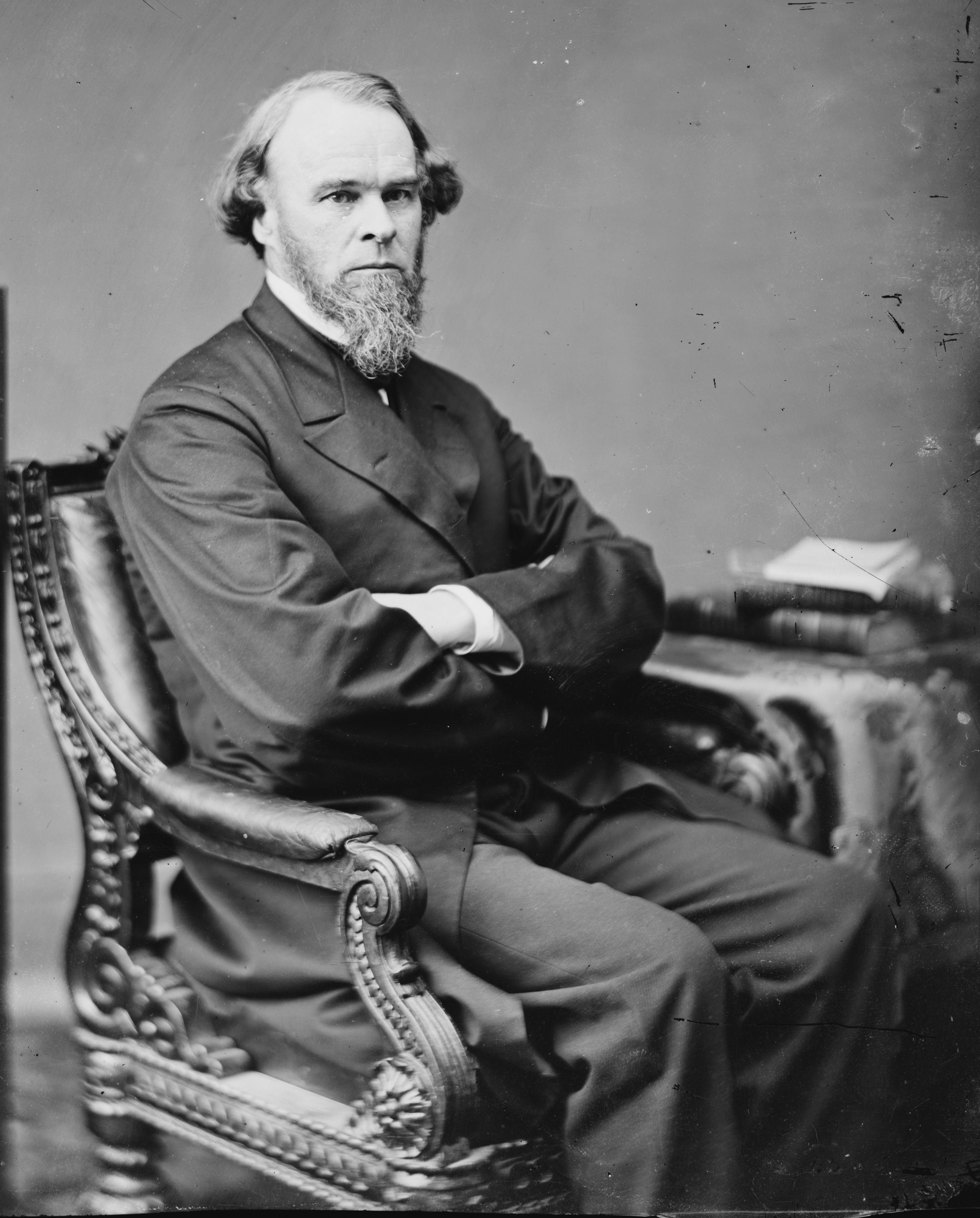
Historical · U.S. House · Michigan · District 1
Fernando Beaman
Former U.S. Representative · Michigan District 1 · 1861–1871 · Republican
Fernando Beaman represented Michigan's District 1 in the United States House of Representatives (1861–1871) for the Republican party. The page below collects sourced biographical facts, term history, committee roles, and provenance for Beaman.
Bioguide ID: B000275
Key facts
- Full name
- Fernando Beaman
- State
- Michigan
- District
- District 1
- Party
- Republican
- House service
- 1861–1871
- First House term
- 1861
- Status
- Left office
- Current term ends
- —
- Born
- 1814
- Bioguide ID
- B000275
- Committee assignments
- —
- Dataset version
- 1.20260606
Biographical narrative
925 words · sourced from the Wikipedia REST extract
Fernando Beaman was a prominent American politician, lawyer, and educator who served as a U.S. Representative from Michigan during a transformative period in American history, including the Civil War. A member of the Republican Party, Beaman represented Michigan's 1st congressional district in the United States House of Representatives for five consecutive terms from 1861 to 1871. His career also included significant roles in local government, including serving as mayor of Adrian, Michigan, and as a judge of the probate court for Lenawee County.
Early life and career
Fernando Beaman was born on June 28, 1814, in Chester, Vermont. He was the son of Joshua Beaman and Hannah Olcott Beaman. In 1819, when Beaman was just five years old, his family relocated to Franklin County, New York, where they settled on a farm. Beaman received his early education in local district schools and furthered his studies at Franklin Academy in Malone, New York. His early experiences in education likely influenced his later career as a teacher.
In 1836, Beaman moved to Rochester, New York, where he began studying law. He was admitted to the bar in 1839 after moving to Manchester, Michigan, in 1838. Beaman quickly established a legal practice and gained recognition in the legal community. His career in law took him to Tecumseh, Michigan, and later to Clinton, Michigan. In 1843, he settled in Adrian, Michigan, where he was appointed as the prosecuting attorney for Lenawee County, a position he held until 1850. During his time in Adrian, Beaman formed a law partnership with Thomas M. Cooley, who would later become the Chief Justice of the Michigan Supreme Court.
Beaman's involvement in local governance began early in his career. He served as the city attorney for Adrian and was an active participant in the political landscape of the time. In 1854, he was a member of the convention that organized the Republican Party in Jackson, Michigan, a significant event in the formation of the party. He was also a delegate to the first Republican National Convention held in Philadelphia in 1856. His political career continued to develop as he served as the mayor of Adrian in 1856 and as a judge of the probate court of Lenawee County from 1856 to 1860.
House tenure
Fernando Beaman's congressional career began when he was elected as a Republican representative from Michigan's 2nd congressional district to the United States House of Representatives for the Thirty-seventh Congress. He took office on March 4, 1861, and continued to serve through the succeeding four Congresses until March 3, 1871. His tenure in the House coincided with a critical period in American history, marked by the Civil War and its aftermath.
Following the redistricting that occurred after the 1860 census, Beaman represented Michigan's 1st congressional district starting with the elections of 1862. During his time in Congress, he was involved in various legislative matters and served as the chairman of the House Committee on Roads and Canals during the Thirty-ninth Congress. His leadership in this committee reflected his commitment to infrastructure development, which was a significant focus during the post-war period as the nation sought to rebuild and expand.
Beaman's congressional career was characterized by his active participation in legislative discussions and his efforts to address the needs of his constituents. However, he chose not to seek renomination in 1870, concluding his time in the House of Representatives. After leaving Congress, he returned to Adrian, where he resumed his legal practice, continuing to contribute to his community through his professional work.
Legislative focus and committees
During his time in the U.S. House of Representatives, Fernando Beaman's legislative focus included issues related to infrastructure, particularly through his role as chairman of the House Committee on Roads and Canals. This committee was responsible for overseeing legislation related to transportation and infrastructure projects, which were essential for the economic development of the nation, especially in the wake of the Civil War. Beaman's involvement in this committee indicated his interest in improving the nation's transportation systems, which were crucial for trade, commerce, and the movement of people.
Beaman's legislative work also reflected the broader priorities of the Republican Party during this era, which included promoting economic growth, supporting the Union's reconstruction efforts, and addressing the challenges faced by a nation emerging from civil conflict. His participation in the first Republican National Convention and his role in local governance positioned him as a key figure within the party, contributing to its development and policy direction.
After his congressional tenure, Beaman continued to engage in public service. He was appointed as a judge of the probate court of Lenawee County in 1871 and was subsequently elected to the same position in 1872, with re-elections occurring in 1876. His legal expertise and experience in public office allowed him to continue influencing local governance and judicial matters.
Despite declining health, Beaman remained a respected figure in his community. He turned down appointments to significant positions, including a potential role as a United States Senator and opportunities to serve on the Michigan Supreme Court and as the United States Commissioner of Indian Affairs. His decision to decline these positions reflected his commitment to his local community and his desire to focus on his health and legal practice.
Fernando Beaman passed away on September 27, 1882, in Adrian, Michigan. His contributions to both the legal profession and public service left a lasting impact on the community he served. He is interred in Oakwood Cemetery in Adrian, where his legacy as a lawyer, politician, and community leader is remembered.
Notable legislation
Sponsored and co-sponsored legislation for Fernando Beaman is pending operator curation. The biographical narrative above carries the same provenance trail until per-bill rows are written.
Sources
- [1]https://en.wikipedia.org/wiki/Fernando_C._BeamanWikipedia · retrieved 2026-06-06
Notable quotes
Sourced quotes for Fernando Beaman are pending operator curation. Narrative-scope provenance remains attached below.
Sources
- [1]https://en.wikipedia.org/wiki/Fernando_C._BeamanWikipedia · retrieved 2026-06-06
Key positions
Curated policy positions for Fernando Beaman are pending operator review. The biographical narrative above carries the same provenance trail until per-topic positions are written.
Sources
- [1]https://en.wikipedia.org/wiki/Fernando_C._BeamanWikipedia · retrieved 2026-06-06
Terms served
- 1861–1863U.S. House · Term 1 · Republican
- 1863–1865U.S. House · Term 2 · Republican
- 1865–1867U.S. House · Term 3 · Republican
- 1867–1869U.S. House · Term 4 · Republican
- 1869–1871U.S. House · Term 5 · Republican
Sources & provenance
Every attributable claim above carries a per-section [N] marker that resolves to the corresponding URL below. Each entry records the upstream provider, the canonical URL, and the timestamp at which the source was retrieved by the ingest pipeline.
Key facts
- https://bioguide.congress.gov/search/bio/B000275bioguide · retrieved 2026-06-06
- https://www.govtrack.us/congress/members/401269govtrack · retrieved 2026-06-06
Biographical narrative
- https://en.wikipedia.org/wiki/Fernando_C._Beamanwikipedia · retrieved 2026-06-06
Find your representative
Every U.S. state elects representatives by district. Browse Michigan’s delegation, the full former-representative roster, or explore the role and term length.
Related on The Candidate
- Preceded by George CooperEarlier holder of the Michigan District 1 House seat · Democratic.Open
- Succeeded by Moses FieldLater holder of the Michigan District 1 House seat · Republican.Open
- Alexander BuelFormer U.S. Representative · Michigan District 1 · DemocraticOpen
- Alfred LuckingFormer U.S. Representative · Michigan District 1 · DemocraticOpen
- Alpheus WilliamsFormer U.S. Representative · Michigan District 1 · DemocraticOpen
- Bart StupakFormer U.S. Representative · Michigan District 1 · DemocraticOpen