
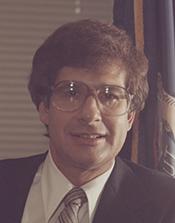
Historical · U.S. House · Michigan · District 11
Robert Davis
Former U.S. Representative · Michigan District 11 · 1979–1993 · Republican
Robert Davis represented Michigan's District 11 in the United States House of Representatives (1979–1993) for the Republican party. The page below collects sourced biographical facts, term history, committee roles, and provenance for Davis.
Bioguide ID: D000131
Key facts
- Full name
- Robert Davis
- State
- Michigan
- District
- District 11
- Party
- Republican
- House service
- 1979–1993
- First House term
- 1979
- Status
- Left office
- Current term ends
- —
- Born
- 1932
- Bioguide ID
- D000131
- Committee assignments
- —
- Dataset version
- 1.20260605
Biographical narrative
961 words · sourced from the Wikipedia REST extract
Robert W. Davis was an American politician who served as a U.S. Representative for Michigan's 11th congressional district from 1979 until 1993. A member of the Republican Party, Davis had a notable political career that spanned several decades, beginning at the state level before transitioning to national politics. He was involved in various legislative initiatives and was known for his contributions to the establishment of significant national parks in Michigan. After leaving Congress, he continued to engage in political activities and lobbying until his passing in 2009.
Early life and career
Robert W. Davis was born on July 31, 1932, in Marquette, Michigan. Shortly after his birth, his family relocated to St. Ignace, where he completed his education in the local public schools. He graduated from LaSalle High School in 1950 and pursued higher education at several institutions, including Northern Michigan University, Hillsdale College, and the College of Mortuary Sciences at Wayne State University. Before embarking on his political career, Davis worked as a funeral director at the Davis Funeral Home in St. Ignace, a profession that provided him with a unique perspective on community service and engagement.
Davis's political career began in 1966 when he was elected as a Republican to the Michigan House of Representatives, representing the 106th District. He was successful in his re-election bid in 1968, which marked the beginning of his long-standing involvement in state politics. In 1970, he advanced to the Michigan State Senate, where he represented the 37th district. During his tenure in the Senate, Davis held significant leadership positions, including Majority Whip from 1970 to 1974 and Senate Republican Leader from 1974 to 1978. His leadership roles in the state legislature helped him build a reputation as a capable and influential politician.
In 1978, Davis transitioned to national politics when he was elected to the 96th United States Congress. This marked the start of his service in the U.S. House of Representatives, where he would serve for a total of seven terms. His congressional career was characterized by a commitment to representing the interests of his constituents in Michigan, particularly those in the Upper Peninsula and Northern Michigan.
House tenure
Davis's tenure in the U.S. House of Representatives began in 1979, and he was re-elected to six subsequent Congresses. Throughout his time in office, he focused on various issues pertinent to his district and the state of Michigan. One of his notable contributions was his involvement in the establishment of the Thunder Bay National Marine Sanctuary, which aimed to protect the unique marine environment of the Great Lakes. Additionally, he played a role in the creation of the Keweenaw National Historical Park, which preserves the cultural and historical significance of the copper mining industry in the region.
Davis's legislative work was often influenced by the needs and concerns of his constituents, particularly those related to environmental conservation and economic development. His efforts in Congress were aimed at enhancing the quality of life for residents in his district, which included advocating for policies that supported local industries and tourism.
However, Davis's time in Congress was not without controversy. In early 1992, he became implicated in the House banking scandal, which involved members of Congress writing overdrawn checks on their accounts at a bank operated by the House. Although Davis was one of the more prominent figures associated with this scandal, it is important to note that the bank had allowed members to write checks that exceeded their account balances, meaning that no legal violations occurred. This incident, however, affected his public image as he approached the end of his congressional career.
In 1992, following the redistricting process that resulted from the 1990 census, Davis chose not to seek re-election. The changes to the congressional districts significantly altered the political landscape, with most of the territory he represented being incorporated into Michigan's 1st congressional district. In the subsequent election, Democrat Bart Stupak was elected to represent the newly drawn district, succeeding Davis and continuing the tradition of representing the interests of Northern Michigan.
Legislative focus and committees
During his time in the House of Representatives, Robert W. Davis served on various committees that aligned with his legislative interests and the needs of his constituents. His work on these committees allowed him to influence key legislation and advocate for policies that were important to his district. While specific committee assignments during his tenure are not detailed, it is common for members of Congress to serve on committees related to areas such as natural resources, transportation, and economic development, particularly for representatives from districts with significant natural landscapes and tourism industries.
Davis's legislative focus included environmental conservation, economic development, and support for local industries, which were critical to the economy of Northern Michigan. His efforts in establishing national parks and marine sanctuaries reflected a commitment to preserving the natural beauty and historical significance of the region. These initiatives not only aimed to protect the environment but also to promote tourism, which is a vital component of the local economy.
After leaving Congress, Davis continued to be active in political circles, working as a lobbyist for K&L Gates. He remained engaged in Republican politics and was involved in campaign efforts, including support for the presidential campaigns of George W. Bush. His connections within the political sphere, including friendships with prominent figures such as Vice President Dick Cheney, underscored his ongoing influence and involvement in national politics.
Robert W. Davis passed away on October 16, 2009, at the age of 77 due to heart and kidney failure. He is interred at Protestant Cemetery on Mackinac Island, Michigan. His legacy includes his contributions to Michigan's political landscape and his efforts to enhance the quality of life for residents in his district through legislative initiatives and community engagement.
Notable legislation
Sponsored and co-sponsored legislation for Robert Davis is pending operator curation. The biographical narrative above carries the same provenance trail until per-bill rows are written.
Sources
- [1]https://en.wikipedia.org/wiki/Bob_Davis_(Michigan_politician)Wikipedia · retrieved 2026-06-05
Notable quotes
Sourced quotes for Robert Davis are pending operator curation. Narrative-scope provenance remains attached below.
Sources
- [1]https://en.wikipedia.org/wiki/Bob_Davis_(Michigan_politician)Wikipedia · retrieved 2026-06-05
Key positions
Curated policy positions for Robert Davis are pending operator review. The biographical narrative above carries the same provenance trail until per-topic positions are written.
Sources
- [1]https://en.wikipedia.org/wiki/Bob_Davis_(Michigan_politician)Wikipedia · retrieved 2026-06-05
Terms served
- 1979–1981U.S. House · Term 1 · Republican
- 1981–1983U.S. House · Term 2 · Republican
- 1983–1985U.S. House · Term 3 · Republican
- 1985–1987U.S. House · Term 4 · Republican
- 1987–1989U.S. House · Term 5 · Republican
- 1989–1991U.S. House · Term 6 · Republican
- 1991–1993U.S. House · Term 7 · Republican
Sources & provenance
Every attributable claim above carries a per-section [N] marker that resolves to the corresponding URL below. Each entry records the upstream provider, the canonical URL, and the timestamp at which the source was retrieved by the ingest pipeline.
Key facts
- https://bioguide.congress.gov/search/bio/D000131bioguide · retrieved 2026-06-05
- https://www.govtrack.us/congress/members/403266govtrack · retrieved 2026-06-05
Biographical narrative
- https://en.wikipedia.org/wiki/Bob_Davis_(Michigan_politician)wikipedia · retrieved 2026-06-05
Find your representative
Every U.S. state elects representatives by district. Browse Michigan’s delegation, the full former-representative roster, or explore the role and term length.
Related on The Candidate
- Preceded by Philip RuppeEarlier holder of the Michigan District 11 House seat · Republican.Open
- Succeeded by Thad McCotterLater holder of the Michigan District 11 House seat · Republican.Open
- Alexander BuelFormer U.S. Representative · Michigan District 1 · DemocraticOpen
- Alfred LuckingFormer U.S. Representative · Michigan District 1 · DemocraticOpen
- Alpheus WilliamsFormer U.S. Representative · Michigan District 1 · DemocraticOpen
- Bart StupakFormer U.S. Representative · Michigan District 1 · DemocraticOpen