
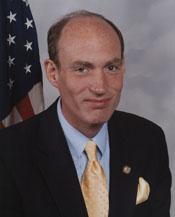
Historical · U.S. House · Michigan · District 11
Thad McCotter
Former U.S. Representative · Michigan District 11 · 2003–2012 · Republican
Thad McCotter represented Michigan's District 11 in the United States House of Representatives (2003–2012) for the Republican party. The page below collects sourced biographical facts, term history, committee roles, and provenance for McCotter.
Bioguide ID: M001147
Key facts
- Full name
- Thad McCotter
- State
- Michigan
- District
- District 11
- Party
- Republican
- House service
- 2003–2012
- First House term
- 2003
- Status
- Left office
- Current term ends
- —
- Born
- 1965
- Bioguide ID
- M001147
- Committee assignments
- —
- Dataset version
- 1.20260605
Biographical narrative
912 words · sourced from the Wikipedia REST extract
Thaddeus G. McCotter is a former American politician and member of the Republican Party who served as the U.S. Representative for Michigan's 11th congressional district from 2003 until 2012. His political career began at the local level, where he was elected to the Wayne County Commission in 1992, followed by a term in the Michigan State Senate. McCotter's tenure in the U.S. House of Representatives was marked by his involvement in various legislative committees and his candidacy for the Republican presidential nomination in 2012. His political journey concluded with his resignation from Congress amid controversy surrounding his re-election campaign.
Early life and career
Thaddeus George McCotter was born on August 22, 1965, in Detroit, Michigan. He completed his secondary education at Detroit Catholic Central High School in Redford, graduating in 1983. McCotter's family background includes his mother, Georgia Joan McCotter, who served as the city clerk of Livonia, Michigan. This early exposure to public service may have influenced his later political aspirations.
McCotter pursued higher education at the University of Detroit, where he earned a Bachelor of Arts degree in 1987, followed by a Juris Doctor degree in 1990. After completing his education, he established a private law practice and also served as a trustee for Schoolcraft College. His entry into politics began in 1992 when he was elected to the Wayne County Commission. During his time on the commission, McCotter advocated for significant changes to the county charter, notably requiring that any new taxes receive approval from two-thirds of the Commission and 60% of voters.
In 1998, McCotter was elected to the Michigan State Senate, where he served until 2003. His work in the state legislature included efforts to apportion the U.S. Congressional district from which he would later be elected to the House of Representatives. His background in law and local governance provided him with a foundation for his subsequent congressional career.
House tenure
Thaddeus McCotter was elected to the U.S. House of Representatives in November 2002, representing Michigan's 11th congressional district. His district encompassed parts of Detroit's northwestern suburbs, including Livonia, Westland, and Novi. McCotter's initial election marked the beginning of a five-term congressional career, during which he was re-elected multiple times.
Throughout his tenure in the House, McCotter served on several committees, including the Committee on Financial Services. Within this committee, he participated in various subcommittees, such as those focusing on capital markets, insurance, government-sponsored enterprises, financial institutions, consumer credit, and international monetary policy and trade. His involvement in these committees allowed him to engage with a range of financial and economic issues affecting his constituents and the nation.
In addition to his committee work, McCotter held leadership positions within the Republican Party. He was elected chairman of the House Republican Policy Committee, a significant role that placed him among the top ranks of House Republicans. His leadership was particularly notable after the Republican Party transitioned to the minority in the House following the midterm elections in November 2006.
Legislative focus and committees
During his time in Congress, McCotter's legislative focus encompassed a variety of issues, reflecting both moderate and conservative perspectives within the Republican Party. He was a member of the moderate Republican Main Street Partnership as well as the conservative Republican Study Committee, illustrating his ability to navigate different ideological factions within his party.
McCotter's voting record included support for measures aimed at addressing energy price gouging, where he broke ranks with some party leaders to vote for a bill proposed by House Democrats. He was also a proponent of U.S. military involvement in both the War in Afghanistan and the Iraq War, expressing his views in a book he authored.
One of McCotter's more unconventional legislative proposals was the introduction of the Humanity and Pets Partnered Through the Years (HAPPY) Act, which sought to provide pet owners with a tax deduction for pet care expenses. This initiative received mixed reactions, with some critics labeling it as an example of the complexities of the tax code.
In addition to his legislative initiatives, McCotter was involved in various caucuses, including the Congressional COPD Caucus, the House Sovereignty Caucus (which he co-founded), the International Conservation Caucus, and the Sportsmen's Caucus. His participation in these groups reflected his interest in a wide range of issues, from health concerns to environmental conservation and sportsmen's rights.
Despite his active engagement in legislative matters, McCotter's political career faced challenges. In 2011, he announced his candidacy for the Republican presidential nomination for the 2012 election. However, after a disappointing performance in the Iowa Straw Poll and difficulties in gaining traction in the race, he suspended his campaign.
Following the end of his presidential bid, McCotter sought re-election to his congressional seat. However, he faced significant obstacles when many of his petition signatures for the Republican primary were deemed invalid, leading to his inability to qualify for the ballot. This situation was compounded by allegations of electoral misconduct involving some of his staff members, resulting in legal actions and reputational damage. Ultimately, McCotter resigned from Congress on July 6, 2012, marking the end of his tenure in public office.
Thaddeus G. McCotter's political career reflects a journey through various levels of government, characterized by his service in local and state offices before his election to the U.S. House of Representatives. His legislative contributions and leadership roles within the Republican Party highlight his engagement with a range of issues, although his career concluded amidst controversy and challenges related to his re-election efforts.
Notable legislation
Sponsored and co-sponsored legislation for Thad McCotter is pending operator curation. The biographical narrative above carries the same provenance trail until per-bill rows are written.
Sources
- [1]https://en.wikipedia.org/wiki/Thaddeus_McCotterWikipedia · retrieved 2026-06-05
Notable quotes
Sourced quotes for Thad McCotter are pending operator curation. Narrative-scope provenance remains attached below.
Sources
- [1]https://en.wikipedia.org/wiki/Thaddeus_McCotterWikipedia · retrieved 2026-06-05
Key positions
Curated policy positions for Thad McCotter are pending operator review. The biographical narrative above carries the same provenance trail until per-topic positions are written.
Sources
- [1]https://en.wikipedia.org/wiki/Thaddeus_McCotterWikipedia · retrieved 2026-06-05
Terms served
- 2003–2005U.S. House · Term 1 · Republican
- 2005–2007U.S. House · Term 2 · Republican
- 2007–2009U.S. House · Term 3 · Republican
- 2009–2011U.S. House · Term 4 · Republican
- 2011–2012U.S. House · Term 5 · Republican
Sources & provenance
Every attributable claim above carries a per-section [N] marker that resolves to the corresponding URL below. Each entry records the upstream provider, the canonical URL, and the timestamp at which the source was retrieved by the ingest pipeline.
Key facts
- https://bioguide.congress.gov/search/bio/M001147bioguide · retrieved 2026-06-05
- http://mccotter.house.govhouse.gov · retrieved 2026-06-05
Biographical narrative
- https://en.wikipedia.org/wiki/Thaddeus_McCotterwikipedia · retrieved 2026-06-05
Find your representative
Every U.S. state elects representatives by district. Browse Michigan’s delegation, the full former-representative roster, or explore the role and term length.
Related on The Candidate
- Preceded by Robert DavisEarlier holder of the Michigan District 11 House seat · Republican.Open
- Succeeded by David CursonLater holder of the Michigan District 11 House seat · Democratic.Open
- Alexander BuelFormer U.S. Representative · Michigan District 1 · DemocraticOpen
- Alfred LuckingFormer U.S. Representative · Michigan District 1 · DemocraticOpen
- Alpheus WilliamsFormer U.S. Representative · Michigan District 1 · DemocraticOpen
- Bart StupakFormer U.S. Representative · Michigan District 1 · DemocraticOpen