
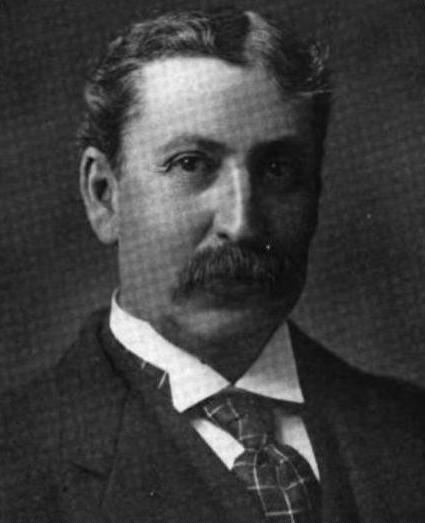
Historical · U.S. House · Michigan · District 12
Horace Young
Former U.S. Representative · Michigan District 12 · 1903–1915 · Republican
Horace Young represented Michigan's District 12 in the United States House of Representatives (1903–1915) for the Republican party. The page below collects sourced biographical facts, term history, committee roles, and provenance for Young.
Bioguide ID: Y000038
Key facts
- Full name
- Horace Young
- State
- Michigan
- District
- District 12
- Party
- Republican
- House service
- 1903–1915
- First House term
- 1903
- Status
- Left office
- Current term ends
- —
- Born
- 1850
- Bioguide ID
- Y000038
- Committee assignments
- —
- Dataset version
- 1.20260606
Biographical narrative
1,007 words · sourced from the Wikipedia REST extract
Horace Young was a prominent American politician who served as a U.S. Representative for Michigan's 12th congressional district. A member of the Republican Party, Young's congressional career spanned over a decade, during which he was involved in various legislative activities and local governance. His political journey began in the late 19th century and continued into the early 20th century, reflecting the evolving political landscape of the United States during that era. Young's tenure in the House of Representatives was marked by his commitment to his constituents and his involvement in local and state politics prior to his congressional service.
Early life and career
Horace Olin Young was born on August 4, 1850, in New Albion, New York. He was the son of Horace C. Young, a state senator, and Laura P. Walker Young. Growing up in a politically engaged family, Young was exposed to the world of politics from an early age. He received his education in the common schools and high school of New Albion, which provided him with a foundational understanding of the educational and civic responsibilities of citizenship. To further his education, he attended the Chamberlain Military Institute in Randolph, New York, where he likely developed skills that would later aid him in his political career.
In pursuit of professional opportunities, Young moved to Ishpeming, Michigan, where he initially engaged in accounting. His interest in law led him to study legal principles, and he was admitted to the bar in 1879, allowing him to commence a legal practice in Ishpeming. Young's legal career was complemented by his involvement in local governance. He served as a member of the Michigan House of Representatives representing the 2nd District of Marquette County from 1879 to 1880. This early political experience provided him with insights into legislative processes and the needs of his constituents.
Young's legal and political career continued to flourish as he took on the role of prosecuting attorney for Marquette County from 1886 to 1896. In this capacity, he was responsible for overseeing legal proceedings and ensuring the enforcement of laws within the county. His work as a prosecuting attorney likely enhanced his reputation as a dedicated public servant and positioned him as a viable candidate for higher office in the future.
House tenure
Horace Young's congressional career began when he was elected as a Republican to the 58th United States Congress, representing Michigan's 12th congressional district. His first term in the House of Representatives commenced on March 4, 1903. Young was re-elected to four consecutive terms, serving in the House until March 3, 1913. His tenure in Congress coincided with a period of significant change in American society, including industrialization, urbanization, and the progressive movement, which sought to address issues such as labor rights, women's suffrage, and government reform.
In 1913, Young presented his credentials as a Member-elect to the 63rd Congress. He served in this capacity until his resignation on May 16, 1913, while a contest for his seat was pending. This contest arose due to an issue related to the ballot for the Progressive candidate, William Josiah MacDonald, which resulted in some votes not being counted in the official tally. The House Committee on Elections reviewed the situation and unanimously reported a resolution to award the 12th District seat to MacDonald, who subsequently took the oath of office on August 26, 1913. Young's resignation marked the end of his congressional career, which had spanned a total of six terms in the House.
Throughout his time in Congress, Young was involved in various legislative initiatives and discussions that reflected the priorities and concerns of his constituents. His experience in local and state politics likely informed his approach to national issues, as he sought to represent the interests of the people in his district. Young's ability to navigate the complexities of congressional procedures and his understanding of the political landscape contributed to his effectiveness as a legislator.
Legislative focus and committees
During his tenure in the House of Representatives, Horace Young was involved in a range of legislative activities that addressed various issues pertinent to his constituents and the nation. While specific details regarding the bills he sponsored or supported are not provided, it is evident that his background in law and local governance equipped him with the skills necessary to engage in legislative discussions and advocate for policies that aligned with the interests of his district.
Young's legislative focus likely included issues relevant to Michigan, such as labor rights, economic development, and infrastructure improvements. As a representative from a state that was experiencing significant industrial growth during his time in office, he would have been attuned to the needs of workers and businesses alike. His experience as a prosecuting attorney may have also influenced his perspective on legal and criminal justice issues, which were increasingly becoming focal points of national discourse.
In addition to his legislative work, Young's participation in various committees would have played a crucial role in shaping his contributions to Congress. Committees are essential in the legislative process, as they review proposed legislation, conduct hearings, and make recommendations to the full House. Young's involvement in committees would have allowed him to collaborate with other lawmakers, gather information, and advocate for the needs of his constituents.
After leaving Congress, Young continued to play a significant role in his community. He served as the president of the Miners’ National Bank in Ishpeming, where he applied his expertise in finance and law to support local economic development. His post-congressional career demonstrated his ongoing commitment to public service and the welfare of his community.
Horace Young passed away on August 5, 1917, just one day after his 67th birthday, in Ishpeming, Michigan. He is interred at the City Cemetery in Ishpeming, where he is remembered for his contributions to the political landscape of Michigan and his service to the people of his district. Young's legacy as a politician reflects the complexities and challenges of early 20th-century American governance, as well as the enduring impact of local leaders in shaping national policy.
Notable legislation
Sponsored and co-sponsored legislation for Horace Young is pending operator curation. The biographical narrative above carries the same provenance trail until per-bill rows are written.
Sources
- [1]https://en.wikipedia.org/wiki/H._Olin_YoungWikipedia · retrieved 2026-06-06
Notable quotes
Sourced quotes for Horace Young are pending operator curation. Narrative-scope provenance remains attached below.
Sources
- [1]https://en.wikipedia.org/wiki/H._Olin_YoungWikipedia · retrieved 2026-06-06
Key positions
Curated policy positions for Horace Young are pending operator review. The biographical narrative above carries the same provenance trail until per-topic positions are written.
Sources
- [1]https://en.wikipedia.org/wiki/H._Olin_YoungWikipedia · retrieved 2026-06-06
Terms served
- 1903–1905U.S. House · Term 1 · Republican
- 1905–1907U.S. House · Term 2 · Republican
- 1907–1909U.S. House · Term 3 · Republican
- 1909–1911U.S. House · Term 4 · Republican
- 1911–1913U.S. House · Term 5 · Republican
- 1913–1915U.S. House · Term 6 · Republican
Sources & provenance
Every attributable claim above carries a per-section [N] marker that resolves to the corresponding URL below. Each entry records the upstream provider, the canonical URL, and the timestamp at which the source was retrieved by the ingest pipeline.
Key facts
- https://bioguide.congress.gov/search/bio/Y000038bioguide · retrieved 2026-06-06
- https://www.govtrack.us/congress/members/411970govtrack · retrieved 2026-06-06
Biographical narrative
- https://en.wikipedia.org/wiki/H._Olin_Youngwikipedia · retrieved 2026-06-06
Find your representative
Every U.S. state elects representatives by district. Browse Michigan’s delegation, the full former-representative roster, or explore the role and term length.
Related on The Candidate
- Preceded by Carlos SheldenEarlier holder of the Michigan District 12 House seat · Republican.Open
- Succeeded by William JamesLater holder of the Michigan District 12 House seat · Republican.Open
- Alexander BuelFormer U.S. Representative · Michigan District 1 · DemocraticOpen
- Alfred LuckingFormer U.S. Representative · Michigan District 1 · DemocraticOpen
- Alpheus WilliamsFormer U.S. Representative · Michigan District 1 · DemocraticOpen
- Bart StupakFormer U.S. Representative · Michigan District 1 · DemocraticOpen