
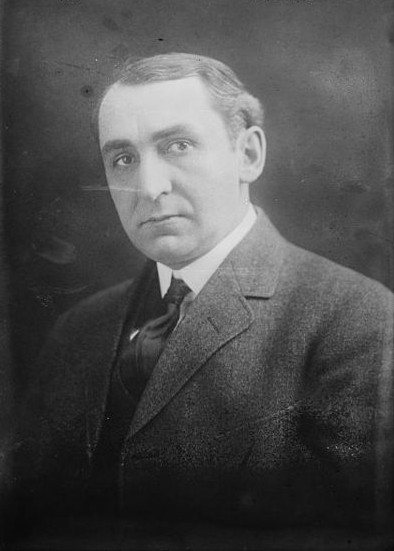
Historical · U.S. House · Michigan · District 12
William James
Former U.S. Representative · Michigan District 12 · 1915–1935 · Republican
William James represented Michigan's District 12 in the United States House of Representatives (1915–1935) for the Republican party. The page below collects sourced biographical facts, term history, committee roles, and provenance for James.
Bioguide ID: J000053
Key facts
- Full name
- William James
- State
- Michigan
- District
- District 12
- Party
- Republican
- House service
- 1915–1935
- First House term
- 1915
- Status
- Left office
- Current term ends
- —
- Born
- 1873
- Bioguide ID
- J000053
- Committee assignments
- —
- Dataset version
- 1.20260606
Biographical narrative
807 words · sourced from the Wikipedia REST extract
William James was a U.S. Representative from Michigan, serving as a member of the Republican Party. His congressional career spanned two decades, during which he represented Michigan's 12th congressional district. James was born on May 23, 1873, and his tenure in the House of Representatives lasted from 1915 until 1935. He played a significant role in various legislative matters and held leadership positions, including chairing the Committee on Military Affairs during his time in Congress. After losing his bid for re-election in the mid-1930s, he concluded his public service and passed away in 1945.
Early life and career
William James was born in Morristown, New Jersey, but moved with his family to Hancock, Michigan, in 1876. His early education took place in the public schools of Hancock, where he laid the foundation for his future endeavors. In the early 1890s, he attended Albion College in Albion, Michigan, for a brief period, which contributed to his educational background.
Before entering politics, James engaged in various professional pursuits. He served as the treasurer of Houghton County, Michigan, from 1900 to 1904, which marked his initial foray into public service. Following this role, he became involved in the real estate and insurance business, establishing a career that would support his later political ambitions.
James's military service began when he enlisted as a private in Company F of the Thirty-fourth Regiment, Michigan Volunteer Infantry, during the Spanish–American War. This experience likely influenced his later legislative focus on military affairs. His commitment to public service continued as he became a member of the board of aldermen in Hancock from 1906 to 1908. He then served as the mayor of Hancock in 1908 and 1909, further solidifying his reputation as a local leader.
In the years leading up to his congressional career, James was elected to the Michigan Senate, where he served from 1910 to 1914. His time in the state legislature provided him with valuable experience in governance and policy-making, setting the stage for his transition to the national political arena.
House tenure
William James entered the U.S. House of Representatives after winning the election in 1914, defeating the incumbent Democrat William J. MacDonald. He officially began his first term on March 4, 1915, representing Michigan's 12th congressional district. Over the course of his political career, James was re-elected to nine consecutive terms, demonstrating a significant level of support from his constituents. His tenure in the House lasted until January 3, 1935, when he concluded his service.
During his time in Congress, James was involved in various legislative initiatives and discussions. He held a prominent position as the chairman of the Committee on Military Affairs during the 71st Congress. This role placed him at the forefront of military-related legislation during a period marked by global conflict and military preparedness. His leadership in this committee underscored his commitment to issues concerning national defense and the welfare of military personnel.
Despite his long-standing service, James faced challenges in the political landscape of the 1930s. He ran for re-election in both 1934 and 1936 but was unsuccessful in both attempts, losing to Democrat Frank E. Hook in the general elections. These defeats marked the end of his congressional career, concluding a significant chapter in his public service.
Legislative focus and committees
Throughout his tenure in the House of Representatives, William James focused on a variety of legislative issues, with a notable emphasis on military affairs. As chairman of the Committee on Military Affairs, he played a critical role in shaping policies related to the armed forces and national security. His leadership in this committee allowed him to influence legislation that addressed the needs and concerns of military personnel, particularly during a time when the nation was increasingly aware of global conflicts.
James's legislative contributions extended beyond military matters. His experience in local government and the Michigan Senate likely informed his approach to various issues, including those affecting his constituents in Michigan. While specific details of his legislative initiatives are not documented, his long service suggests that he was involved in a range of discussions and decisions that impacted both his district and the broader national landscape.
His political career was characterized by a commitment to public service, as evidenced by his extensive involvement in local and state government prior to his election to Congress. This background provided him with insights into the needs of his constituents and the workings of government at multiple levels.
After leaving Congress, James's life continued to reflect his dedication to public service. He passed away on November 17, 1945, in Arlington, Virginia. His contributions to the state of Michigan and the nation were recognized posthumously, and he was interred in Arlington National Cemetery, a site that honors those who have served the country. James's legacy as a soldier and congressman remains a part of Michigan's political history.
Notable legislation
Sponsored and co-sponsored legislation for William James is pending operator curation. The biographical narrative above carries the same provenance trail until per-bill rows are written.
Sources
- [1]https://en.wikipedia.org/wiki/W._Frank_JamesWikipedia · retrieved 2026-06-06
Notable quotes
Sourced quotes for William James are pending operator curation. Narrative-scope provenance remains attached below.
Sources
- [1]https://en.wikipedia.org/wiki/W._Frank_JamesWikipedia · retrieved 2026-06-06
Key positions
Curated policy positions for William James are pending operator review. The biographical narrative above carries the same provenance trail until per-topic positions are written.
Sources
- [1]https://en.wikipedia.org/wiki/W._Frank_JamesWikipedia · retrieved 2026-06-06
Terms served
- 1915–1917U.S. House · Term 1 · Republican
- 1917–1919U.S. House · Term 2 · Republican
- 1919–1921U.S. House · Term 3 · Republican
- 1921–1923U.S. House · Term 4 · Republican
- 1923–1925U.S. House · Term 5 · Republican
- 1925–1927U.S. House · Term 6 · Republican
- 1927–1929U.S. House · Term 7 · Republican
- 1929–1931U.S. House · Term 8 · Republican
- 1931–1933U.S. House · Term 9 · Republican
- 1933–1935U.S. House · Term 10 · Republican
Sources & provenance
Every attributable claim above carries a per-section [N] marker that resolves to the corresponding URL below. Each entry records the upstream provider, the canonical URL, and the timestamp at which the source was retrieved by the ingest pipeline.
Key facts
- https://bioguide.congress.gov/search/bio/J000053bioguide · retrieved 2026-06-06
- https://www.govtrack.us/congress/members/405958govtrack · retrieved 2026-06-06
Biographical narrative
- https://en.wikipedia.org/wiki/W._Frank_Jameswikipedia · retrieved 2026-06-06
Find your representative
Every U.S. state elects representatives by district. Browse Michigan’s delegation, the full former-representative roster, or explore the role and term length.
Related on The Candidate
- Preceded by Horace YoungEarlier holder of the Michigan District 12 House seat · Republican.Open
- Succeeded by Frank HookLater holder of the Michigan District 12 House seat · Democratic.Open
- Alexander BuelFormer U.S. Representative · Michigan District 1 · DemocraticOpen
- Alfred LuckingFormer U.S. Representative · Michigan District 1 · DemocraticOpen
- Alpheus WilliamsFormer U.S. Representative · Michigan District 1 · DemocraticOpen
- Bart StupakFormer U.S. Representative · Michigan District 1 · DemocraticOpen