
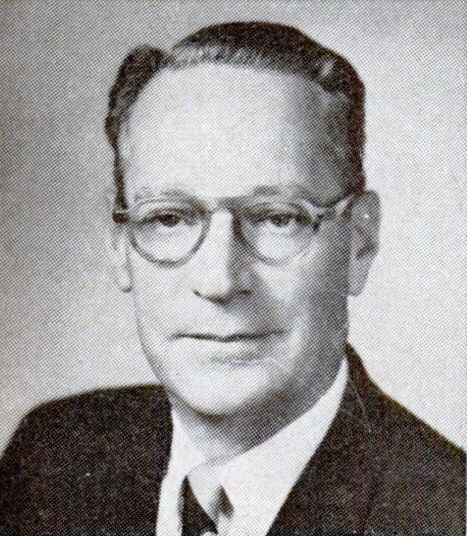
Historical · U.S. House · Michigan · District 12
John Bennett
Former U.S. Representative · Michigan District 12 · 1943–1965 · Republican
John Bennett represented Michigan's District 12 in the United States House of Representatives (1943–1965) for the Republican party. The page below collects sourced biographical facts, term history, committee roles, and provenance for Bennett.
Bioguide ID: B000377
Key facts
- Full name
- John Bennett
- State
- Michigan
- District
- District 12
- Party
- Republican
- House service
- 1943–1965
- First House term
- 1943
- Status
- Left office
- Current term ends
- —
- Born
- 1904
- Bioguide ID
- B000377
- Committee assignments
- —
- Dataset version
- 1.20260605
Biographical narrative
970 words · sourced from the Wikipedia REST extract
John Bennett was an American lawyer and politician who served as a U.S. Representative for Michigan's 12th congressional district from 1943 until his death in 1964. A member of the Republican Party, Bennett's political career spanned over two decades, during which he was involved in various legislative initiatives and represented his constituents through significant periods of American history. He is noted for being the last Republican to hold this congressional seat since 1964.
Early life and career
John Bonifas Bennett was born on January 10, 1904, in Garden, Michigan. His family background included his mother, who was an immigrant from Luxembourg, which contributed to his early understanding of diverse cultural perspectives. Bennett received his primary and secondary education in the public school system, culminating in his graduation from Watersmeet High School. His academic pursuits led him to Marquette University Law School, where he earned his law degree in 1925. Following his graduation, he furthered his education with a post-graduate course at the University of Chicago Law School in 1926.
After completing his education, Bennett was admitted to the Wisconsin bar in 1925 and subsequently to the Michigan bar in 1926. He began his legal career in Ontonagon, Michigan, where he practiced law from 1926 until 1942. His legal expertise and community involvement led him to serve as the prosecuting attorney for Ontonagon County from 1929 to 1934. In this role, he was responsible for overseeing legal proceedings and representing the county in criminal cases, which provided him with valuable experience in public service and law.
In addition to his work as a prosecutor, Bennett held the position of deputy commissioner of the Michigan Department of Labor and Industry from 1935 to 1937. This role involved overseeing labor regulations and policies in the state, further solidifying his commitment to public service and his understanding of the legal and economic issues facing workers and employers.
House tenure
Bennett's political career in the U.S. House of Representatives began after several attempts to secure a congressional seat. He first ran for office in 1938 and again in 1940, both times losing to the incumbent Democrat Frank E. Hook. However, Bennett's persistence paid off in 1942 when he successfully defeated Hook and was elected as a Republican to represent Michigan's 12th congressional district in the 78th Congress. His first term commenced on January 3, 1943, marking the beginning of a significant legislative career.
Bennett's initial term in Congress lasted until January 3, 1945. Following his first term, he faced a setback in 1944 when he lost the election to Hook once again. However, Bennett returned to Congress in 1946, successfully navigating the Republican primary after an unsuccessful challenge from Emil Hurja. He was subsequently re-elected to eight additional Congresses, serving continuously from January 3, 1947, until his death in August 1964.
Throughout his tenure, Bennett was recognized as a moderate Republican. His voting record reflected a blend of traditional Republican values and progressive stances on certain issues. Notably, he voted against the Civil Rights Acts of 1957 and 1960, which aimed to address racial discrimination and protect voting rights. However, he did support the 24th Amendment to the U.S. Constitution, which prohibited poll taxes in federal elections, as well as the Civil Rights Act of 1964, which sought to end segregation and discrimination based on race, color, religion, sex, or national origin. His support for these measures indicated a complex position on civil rights, balancing party lines with evolving societal norms.
Bennett's legislative contributions extended beyond civil rights. He was an advocate for various progressive measures, particularly those related to economic welfare. His support for initiatives concerning the federal minimum wage, housing, and food stamps demonstrated his commitment to addressing the needs of working-class Americans. These positions reflected the broader trends of the mid-20th century, as the nation grappled with issues of economic inequality and social justice.
Bennett's time in Congress coincided with significant historical events, including World War II, the post-war economic boom, and the civil rights movement. His legislative actions were influenced by these contexts, and he played a role in shaping policies that would impact the lives of many Americans.
Legislative focus and committees
During his time in the House of Representatives, Bennett served on various committees that allowed him to influence legislation in key areas. His committee assignments provided him with platforms to advocate for issues important to his constituents and the nation at large. While specific committee details are not provided, it is common for members of Congress to serve on committees related to finance, labor, and social welfare, among others.
Bennett's legislative focus reflected the priorities of his district and the broader Republican agenda during his tenure. His support for the federal minimum wage and housing initiatives aligned with the party's efforts to address economic challenges faced by many Americans in the post-war era. Additionally, his backing of food stamp programs illustrated his recognition of the importance of social safety nets in supporting vulnerable populations.
Throughout his career, Bennett maintained a commitment to public service and the legal profession. His background as a lawyer informed his approach to legislation, as he sought to create laws that were not only effective but also just. His legal training likely contributed to his understanding of the implications of various policies, particularly those related to civil rights and economic welfare.
Bennett's career came to an end when he passed away from cancer on August 9, 1964, in Chevy Chase, Maryland. His death marked the conclusion of a significant chapter in Michigan's political history, as he was the last Republican to represent the 12th congressional district until the present day. He was interred at Gate of Heaven Cemetery in Silver Spring, Maryland, leaving behind a legacy of public service and legislative contributions that reflected the complexities of mid-20th century American politics.
Notable legislation
Sponsored and co-sponsored legislation for John Bennett is pending operator curation. The biographical narrative above carries the same provenance trail until per-bill rows are written.
Sources
- [1]https://en.wikipedia.org/wiki/John_B._BennettWikipedia · retrieved 2026-06-05
Notable quotes
Sourced quotes for John Bennett are pending operator curation. Narrative-scope provenance remains attached below.
Sources
- [1]https://en.wikipedia.org/wiki/John_B._BennettWikipedia · retrieved 2026-06-05
Key positions
Curated policy positions for John Bennett are pending operator review. The biographical narrative above carries the same provenance trail until per-topic positions are written.
Sources
- [1]https://en.wikipedia.org/wiki/John_B._BennettWikipedia · retrieved 2026-06-05
Terms served
- 1943–1945U.S. House · Term 1 · Republican
- 1947–1949U.S. House · Term 2 · Republican
- 1949–1951U.S. House · Term 3 · Republican
- 1951–1953U.S. House · Term 4 · Republican
- 1953–1955U.S. House · Term 5 · Republican
- 1955–1957U.S. House · Term 6 · Republican
- 1957–1959U.S. House · Term 7 · Republican
- 1959–1961U.S. House · Term 8 · Republican
- 1961–1963U.S. House · Term 9 · Republican
- 1963–1965U.S. House · Term 10 · Republican
Sources & provenance
Every attributable claim above carries a per-section [N] marker that resolves to the corresponding URL below. Each entry records the upstream provider, the canonical URL, and the timestamp at which the source was retrieved by the ingest pipeline.
Key facts
- https://bioguide.congress.gov/search/bio/B000377bioguide · retrieved 2026-06-05
- https://www.govtrack.us/congress/members/401369govtrack · retrieved 2026-06-05
Biographical narrative
- https://en.wikipedia.org/wiki/John_B._Bennettwikipedia · retrieved 2026-06-05
Find your representative
Every U.S. state elects representatives by district. Browse Michigan’s delegation, the full former-representative roster, or explore the role and term length.
Related on The Candidate
- Preceded by William JamesEarlier holder of the Michigan District 12 House seat · Republican.Open
- Alexander BuelFormer U.S. Representative · Michigan District 1 · DemocraticOpen
- Alfred LuckingFormer U.S. Representative · Michigan District 1 · DemocraticOpen
- Alpheus WilliamsFormer U.S. Representative · Michigan District 1 · DemocraticOpen
- Bart StupakFormer U.S. Representative · Michigan District 1 · DemocraticOpen
- Republican PartyFederal candidates and office holders on the Republican line.Open