
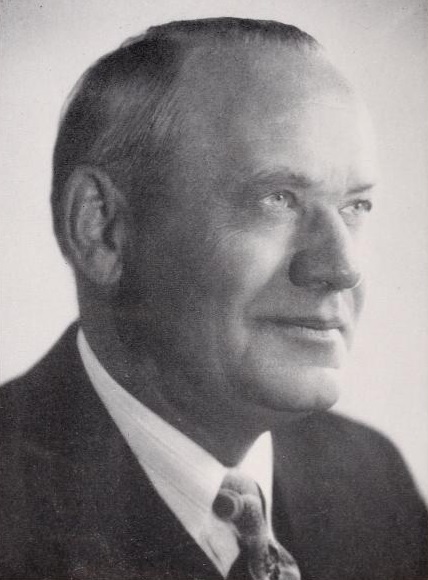
Historical · U.S. House · Michigan · District 16
John Lesinski
Former U.S. Representative · Michigan District 16 · 1933–1951 · Democratic
John Lesinski represented Michigan's District 16 in the United States House of Representatives (1933–1951) for the Democratic party. The page below collects sourced biographical facts, term history, committee roles, and provenance for Lesinski.
Bioguide ID: L000251
Key facts
- Full name
- John Lesinski
- State
- Michigan
- District
- District 16
- Party
- Democratic
- House service
- 1933–1951
- First House term
- 1933
- Status
- Left office
- Current term ends
- —
- Born
- 1885
- Bioguide ID
- L000251
- Committee assignments
- —
- Dataset version
- 1.20260605
Biographical narrative
962 words · sourced from the Wikipedia REST extract
John Lesinski was a prominent American politician who served as a U.S. Representative for Michigan's 16th congressional district from 1933 until his death in 1950. A member of the Democratic Party, Lesinski was notable for his long tenure in Congress, spanning nine terms. He played a significant role in various legislative committees, particularly those focused on veterans' affairs, immigration, and education. His contributions to public service were rooted in his early life experiences and his commitment to his community, particularly the Polish-American population.
Early life and career
John Lesinski was born on January 3, 1885, in Erie, Pennsylvania. Shortly after his birth, his family relocated to Detroit, Michigan, where he spent much of his formative years. He received his education at St. Albertus Roman Catholic Church School, followed by SS. Cyril and Methodius Seminary in Orchard Lake. He later attended Detroit Business University, which equipped him with skills that would serve him in his future business endeavors.
Lesinski began his professional career in the building and real estate sectors in Detroit. He established several lumber and supply companies in the Hamtramck and Dearborn areas, which contributed to the local economy and the development of the region. His involvement in the Polish community was significant; he served as the president of the Polish Citizens' Committee of Detroit from 1919 to 1932. In this capacity, he was instrumental in mobilizing thousands of Polish-Americans and Polish-Canadians to enlist in the military during World War I, supporting the Allied cause against the Axis powers.
In addition to his military recruitment efforts, Lesinski played a crucial role in the financial recovery of Poland following the war. He served as a state commissioner responsible for the sale of bonds that raised funds for the reconstruction of Poland after it regained independence. His efforts were recognized by the Polish government, which awarded him the Polonia Restituta for his contributions.
Lesinski's political involvement extended beyond local initiatives. He was a delegate to the Democratic National Conventions in 1936, 1940, and 1944, as well as to the Democratic State conventions during the same years. These experiences laid the groundwork for his entry into national politics.
House tenure
In 1932, Lesinski was elected as a Democrat to the 73rd United States Congress, becoming the first individual to represent Michigan's newly established 16th congressional district. He officially took office on March 4, 1933, and was subsequently re-elected to eight additional terms, serving continuously until his death in 1950. Throughout his congressional career, Lesinski was known for his dedication to his constituents and his commitment to various legislative priorities.
During his time in the House of Representatives, Lesinski held several key leadership positions. He served as the chairman of the Committee on Invalid Pensions from the 74th to the 79th Congresses, where he focused on issues affecting veterans and their families. His leadership in this committee was particularly significant during a time when many veterans were returning from World War II and needed support and assistance.
In addition to his role on the Invalid Pensions Committee, Lesinski chaired the Committee on Immigration and Naturalization during the 79th Congress. This position allowed him to influence immigration policy at a time when the United States was grappling with issues related to immigration and naturalization processes. His work in this area reflected his understanding of the challenges faced by immigrants, particularly those from his own Polish heritage.
Lesinski also served as the chairman of the Committee on Education and Labor during the 81st Congress. In this capacity, he was involved in discussions and legislation related to education reform, labor rights, and workforce development. His focus on education and labor issues underscored his commitment to improving the lives of working families and ensuring access to quality education.
Lesinski's congressional career came to an end with his passing on May 27, 1950, in Dearborn, Michigan. He was interred at Mount Olivet Cemetery in Detroit, where he was remembered for his long service and dedication to his constituents.
Legislative focus and committees
Throughout his tenure in the U.S. House of Representatives, John Lesinski demonstrated a strong commitment to various legislative issues, particularly those affecting veterans, immigrants, and education. His leadership roles in multiple committees allowed him to shape policies that aligned with his constituents' needs and interests.
As chairman of the Committee on Invalid Pensions, Lesinski was at the forefront of advocating for veterans' benefits and support systems. This committee's work was crucial in addressing the needs of veterans returning from military service, particularly in the aftermath of World War II. Lesinski's efforts in this area contributed to the development of policies aimed at improving the quality of life for veterans and their families.
In his role as chairman of the Committee on Immigration and Naturalization, Lesinski focused on immigration policies that reflected the changing demographics of the United States. His leadership in this committee was particularly important during a time when the nation was experiencing significant shifts in immigration patterns. Lesinski's background as a member of the Polish-American community likely influenced his perspective on immigration issues, as he understood the challenges faced by immigrants seeking a better life in America.
Lesinski's chairmanship of the Committee on Education and Labor further highlighted his commitment to social issues. He worked on legislation aimed at improving educational opportunities and labor rights, advocating for policies that would benefit working families and promote equitable access to education. His focus on these issues demonstrated his understanding of the interconnectedness of education, labor, and economic prosperity.
In summary, John Lesinski's legislative focus and committee work reflected his dedication to serving the needs of his constituents and addressing critical social issues. His long tenure in Congress and leadership in various committees underscored his commitment to public service and the welfare of the American people.
Notable legislation
Sponsored and co-sponsored legislation for John Lesinski is pending operator curation. The biographical narrative above carries the same provenance trail until per-bill rows are written.
Sources
- [1]https://en.wikipedia.org/wiki/John_Lesinski_Sr.Wikipedia · retrieved 2026-06-05
Notable quotes
Sourced quotes for John Lesinski are pending operator curation. Narrative-scope provenance remains attached below.
Sources
- [1]https://en.wikipedia.org/wiki/John_Lesinski_Sr.Wikipedia · retrieved 2026-06-05
Key positions
Curated policy positions for John Lesinski are pending operator review. The biographical narrative above carries the same provenance trail until per-topic positions are written.
Sources
- [1]https://en.wikipedia.org/wiki/John_Lesinski_Sr.Wikipedia · retrieved 2026-06-05
Terms served
- 1933–1935U.S. House · Term 1 · Democratic
- 1935–1937U.S. House · Term 2 · Democratic
- 1937–1939U.S. House · Term 3 · Democratic
- 1939–1941U.S. House · Term 4 · Democratic
- 1941–1943U.S. House · Term 5 · Democratic
- 1943–1945U.S. House · Term 6 · Democratic
- 1945–1947U.S. House · Term 7 · Democratic
- 1947–1949U.S. House · Term 8 · Democratic
- 1949–1951U.S. House · Term 9 · Democratic
Sources & provenance
Every attributable claim above carries a per-section [N] marker that resolves to the corresponding URL below. Each entry records the upstream provider, the canonical URL, and the timestamp at which the source was retrieved by the ingest pipeline.
Key facts
- https://bioguide.congress.gov/search/bio/L000251bioguide · retrieved 2026-06-05
- https://www.govtrack.us/congress/members/406754govtrack · retrieved 2026-06-05
Biographical narrative
- https://en.wikipedia.org/wiki/John_Lesinski_Sr.wikipedia · retrieved 2026-06-05
Find your representative
Every U.S. state elects representatives by district. Browse Michigan’s delegation, the full former-representative roster, or explore the role and term length.
Related on The Candidate
- Succeeded by John Lesinski Jr.Later holder of the Michigan District 16 House seat · Democratic.Open
- Alexander BuelFormer U.S. Representative · Michigan District 1 · DemocraticOpen
- Alfred LuckingFormer U.S. Representative · Michigan District 1 · DemocraticOpen
- Alpheus WilliamsFormer U.S. Representative · Michigan District 1 · DemocraticOpen
- Bart StupakFormer U.S. Representative · Michigan District 1 · DemocraticOpen
- Democratic PartyFederal candidates and office holders on the Democratic line.Open