
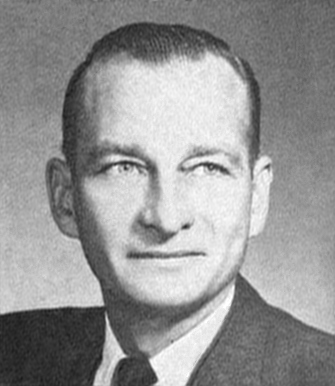
Historical · U.S. House · Michigan · District 16
John Lesinski Jr.
Former U.S. Representative · Michigan District 16 · 1951–1965 · Democratic
John Lesinski Jr. represented Michigan's District 16 in the United States House of Representatives (1951–1965) for the Democratic party. The page below collects sourced biographical facts, term history, committee roles, and provenance for Jr..
Bioguide ID: L000252
Key facts
- Full name
- John Lesinski Jr.
- State
- Michigan
- District
- District 16
- Party
- Democratic
- House service
- 1951–1965
- First House term
- 1951
- Status
- Left office
- Current term ends
- —
- Born
- 1914
- Bioguide ID
- L000252
- Committee assignments
- —
- Dataset version
- 1.20260605
Biographical narrative
936 words · sourced from the Wikipedia REST extract
John Lesinski Jr. was a prominent figure in American politics, serving as a U.S. Representative for Michigan's 16th congressional district from 1951 until 1965. A member of the Democratic Party, Lesinski's political career spanned seven terms in the House of Representatives, during which he engaged in various legislative activities and represented the interests of his constituents. His background as a veteran and his involvement in local business also shaped his perspectives and contributions during his time in office.
Early life and career
John Lesinski Jr. was born on December 28, 1914, in Detroit, Michigan. He was raised in a family of Polish descent, which influenced his cultural background and identity. At the age of eleven, Lesinski moved with his family to Dearborn, Michigan, a city known for its significant Polish-American community. His early education took place in parochial schools, which provided him with a foundation in both academics and religious instruction. He furthered his education at SS. Cyril and Methodius Seminary in Orchard Lake, Michigan, before graduating from Fordson High School in Dearborn.
At the age of eighteen, Lesinski enlisted in the United States Navy as an apprentice seaman, beginning a military career that would span several years. His initial service lasted from 1933 to 1937, and he later returned to active duty in February 1941, shortly before the United States entered World War II. Lesinski served throughout the war until October 1945, during which he earned recognition for his bravery and service, receiving the Navy and Marine Corps Medal as well as the Purple Heart Medal.
In addition to his military service, Lesinski was involved in the business sector. He held the position of vice president at Hamtramck Lumber Company from 1939 to 1943 and again from 1951 to 1954. He also served as president of Dearborn Properties, further establishing his presence in the local business community. His experiences in both the military and business sectors contributed to his understanding of the challenges faced by working-class Americans, which would later inform his legislative priorities.
Lesinski's entry into politics was influenced by his father's legacy. His father, John Lesinski Sr., was a U.S. Representative who passed away in May 1950, leaving a vacancy in Congress. In November 1950, John Lesinski Jr. successfully ran for the Democratic nomination to fill his father's seat, marking the beginning of his political career in the U.S. House of Representatives.
House tenure
Lesinski was elected to the 82nd United States Congress and officially took office on January 3, 1951. Over the course of his tenure, he was re-elected to six additional terms, serving a total of seven terms in the House. His time in office was marked by a commitment to representing the interests of his constituents in Michigan's 16th congressional district, which included parts of Wayne County and the city of Dearborn.
Throughout his congressional career, Lesinski was involved in various legislative initiatives and discussions. His tenure coincided with a period of significant change in American society, including the civil rights movement and post-war economic adjustments. However, he was known for being one of the few Northern Democrats to oppose the Civil Rights Act of 1964, a landmark piece of legislation aimed at ending segregation and discrimination based on race. This opposition placed him at odds with many of his colleagues and constituents who supported civil rights advancements.
In the 1964 elections, Lesinski faced a challenging political landscape. The congressional districts were redrawn, and portions of the 16th and the 15th districts were combined, leading to a competitive primary race. Lesinski lost the Democratic nomination for the 89th Congress to John Dingell, who was the incumbent U.S. Representative for Michigan's 15th congressional district. This defeat marked the end of Lesinski's congressional career, as he did not return to public office after his last term ended on January 3, 1965.
Legislative focus and committees
During his time in the House of Representatives, Lesinski's legislative focus was shaped by his background and the needs of his constituents. He was particularly attentive to issues affecting working-class families, labor rights, and economic development in Michigan. His experience in the business sector likely informed his understanding of economic policies and their impact on local communities.
Lesinski's role in Congress involved participation in various committees, where he contributed to discussions and decisions on a range of issues. While specific committee assignments during his tenure are not detailed in the available information, it is common for members of Congress to serve on committees that align with their interests and the needs of their constituents. These committees play a crucial role in shaping legislation, conducting hearings, and overseeing government functions.
In addition to his legislative work, Lesinski's military service and background as a veteran may have influenced his positions on defense and veterans' affairs. Members of Congress with military experience often advocate for policies that support active-duty service members and veterans, addressing issues such as healthcare, benefits, and military readiness.
After leaving Congress, Lesinski continued to engage in public service. He served on the board of commissioners of Wayne County from 1968 to 1973, further demonstrating his commitment to local governance and community issues. His involvement in local politics allowed him to remain connected to the constituents he had represented in Congress.
John Lesinski Jr. passed away on October 21, 2005, in Dearborn, Michigan. His legacy as a U.S. Representative reflects a career dedicated to public service and the representation of his constituents in Michigan. Through his military service, business experience, and political career, Lesinski contributed to the discourse on important issues of his time, leaving a mark on the history of Michigan's political landscape.
Notable legislation
Sponsored and co-sponsored legislation for John Lesinski Jr. is pending operator curation. The biographical narrative above carries the same provenance trail until per-bill rows are written.
Sources
- [1]https://en.wikipedia.org/wiki/John_Lesinski_Jr.Wikipedia · retrieved 2026-06-05
Notable quotes
Sourced quotes for John Lesinski Jr. are pending operator curation. Narrative-scope provenance remains attached below.
Sources
- [1]https://en.wikipedia.org/wiki/John_Lesinski_Jr.Wikipedia · retrieved 2026-06-05
Key positions
Curated policy positions for John Lesinski Jr. are pending operator review. The biographical narrative above carries the same provenance trail until per-topic positions are written.
Sources
- [1]https://en.wikipedia.org/wiki/John_Lesinski_Jr.Wikipedia · retrieved 2026-06-05
Terms served
- 1951–1953U.S. House · Term 1 · Democratic
- 1953–1955U.S. House · Term 2 · Democratic
- 1955–1957U.S. House · Term 3 · Democratic
- 1957–1959U.S. House · Term 4 · Democratic
- 1959–1961U.S. House · Term 5 · Democratic
- 1961–1963U.S. House · Term 6 · Democratic
- 1963–1965U.S. House · Term 7 · Democratic
Sources & provenance
Every attributable claim above carries a per-section [N] marker that resolves to the corresponding URL below. Each entry records the upstream provider, the canonical URL, and the timestamp at which the source was retrieved by the ingest pipeline.
Key facts
- https://bioguide.congress.gov/search/bio/L000252bioguide · retrieved 2026-06-05
- https://www.govtrack.us/congress/members/406755govtrack · retrieved 2026-06-05
Biographical narrative
- https://en.wikipedia.org/wiki/John_Lesinski_Jr.wikipedia · retrieved 2026-06-05
Find your representative
Every U.S. state elects representatives by district. Browse Michigan’s delegation, the full former-representative roster, or explore the role and term length.
Related on The Candidate
- Preceded by John LesinskiEarlier holder of the Michigan District 16 House seat · Democratic.Open
- Alexander BuelFormer U.S. Representative · Michigan District 1 · DemocraticOpen
- Alfred LuckingFormer U.S. Representative · Michigan District 1 · DemocraticOpen
- Alpheus WilliamsFormer U.S. Representative · Michigan District 1 · DemocraticOpen
- Bart StupakFormer U.S. Representative · Michigan District 1 · DemocraticOpen
- Democratic PartyFederal candidates and office holders on the Democratic line.Open