
Historical · U.S. House · Michigan · District 17
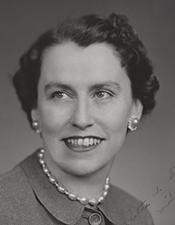
Martha Griffiths
Former U.S. Representative · Michigan District 17 · 1955–1975 · Democratic
Martha Griffiths represented Michigan's District 17 in the United States House of Representatives (1955–1975) for the Democratic party. The page below collects sourced biographical facts, term history, committee roles, and provenance for Griffiths.
Bioguide ID: G000471
Key facts
- Full name
- Martha Griffiths
- State
- Michigan
- District
- District 17
- Party
- Democratic
- House service
- 1955–1975
- First House term
- 1955
- Status
- Left office
- Current term ends
- —
- Born
- 1912
- Bioguide ID
- G000471
- Committee assignments
- —
- Dataset version
- 1.20260605
Biographical narrative
995 words · sourced from the Wikipedia REST extract
Martha W. Griffiths was an influential American lawyer and politician who served as a U.S. Representative for Michigan's 17th congressional district from 1955 until 1975. A member of the Democratic Party, she made significant contributions to American legislative history, particularly in the areas of civil rights and animal welfare. Griffiths was notable for being the first woman from Michigan elected to the United States Congress and the first woman to serve on the House Committee on Ways and Means. Her legislative efforts included pivotal roles in the passage of the Equal Rights Amendment and the Humane Slaughter Act. After her congressional career, she served as the lieutenant governor of Michigan, further solidifying her legacy as a trailblazer for women in politics.
Early life and career
Martha Edna Wright was born on January 29, 1912, in Pierce City, Missouri. She grew up in a family that valued education, which influenced her academic pursuits. Griffiths attended public schools in her hometown before enrolling at the University of Missouri, where she earned a Bachelor of Arts degree in 1934. Following her undergraduate studies, she chose to pursue a career in law, leading her to the University of Michigan Law School, from which she graduated in 1940.
After completing her legal education, Griffiths began her career in law, initially working in private practice. Her early professional experience included a position in the legal department of the American Automobile Insurance Company in Detroit from 1941 to 1942. During World War II, she served as an Ordnance District contract negotiator from 1942 to 1946, where she gained valuable experience in negotiations and legal proceedings.
Griffiths entered the political arena in 1949 when she was elected to the Michigan House of Representatives, representing the Wayne County 1st district. She served in this capacity until 1953, during which time she developed a reputation for her commitment to public service and advocacy for women's rights. In 1953, she was appointed as the recorder and judge of the Recorder's Court in Detroit, becoming the first woman to hold this judicial position. Her tenure as a judge lasted until 1954, further establishing her credentials as a legal expert and public servant.
House tenure
In 1954, Griffiths was elected as a Democrat to represent Michigan's 17th congressional district in the 84th Congress, marking the beginning of her ten terms in the U.S. House of Representatives. She officially took office on January 3, 1955, and continued to serve until January 3, 1975. Throughout her congressional career, Griffiths was a delegate at the Democratic National Convention in both 1956 and 1968, where she participated in shaping the party's platform and direction.
Griffiths' legislative career was marked by her dedication to civil rights and social justice. She was instrumental in advocating for the inclusion of sex discrimination prohibitions under Title VII of the Civil Rights Act of 1964, a landmark piece of legislation aimed at ending discrimination in employment. Her efforts in this area were significant, as they laid the groundwork for future advancements in gender equality.
In addition to her work on civil rights, Griffiths was a strong proponent of animal welfare. In 1955, she introduced the first version of the federal Humane Slaughter Act, which aimed to improve the treatment of animals in the food industry. This legislation sought to prohibit inhumane practices such as shackling and hoisting conscious animals and the use of sledgehammers for stunning. A revised version of the act, co-sponsored by Griffiths and Representative William R. Poage, was enacted in 1958, reflecting her commitment to ethical treatment of animals.
Griffiths' legislative achievements and her role as a pioneering woman in Congress contributed to her recognition as a significant figure in American politics. She was known for her determination and legal acumen, which she utilized to navigate the complexities of legislative processes and advocate for her constituents.
Legislative focus and committees
During her time in the House of Representatives, Griffiths served on several important committees, most notably the House Committee on Ways and Means. Her appointment to this committee was historic, as she was the first woman to serve in this capacity. The Ways and Means Committee is one of the oldest and most powerful committees in Congress, responsible for taxation and revenue generation, making Griffiths' presence on the committee particularly noteworthy.
Griffiths' legislative focus encompassed a range of issues, with a strong emphasis on civil rights, women's rights, and social justice. Her sponsorship of the Equal Rights Amendment underscored her commitment to gender equality and her belief that women should have the same rights and opportunities as men. Although the amendment ultimately did not achieve ratification, Griffiths' advocacy for it highlighted the ongoing struggle for women's rights in the United States.
In addition to her work on civil rights, Griffiths was an advocate for various social issues, including healthcare and education. Her legislative initiatives often reflected her deep concern for the welfare of marginalized groups, including women, minorities, and animals. She utilized her legal background to craft legislation that addressed these issues effectively, demonstrating her ability to combine her professional expertise with her passion for public service.
After her congressional tenure, Griffiths continued her public service by being elected as the lieutenant governor of Michigan in 1982, becoming the first woman to hold this position. She served in this role until 1991, further contributing to her legacy as a pioneer for women in politics.
Griffiths was recognized for her contributions to society and her trailblazing role in politics. She was inducted into the Michigan Women's Hall of Fame in 1983 and the National Women's Hall of Fame in 1993, honoring her impact on women's rights and public service.
Martha Griffiths passed away on April 22, 2003, at the age of 91, leaving behind a legacy of advocacy and public service that continues to inspire future generations of women in politics. Her life and career exemplify the importance of perseverance and dedication to justice, making her a significant figure in American history.
Notable legislation
Sponsored and co-sponsored legislation for Martha Griffiths is pending operator curation. The biographical narrative above carries the same provenance trail until per-bill rows are written.
Sources
- [1]https://en.wikipedia.org/wiki/Martha_GriffithsWikipedia · retrieved 2026-06-05
Notable quotes
Sourced quotes for Martha Griffiths are pending operator curation. Narrative-scope provenance remains attached below.
Sources
- [1]https://en.wikipedia.org/wiki/Martha_GriffithsWikipedia · retrieved 2026-06-05
Key positions
Curated policy positions for Martha Griffiths are pending operator review. The biographical narrative above carries the same provenance trail until per-topic positions are written.
Sources
- [1]https://en.wikipedia.org/wiki/Martha_GriffithsWikipedia · retrieved 2026-06-05
Terms served
- 1955–1957U.S. House · Term 1 · Democratic
- 1957–1959U.S. House · Term 2 · Democratic
- 1959–1961U.S. House · Term 3 · Democratic
- 1961–1963U.S. House · Term 4 · Democratic
- 1963–1965U.S. House · Term 5 · Democratic
- 1965–1967U.S. House · Term 6 · Democratic
- 1967–1969U.S. House · Term 7 · Democratic
- 1969–1971U.S. House · Term 8 · Democratic
- 1971–1973U.S. House · Term 9 · Democratic
- 1973–1975U.S. House · Term 10 · Democratic
Sources & provenance
Every attributable claim above carries a per-section [N] marker that resolves to the corresponding URL below. Each entry records the upstream provider, the canonical URL, and the timestamp at which the source was retrieved by the ingest pipeline.
Key facts
- https://bioguide.congress.gov/search/bio/G000471bioguide · retrieved 2026-06-05
- https://www.govtrack.us/congress/members/404816govtrack · retrieved 2026-06-05
Biographical narrative
- https://en.wikipedia.org/wiki/Martha_Griffithswikipedia · retrieved 2026-06-05
Find your representative
Every U.S. state elects representatives by district. Browse Michigan’s delegation, the full former-representative roster, or explore the role and term length.
Related on The Candidate
- Preceded by Charles OakmanEarlier holder of the Michigan District 17 House seat · Republican.Open
- Succeeded by William BrodheadLater holder of the Michigan District 17 House seat · Democratic.Open
- Alexander BuelFormer U.S. Representative · Michigan District 1 · DemocraticOpen
- Alfred LuckingFormer U.S. Representative · Michigan District 1 · DemocraticOpen
- Alpheus WilliamsFormer U.S. Representative · Michigan District 1 · DemocraticOpen
- Bart StupakFormer U.S. Representative · Michigan District 1 · DemocraticOpen