
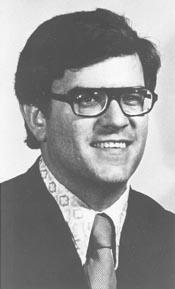
Historical · U.S. House · Michigan · District 17
William Brodhead
Former U.S. Representative · Michigan District 17 · 1975–1983 · Democratic
William Brodhead represented Michigan's District 17 in the United States House of Representatives (1975–1983) for the Democratic party. The page below collects sourced biographical facts, term history, committee roles, and provenance for Brodhead.
Bioguide ID: B000862
Key facts
- Full name
- William Brodhead
- State
- Michigan
- District
- District 17
- Party
- Democratic
- House service
- 1975–1983
- First House term
- 1975
- Status
- Left office
- Current term ends
- —
- Born
- 1941
- Bioguide ID
- B000862
- Committee assignments
- —
- Dataset version
- 1.20260605
Biographical narrative
1,006 words · sourced from the Wikipedia REST extract
William Brodhead is a former American politician and lawyer who served as a U.S. Representative for Michigan's 17th congressional district from 1975 to 1983. A member of the Democratic Party, Brodhead was elected to four consecutive terms in the House of Representatives, where he was involved in significant legislative activities and served on key committees. His career in public service began in the Michigan House of Representatives, and after leaving Congress, he returned to his legal practice while also engaging in various philanthropic and community initiatives.
Early life and career
William McNulty Brodhead was born on September 12, 1941, in Cleveland, Ohio. He spent his formative years in Cleveland, where he attended local elementary and secondary schools. Following his high school education, Brodhead pursued higher education at Wayne State University in Detroit, Michigan, where he earned a Bachelor of Arts degree in 1965. His academic journey continued at the University of Michigan Law School in Ann Arbor, where he obtained his Juris Doctor degree in 1967.
After completing his education, Brodhead was admitted to the Michigan Bar in 1968, marking the beginning of his legal career. He commenced his practice in Detroit, where he established himself in the legal community. His early involvement in politics began when he was elected to the Michigan House of Representatives in 1970. He successfully secured reelection in 1972, representing a district in Detroit. This experience in state politics laid the groundwork for his future endeavors at the federal level.
House tenure
Brodhead's entry into the U.S. House of Representatives came in 1975 when he won election to represent Michigan's 17th congressional district. He succeeded Martha W. Griffiths, the Democratic incumbent who chose not to seek renomination. Brodhead's election marked the beginning of his four terms in Congress, during which he served from January 3, 1975, until January 3, 1983.
Throughout his tenure in the House, Brodhead was an active participant in various legislative initiatives. He served on the House Ways and Means Committee, which is responsible for taxation, trade, and social security matters. This committee plays a crucial role in shaping fiscal policy and economic legislation. Additionally, Brodhead was a member of the Budget Committee, where he contributed to discussions and decisions regarding the federal budget and fiscal priorities.
Brodhead's leadership capabilities were recognized when he served as Chair of the Democratic Study Group, which functioned as the liberal caucus within the House. In this role, he was involved in promoting progressive policies and advocating for issues aligned with the Democratic Party's platform. His time in Congress was characterized by a commitment to addressing the needs of his constituents and contributing to broader national discussions on economic and social issues.
During his congressional career, Brodhead participated in various legislative efforts that reflected the priorities of his district and the Democratic Party. His work on the Ways and Means Committee, in particular, allowed him to engage with critical issues such as healthcare, taxation, and social welfare programs. Brodhead's legislative focus was informed by his background as a lawyer and his experience in state politics, enabling him to navigate complex legal and policy matters effectively.
Legislative focus and committees
Brodhead's legislative focus during his time in Congress encompassed a range of issues pertinent to his constituents and the broader American public. His involvement in the House Ways and Means Committee provided him with a platform to influence significant economic policies, particularly those related to taxation and social security. The committee's work is vital in shaping the financial landscape of the nation, and Brodhead's participation allowed him to advocate for measures that aligned with the interests of his district.
As a member of the Budget Committee, Brodhead contributed to discussions surrounding federal spending and budgetary priorities. This role required a keen understanding of fiscal policy and the implications of budget decisions on various sectors, including education, healthcare, and infrastructure. His work on these committees underscored his commitment to responsible governance and fiscal accountability.
In addition to his committee assignments, Brodhead's leadership as Chair of the Democratic Study Group positioned him as a key figure in promoting progressive legislation. The group served as a platform for liberal members of Congress to collaborate on initiatives that addressed social justice, economic equality, and civil rights. Under his chairmanship, the group focused on advancing policies that aimed to improve the quality of life for all Americans, particularly those in marginalized communities.
Brodhead's legislative efforts were reflective of the broader political climate of the 1970s and early 1980s, a period marked by significant social change and economic challenges. His work in Congress was characterized by a dedication to public service and a desire to effect positive change through legislative action.
Following his decision not to seek reelection in 1982, Brodhead concluded his congressional career and returned to the Detroit area. He transitioned back into the legal profession, becoming a partner at the Detroit law firm Plunkett & Cooney, where he practiced law until 2003. After retiring from the firm, he continued to work independently until 2006, marking the end of his legal career.
In addition to his professional endeavors, Brodhead remained active in community service and philanthropy. He served on various non-profit boards, contributing to organizations such as Detroit Public Television, Mt. Carmel Hospital, and Michigan's Children. His commitment to community engagement was evident in his roles as Board Chair for several organizations, including the Skillman Foundation and Covenant House Michigan.
In 1994, Brodhead attempted to return to public office by running for the U.S. Senate. However, he was unsuccessful in the primary election, which was ultimately won by Bob Carr. Carr later lost in the general election to Spencer Abraham.
In his personal life, Brodhead resides in Northern California with his wife, Kathleen, whom he married in 1965. The couple has two adult children and a granddaughter who also live in Northern California. Brodhead has continued to be involved in community initiatives, including serving on the board of directors of Covenant House in California, reflecting his ongoing commitment to public service and community welfare.
Notable legislation
Sponsored and co-sponsored legislation for William Brodhead is pending operator curation. The biographical narrative above carries the same provenance trail until per-bill rows are written.
Sources
- [1]https://en.wikipedia.org/wiki/William_M._BrodheadWikipedia · retrieved 2026-06-05
Notable quotes
Sourced quotes for William Brodhead are pending operator curation. Narrative-scope provenance remains attached below.
Sources
- [1]https://en.wikipedia.org/wiki/William_M._BrodheadWikipedia · retrieved 2026-06-05
Key positions
Curated policy positions for William Brodhead are pending operator review. The biographical narrative above carries the same provenance trail until per-topic positions are written.
Sources
- [1]https://en.wikipedia.org/wiki/William_M._BrodheadWikipedia · retrieved 2026-06-05
Terms served
- 1975–1977U.S. House · Term 1 · Democratic
- 1977–1979U.S. House · Term 2 · Democratic
- 1979–1981U.S. House · Term 3 · Democratic
- 1981–1983U.S. House · Term 4 · Democratic
Sources & provenance
Every attributable claim above carries a per-section [N] marker that resolves to the corresponding URL below. Each entry records the upstream provider, the canonical URL, and the timestamp at which the source was retrieved by the ingest pipeline.
Key facts
- https://bioguide.congress.gov/search/bio/B000862bioguide · retrieved 2026-06-05
- https://www.govtrack.us/congress/members/401819govtrack · retrieved 2026-06-05
Biographical narrative
- https://en.wikipedia.org/wiki/William_M._Brodheadwikipedia · retrieved 2026-06-05
Find your representative
Every U.S. state elects representatives by district. Browse Michigan’s delegation, the full former-representative roster, or explore the role and term length.
Related on The Candidate
- Preceded by Martha GriffithsEarlier holder of the Michigan District 17 House seat · Democratic.Open
- Alexander BuelFormer U.S. Representative · Michigan District 1 · DemocraticOpen
- Alfred LuckingFormer U.S. Representative · Michigan District 1 · DemocraticOpen
- Alpheus WilliamsFormer U.S. Representative · Michigan District 1 · DemocraticOpen
- Bart StupakFormer U.S. Representative · Michigan District 1 · DemocraticOpen
- Democratic PartyFederal candidates and office holders on the Democratic line.Open