
Historical · U.S. House · Michigan · District 18
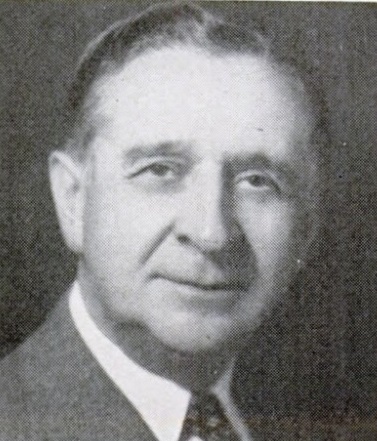
George Dondero
Former U.S. Representative · Michigan District 18 · 1933–1957 · Republican
George Dondero represented Michigan's District 18 in the United States House of Representatives (1933–1957) for the Republican party. The page below collects sourced biographical facts, term history, committee roles, and provenance for Dondero.
Bioguide ID: D000411
Key facts
- Full name
- George Dondero
- State
- Michigan
- District
- District 18
- Party
- Republican
- House service
- 1933–1957
- First House term
- 1933
- Status
- Left office
- Current term ends
- —
- Born
- 1883
- Bioguide ID
- D000411
- Committee assignments
- —
- Dataset version
- 1.20260605
Biographical narrative
963 words · sourced from the Wikipedia REST extract
George Dondero was a Republican politician who served as a U.S. Representative for Michigan's congressional districts from 1933 until 1957. His lengthy tenure in the House of Representatives spanned twelve terms, during which he engaged in various legislative activities and held significant committee positions. Dondero's political career was marked by his involvement in education and public works, as well as his controversial views on modern art and communism.
Early life and career
George Anthony Dondero was born on December 16, 1883, on a farm located in Greenfield Township, Michigan, an area that has since been incorporated into Detroit. His family background was diverse, with his father being an immigrant from Italy and his mother hailing from Germany. This multicultural heritage likely influenced his perspectives and approach to public service.
Dondero's early career in public service began at the local level. He served as the village clerk of Royal Oak, Michigan, in 1905 and 1906, and subsequently held positions as town treasurer in 1907 and 1908, and village assessor in 1909. His commitment to public service continued as he graduated from the Detroit College of Law in 1910, after which he was admitted to the bar and established a legal practice in Royal Oak. His legal career was complemented by his role as village attorney from 1911 to 1921, and as assistant prosecuting attorney for Oakland County in 1918 and 1919.
In addition to his legal work, Dondero was actively involved in local governance. He served as mayor of Royal Oak for two terms in 1921 and 1922, and he was a member of the board of education from 1910 to 1928. His extensive experience in local government provided him with a solid foundation for his future political career at the national level.
Dondero's entry into federal politics came in 1932 when he was elected as a Republican to the 73rd United States Congress. He began his first term on March 4, 1933, representing Michigan's newly created 17th congressional district, which was established following the 1930 census. Throughout his congressional career, he was re-elected to eleven additional terms, continuing to serve until January 3, 1957. Following the 1950 census, the majority of his constituency was incorporated into the 18th congressional district, which he also represented until the end of his tenure.
House tenure
During his time in the House of Representatives, Dondero was involved in a variety of legislative matters and held several key positions on important committees. From 1937 to 1947, he served as the ranking member of the House Committee on Education, where he played a significant role in shaping educational policy during a transformative period in American education. His leadership on this committee allowed him to influence legislation that affected schools and educational institutions across the nation.
In addition to his work on education, Dondero was appointed chairman of the Committee on Public Works during the 80th and 81st Congresses. In this capacity, he oversaw crucial infrastructure projects and initiatives aimed at improving public facilities and services. One of his notable legislative achievements was sponsoring the bill that led to the creation of the Saint Lawrence Seaway in 1954. This significant project enabled large ocean-going vessels to access the Great Lakes, facilitating trade and commerce in the region.
Dondero's congressional career was also marked by his alignment with certain political movements and ideologies. He was sympathetic to McCarthyism, a period characterized by heightened anti-communist sentiment in the United States. He publicly expressed concerns about perceived communist influences within the government and society, which led him to question the effectiveness of various government officials in countering these influences.
Legislative focus and committees
Throughout his twelve terms in Congress, Dondero's legislative focus reflected his interests and the political climate of the time. His work on the House Committee on Education underscored his commitment to improving educational opportunities and addressing the needs of schools and students. He was involved in discussions and decisions that shaped educational policy during a time when the nation was grappling with issues related to access, funding, and curriculum development.
As chairman of the Committee on Public Works, Dondero played a pivotal role in overseeing infrastructure projects that were essential for the growth and development of the United States. His leadership in this area was particularly important during the post-World War II era, a time when the nation was focused on rebuilding and modernizing its infrastructure.
Dondero's views on art and culture were also a significant aspect of his public persona. He was known for his outspoken criticism of modern art, which he associated with communist ideology. He argued that various modern art movements, such as Cubism and Dadaism, were detrimental to American values and culture. His remarks on this subject garnered attention and controversy, reflecting the broader cultural debates of the time regarding art, expression, and political ideology.
In addition to his legislative work, Dondero's actions during his tenure included attempts to influence high-profile trials and investigations related to war crimes and alleged communist infiltration in the government. His efforts to block the prosecution of IG Farben executives at the Nuremberg trials and his public criticisms of government officials for their handling of suspected communist activities highlighted his commitment to anti-communism and his willingness to take bold stances on contentious issues.
George Dondero's career in the U.S. House of Representatives concluded on January 3, 1957. Following his departure from Congress, he continued to be involved in various civic activities and remained a prominent figure in Michigan politics until his death on January 29, 1968, at the age of 84. He is interred at Oakview Cemetery in Royal Oak, Michigan, leaving behind a legacy marked by his long service in the House and his contributions to American political discourse during a pivotal era in the nation's history.
Notable legislation
Sponsored and co-sponsored legislation for George Dondero is pending operator curation. The biographical narrative above carries the same provenance trail until per-bill rows are written.
Sources
- [1]https://en.wikipedia.org/wiki/George_Anthony_DonderoWikipedia · retrieved 2026-06-05
Notable quotes
Sourced quotes for George Dondero are pending operator curation. Narrative-scope provenance remains attached below.
Sources
- [1]https://en.wikipedia.org/wiki/George_Anthony_DonderoWikipedia · retrieved 2026-06-05
Key positions
Curated policy positions for George Dondero are pending operator review. The biographical narrative above carries the same provenance trail until per-topic positions are written.
Sources
- [1]https://en.wikipedia.org/wiki/George_Anthony_DonderoWikipedia · retrieved 2026-06-05
Terms served
- 1933–1935U.S. House · Term 1 · Republican
- 1935–1937U.S. House · Term 2 · Republican
- 1937–1939U.S. House · Term 3 · Republican
- 1939–1941U.S. House · Term 4 · Republican
- 1941–1943U.S. House · Term 5 · Republican
- 1943–1945U.S. House · Term 6 · Republican
- 1945–1947U.S. House · Term 7 · Republican
- 1947–1949U.S. House · Term 8 · Republican
- 1949–1951U.S. House · Term 9 · Republican
- 1951–1953U.S. House · Term 10 · Republican
- 1953–1955U.S. House · Term 11 · Republican
- 1955–1957U.S. House · Term 12 · Republican
Sources & provenance
Every attributable claim above carries a per-section [N] marker that resolves to the corresponding URL below. Each entry records the upstream provider, the canonical URL, and the timestamp at which the source was retrieved by the ingest pipeline.
Key facts
- https://bioguide.congress.gov/search/bio/D000411bioguide · retrieved 2026-06-05
- https://www.govtrack.us/congress/members/403524govtrack · retrieved 2026-06-05
Biographical narrative
- https://en.wikipedia.org/wiki/George_Anthony_Donderowikipedia · retrieved 2026-06-05
Find your representative
Every U.S. state elects representatives by district. Browse Michigan’s delegation, the full former-representative roster, or explore the role and term length.
Related on The Candidate
- Succeeded by William BroomfieldLater holder of the Michigan District 18 House seat · Republican.Open
- Alexander BuelFormer U.S. Representative · Michigan District 1 · DemocraticOpen
- Alfred LuckingFormer U.S. Representative · Michigan District 1 · DemocraticOpen
- Alpheus WilliamsFormer U.S. Representative · Michigan District 1 · DemocraticOpen
- Bart StupakFormer U.S. Representative · Michigan District 1 · DemocraticOpen
- Republican PartyFederal candidates and office holders on the Republican line.Open