
Historical · U.S. House · Michigan · District 18
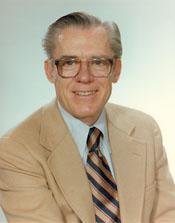
William Broomfield
Former U.S. Representative · Michigan District 18 · 1957–1993 · Republican
William Broomfield represented Michigan's District 18 in the United States House of Representatives (1957–1993) for the Republican party. The page below collects sourced biographical facts, term history, committee roles, and provenance for Broomfield.
Bioguide ID: B000890
Key facts
- Full name
- William Broomfield
- State
- Michigan
- District
- District 18
- Party
- Republican
- House service
- 1957–1993
- First House term
- 1957
- Status
- Left office
- Current term ends
- —
- Born
- 1922
- Bioguide ID
- B000890
- Committee assignments
- —
- Dataset version
- 1.20260605
Biographical narrative
850 words · sourced from the Wikipedia REST extract
William S. Broomfield was an American politician who served as a U.S. Representative from Michigan, representing the 18th congressional district for a significant portion of his career. A member of the Republican Party, Broomfield's tenure in the House of Representatives spanned from 1957 until 1993, making him one of the longest-serving members of Congress at the time of his retirement. His legislative work was characterized by a commitment to bipartisanship and ethics, and he played a notable role in various significant legislative measures during his time in office.
Early life and career
William S. Broomfield was born on April 28, 1922, in Royal Oak, Michigan, to Scevillian C. Broomfield and Fern Broomfield. His father was a dentist, which may have influenced Broomfield's early understanding of community service and public health. He completed his secondary education at Royal Oak High School in 1940 before pursuing higher education at Michigan State College, now known as Michigan State University, located in East Lansing.
During World War II, Broomfield served in the United States Army Air Corps, contributing to the war effort and gaining valuable leadership experience. After the war, he transitioned into the private sector, engaging in the real estate and property management business, which provided him with insights into local economic issues and community development.
Broomfield's political career began at the state level. He was elected to the Michigan State House of Representatives, where he served from 1949 to 1954. During his time in the state legislature, he held the position of speaker pro tempore in 1953, demonstrating his leadership abilities and gaining recognition among his peers. Following his tenure in the House, he advanced to the Michigan State Senate, serving in 1955 and 1956. These early experiences in state politics laid the groundwork for his subsequent election to the U.S. Congress.
House tenure
In 1956, Broomfield was elected as a Republican representative for Michigan's 18th District to the United States House of Representatives. His first term began on January 3, 1957, and he was subsequently re-elected for 17 additional terms, serving until January 3, 1993. Throughout his congressional career, Broomfield experienced changes in district boundaries due to redistricting that followed the U.S. Census. He represented the 19th District from 1973 to 1983 and returned to represent the 18th District from 1983 until his retirement.
Broomfield's long tenure in the House made him a prominent figure within the Republican Party and in Congress as a whole. By the time he retired, he was recognized as the longest-serving Republican member in the House. His legislative contributions included participation in various committees, notably the U.S. House Committee on Foreign Affairs, where he served as the ranking member from 1975 until his retirement. His leadership roles and extensive experience allowed him to influence key foreign policy discussions and decisions during a pivotal time in U.S. history.
Broomfield's legislative record included votes in favor of several significant civil rights measures, including the Civil Rights Acts of 1957, 1960, 1964, and 1968, as well as the Voting Rights Act of 1965 and the 24th Amendment to the U.S. Constitution. His support for these landmark pieces of legislation reflected a commitment to advancing civil rights and addressing social justice issues, which were central to the national discourse during his time in office.
Legislative focus and committees
Throughout his congressional career, Broomfield was known for his dedication to ethical governance and bipartisanship. His ability to work across party lines earned him respect from colleagues on both sides of the aisle. He was often praised for his integrity and statesmanship, qualities that contributed to his reputation as a reliable and principled legislator.
As a member of the House Committee on Foreign Affairs, Broomfield engaged in discussions and decisions that shaped U.S. foreign policy during a period marked by significant global events. His role as ranking member allowed him to influence the committee's direction and priorities, particularly in relation to international relations and diplomatic efforts.
Broomfield's legislative focus extended beyond foreign affairs, as he was involved in a wide range of issues affecting his constituents and the nation. His experience in real estate and property management likely informed his perspectives on economic development, housing, and urban planning, which were important topics in the context of his district's needs.
After retiring from Congress in 1993, Broomfield continued to be active in community service. He established a foundation that supported various charitable initiatives in southeast Michigan, including efforts to combat cancer, spina bifida, and Alzheimer's disease, as well as supporting the Salvation Army. His commitment to philanthropy reflected his ongoing dedication to public service and improving the lives of others.
Broomfield's legacy includes the designation of the Royal Oak Post Office as the William S. Broomfield Post Office Building in September 2000, honoring his contributions to the community and the state. He passed away on February 20, 2019, at the age of 96 in Kensington, Maryland, where he had resided in his later years. His death marked the end of a long and impactful career in public service, leaving behind a legacy of bipartisan cooperation and commitment to ethical governance.
Notable legislation
Sponsored and co-sponsored legislation for William Broomfield is pending operator curation. The biographical narrative above carries the same provenance trail until per-bill rows are written.
Sources
- [1]https://en.wikipedia.org/wiki/William_BroomfieldWikipedia · retrieved 2026-06-05
Notable quotes
Sourced quotes for William Broomfield are pending operator curation. Narrative-scope provenance remains attached below.
Sources
- [1]https://en.wikipedia.org/wiki/William_BroomfieldWikipedia · retrieved 2026-06-05
Key positions
Curated policy positions for William Broomfield are pending operator review. The biographical narrative above carries the same provenance trail until per-topic positions are written.
Sources
- [1]https://en.wikipedia.org/wiki/William_BroomfieldWikipedia · retrieved 2026-06-05
Terms served
- 1957–1959U.S. House · Term 1 · Republican
- 1959–1961U.S. House · Term 2 · Republican
- 1961–1963U.S. House · Term 3 · Republican
- 1963–1965U.S. House · Term 4 · Republican
- 1965–1967U.S. House · Term 5 · Republican
- 1967–1969U.S. House · Term 6 · Republican
- 1969–1971U.S. House · Term 7 · Republican
- 1971–1973U.S. House · Term 8 · Republican
- 1973–1975U.S. House · Term 9 · Republican
- 1975–1977U.S. House · Term 10 · Republican
- 1977–1979U.S. House · Term 11 · Republican
- 1979–1981U.S. House · Term 12 · Republican
- 1981–1983U.S. House · Term 13 · Republican
- 1983–1985U.S. House · Term 14 · Republican
- 1985–1987U.S. House · Term 15 · Republican
- 1987–1989U.S. House · Term 16 · Republican
- 1989–1991U.S. House · Term 17 · Republican
- 1991–1993U.S. House · Term 18 · Republican
Sources & provenance
Every attributable claim above carries a per-section [N] marker that resolves to the corresponding URL below. Each entry records the upstream provider, the canonical URL, and the timestamp at which the source was retrieved by the ingest pipeline.
Key facts
- https://bioguide.congress.gov/search/bio/B000890bioguide · retrieved 2026-06-05
- https://www.govtrack.us/congress/members/401847govtrack · retrieved 2026-06-05
Biographical narrative
- https://en.wikipedia.org/wiki/William_Broomfieldwikipedia · retrieved 2026-06-05
Find your representative
Every U.S. state elects representatives by district. Browse Michigan’s delegation, the full former-representative roster, or explore the role and term length.
Related on The Candidate
- Preceded by George DonderoEarlier holder of the Michigan District 18 House seat · Republican.Open
- Alexander BuelFormer U.S. Representative · Michigan District 1 · DemocraticOpen
- Alfred LuckingFormer U.S. Representative · Michigan District 1 · DemocraticOpen
- Alpheus WilliamsFormer U.S. Representative · Michigan District 1 · DemocraticOpen
- Bart StupakFormer U.S. Representative · Michigan District 1 · DemocraticOpen
- Republican PartyFederal candidates and office holders on the Republican line.Open