
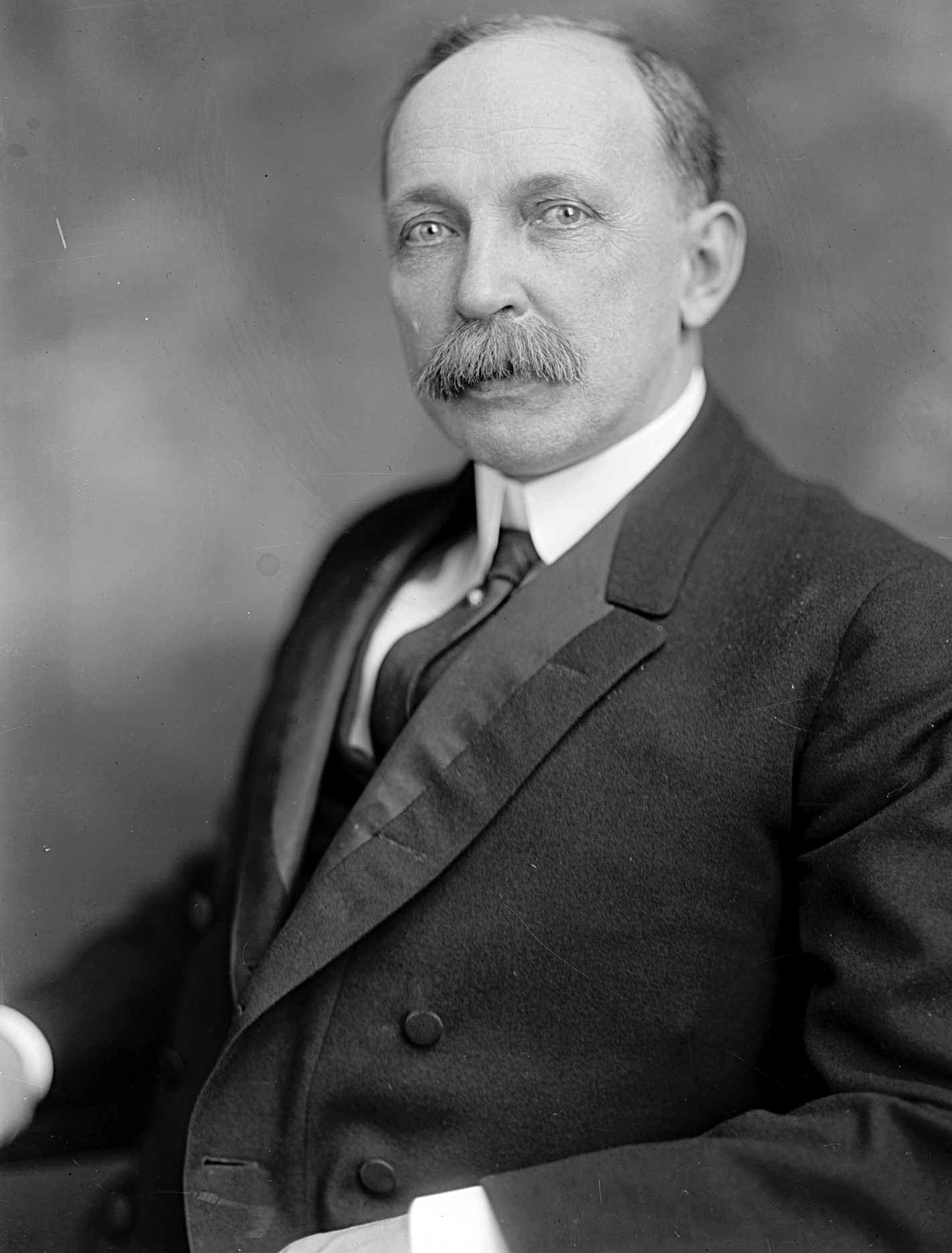
Historical · U.S. House · Michigan · District 2
Samuel Beakes
Former U.S. Representative · Michigan District 2 · 1913–1919 · Democratic
Samuel Beakes represented Michigan's District 2 in the United States House of Representatives (1913–1919) for the Democratic party. The page below collects sourced biographical facts, term history, committee roles, and provenance for Beakes.
Bioguide ID: B000264
Key facts
- Full name
- Samuel Beakes
- State
- Michigan
- District
- District 2
- Party
- Democratic
- House service
- 1913–1919
- First House term
- 1913
- Status
- Left office
- Current term ends
- —
- Born
- 1861
- Bioguide ID
- B000264
- Committee assignments
- —
- Dataset version
- 1.20260606
Biographical narrative
823 words · sourced from the Wikipedia REST extract
Samuel Beakes was a prominent American politician who served as a U.S. Representative for Michigan's 2nd congressional district. A member of the Democratic Party, Beakes held office during a transformative period in American history, contributing to legislative discussions and decisions from 1913 until 1919. His career spanned various roles in local government and media, reflecting a deep engagement with both community and national issues.
Early life and career
Samuel Willard Beakes was born on January 11, 1861, in Sullivan County, New York. He was the son of Elizabeth Bull and George M. Beakes. His early education took place at Wallkill Academy in Middletown, New York, where he laid the groundwork for his future academic and professional pursuits. Beakes continued his education at the University of Michigan at Ann Arbor, where he graduated from the law department in 1883. Upon completing his studies, he was admitted to the bar the same year, marking the beginning of his legal career in Westerville, Ohio.
In addition to his legal practice, Beakes ventured into journalism, becoming the editor and proprietor of the Westerville Review in 1884. This role was a precursor to his subsequent editorial positions, which included editing the Adrian Daily Record from 1884 to 1886 and the Ann Arbor Argus from 1886 to 1905. His involvement in the media not only showcased his writing and communication skills but also allowed him to engage with the public on various issues.
Beakes's political career began to take shape during his time in Ann Arbor, Michigan. He served as the mayor of Ann Arbor from 1888 to 1890, demonstrating his commitment to local governance. His public service continued with appointments as postmaster of Ann Arbor from 1894 to 1898, city treasurer during two separate terms (1891-1893 and 1903-1905), and city assessor from 1906 to 1913. These roles provided him with a comprehensive understanding of municipal operations and the needs of his constituents.
In 1916, Beakes was selected as a delegate to the Democratic National Convention held in St. Louis, further solidifying his involvement in the political landscape of the time. His experiences in local government and media paved the way for his election to the U.S. House of Representatives.
House tenure
Beakes was elected to the United States House of Representatives as a Democrat from Michigan's 2nd District, beginning his first term on March 4, 1913. He served in the Sixty-third and Sixty-fourth Congresses, where he participated in legislative activities and contributed to discussions on various national issues. His tenure in the House was marked by the challenges and changes that characterized the early 20th century, including the impacts of World War I and domestic social reforms.
After completing his initial two terms, Beakes contested the election of Mark R. Bacon to the Sixty-fifth Congress and was successful in securing his seat. He served from December 13, 1917, until March 3, 1919. During this time, he continued to advocate for the interests of his constituents and engage with the pressing issues of the day. However, his political career in the House came to an end when he was defeated by Earl C. Michener in the 1918 election for the Sixty-sixth Congress.
Legislative focus and committees
Throughout his time in the House of Representatives, Beakes was involved in various legislative matters that reflected the priorities of his district and the broader national context. While specific details regarding the bills he sponsored or the committees he served on are not available, it can be inferred that his background in law and local governance informed his legislative focus. His experiences as a mayor and city treasurer likely influenced his perspectives on fiscal responsibility, infrastructure development, and community welfare.
Beakes's engagement with the Democratic Party and his participation in the national convention suggest that he was attuned to the evolving political landscape and the priorities of his party during a time of significant change in American society. His legislative work would have involved collaboration with colleagues on both sides of the aisle, navigating the complexities of governance in a rapidly changing world.
After leaving Congress, Beakes continued to contribute to public service. He resided in Washington, D.C., where he took on roles in the federal government. He served as the assistant chief of the industrial cooperation service of the United States Department of Commerce for a brief period in 1919 and later became a staff member of the United States Veterans' Bureau. His work in these positions reflected his ongoing commitment to public service and the welfare of veterans, a critical issue in the post-World War I era.
Samuel Beakes passed away on February 9, 1927, in Washington, D.C., at the age of 66. His contributions to Michigan and the nation are commemorated by his burial in Forest Hill Cemetery in Ann Arbor, Michigan. His life and career exemplify the dedication of public servants who engage with their communities and contribute to the legislative process at the national level.
Notable legislation
Sponsored and co-sponsored legislation for Samuel Beakes is pending operator curation. The biographical narrative above carries the same provenance trail until per-bill rows are written.
Sources
- [1]https://en.wikipedia.org/wiki/Samuel_BeakesWikipedia · retrieved 2026-06-06
Notable quotes
Sourced quotes for Samuel Beakes are pending operator curation. Narrative-scope provenance remains attached below.
Sources
- [1]https://en.wikipedia.org/wiki/Samuel_BeakesWikipedia · retrieved 2026-06-06
Key positions
Curated policy positions for Samuel Beakes are pending operator review. The biographical narrative above carries the same provenance trail until per-topic positions are written.
Sources
- [1]https://en.wikipedia.org/wiki/Samuel_BeakesWikipedia · retrieved 2026-06-06
Terms served
- 1913–1915U.S. House · Term 1 · Democratic
- 1915–1917U.S. House · Term 2 · Democratic
- 1917–1919U.S. House · Term 3 · Democratic
Sources & provenance
Every attributable claim above carries a per-section [N] marker that resolves to the corresponding URL below. Each entry records the upstream provider, the canonical URL, and the timestamp at which the source was retrieved by the ingest pipeline.
Key facts
- https://bioguide.congress.gov/search/bio/B000264bioguide · retrieved 2026-06-06
- https://www.govtrack.us/congress/members/401258govtrack · retrieved 2026-06-06
Biographical narrative
- https://en.wikipedia.org/wiki/Samuel_Beakeswikipedia · retrieved 2026-06-06
Find your representative
Every U.S. state elects representatives by district. Browse Michigan’s delegation, the full former-representative roster, or explore the role and term length.
Related on The Candidate
- Preceded by William WedemeyerEarlier holder of the Michigan District 2 House seat · Republican.Open
- Succeeded by Earl MichenerLater holder of the Michigan District 2 House seat · Republican.Open
- Alexander BuelFormer U.S. Representative · Michigan District 1 · DemocraticOpen
- Alfred LuckingFormer U.S. Representative · Michigan District 1 · DemocraticOpen
- Alpheus WilliamsFormer U.S. Representative · Michigan District 1 · DemocraticOpen
- Bart StupakFormer U.S. Representative · Michigan District 1 · DemocraticOpen