
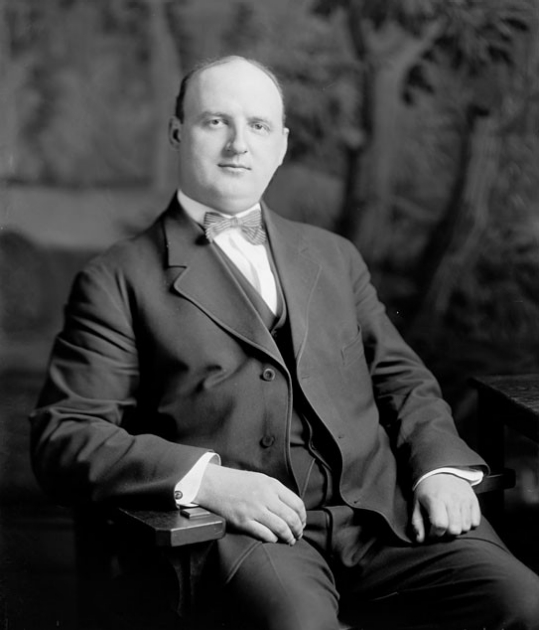
Historical · U.S. House · Michigan · District 2
William Wedemeyer
Former U.S. Representative · Michigan District 2 · 1911–1913 · Republican
William Wedemeyer represented Michigan's District 2 in the United States House of Representatives (1911–1913) for the Republican party. The page below collects sourced biographical facts, term history, committee roles, and provenance for Wedemeyer.
Bioguide ID: W000242
Key facts
- Full name
- William Wedemeyer
- State
- Michigan
- District
- District 2
- Party
- Republican
- House service
- 1911–1913
- First House term
- 1911
- Status
- Left office
- Current term ends
- —
- Born
- 1873
- Bioguide ID
- W000242
- Committee assignments
- —
- Dataset version
- 1.20260606
Biographical narrative
995 words · sourced from the Wikipedia REST extract
William Wedemeyer was a U.S. Representative from Michigan, serving in the House of Representatives during the early 20th century. A member of the Republican Party, he represented Michigan's 2nd congressional district from 1911 until his death in 1913. His political career was marked by a range of experiences in both local and national governance, as well as a tragic end that has been noted in the annals of congressional history.
Early life and career
William Wedemeyer was born on March 22, 1873, in Washtenaw County, Michigan, specifically near Lima Township. His early education took place in local district schools, where he laid the groundwork for his future academic and professional pursuits. He later attended Ann Arbor High School, which is known for its rigorous academic standards and has produced many notable alumni. Following his high school education, Wedemeyer pursued higher education at the University of Michigan at Ann Arbor, where he graduated from the law department in 1895. This legal education equipped him with the knowledge and skills necessary for a career in law and public service.
After completing his education, Wedemeyer was admitted to the bar in 1895, marking the beginning of his professional career as a lawyer. He quickly became involved in local governance, serving as a member of the board of school examiners from 1894 to 1895. This role allowed him to contribute to the educational landscape of his community, ensuring that schools met the necessary standards for quality education. Following this position, he served as the county commissioner of schools from 1895 to 1897, further solidifying his commitment to education and public service.
In addition to his work in education, Wedemeyer held the position of deputy commissioner of railroads for the state of Michigan from 1897 to 1899. This role involved oversight and regulation of the railroad industry, which was a vital component of the economy during that period. His experience in this position likely provided him with insights into the complexities of transportation and infrastructure, issues that would become increasingly important in the years to come.
In 1899, Wedemeyer began practicing law in Ann Arbor, where he would establish himself as a prominent legal figure in the community. His legal career was complemented by his involvement in politics. He served as chairman of the Republican State convention in 1903, a position that highlighted his leadership within the party. Additionally, he was active on the Republican State central committee from 1906 to 1910, further demonstrating his commitment to the political process and his party's platform.
In the summer of 1905, Wedemeyer took on a unique role as the American consul in Georgetown, British Guiana. This position allowed him to represent U.S. interests abroad and gain valuable international experience, which would later inform his work in Congress. His diverse experiences in education, law, and international relations laid a solid foundation for his future political career.
House tenure
William Wedemeyer entered the U.S. House of Representatives after being elected as a Republican from Michigan's 2nd congressional district in 1910. His term began on March 4, 1911, during the 62nd United States Congress. As a freshman congressman, Wedemeyer faced the challenges of navigating the legislative process while representing the interests of his constituents. His election to Congress was a significant achievement, reflecting his growing influence within the Republican Party and his commitment to public service.
During his time in the House, Wedemeyer participated in various legislative activities and contributed to discussions on a range of issues pertinent to his district and the nation. However, his tenure was cut short by his untimely death on January 2, 1913. His passing occurred while he was on an official visit to Colón, Panama, as part of a congressional delegation coinciding with President Taft’s visit to the country. This trip was intended to strengthen diplomatic ties and address issues related to the Panama Canal, a significant engineering project that was of great importance to U.S. interests at the time.
Wedemeyer’s death was a tragic event, as he reportedly had been experiencing suicidal tendencies following his unsuccessful bid for re-election in 1912. He lost his congressional seat to Samuel Beakes, which may have contributed to his mental distress. The circumstances surrounding his death were particularly poignant, as he committed suicide by jumping from a steamship on the return voyage to the United States. His body was never recovered, leaving a lingering sense of loss for his family, friends, and constituents.
Legislative focus and committees
While specific details regarding the legislative focus and committee assignments of William Wedemeyer during his time in Congress are not extensively documented, it is known that he served as a member of the House during a period marked by significant national issues, including economic growth, labor rights, and the ongoing developments related to the Panama Canal. As a representative from Michigan, a state with a strong industrial base, it is likely that Wedemeyer was involved in discussions and legislation related to economic policies, infrastructure development, and transportation.
The early 20th century was a time of considerable change in the United States, with rapid industrialization and urbanization transforming the social and economic landscape. Congress was tasked with addressing the challenges and opportunities presented by these changes, and members like Wedemeyer played a role in shaping the legislative response to these issues. His background in law and his experience in local governance would have informed his approach to legislative matters, allowing him to advocate for policies that aligned with the interests of his constituents.
Despite the brevity of his congressional career, Wedemeyer’s contributions to the legislative process and his commitment to public service remain a part of Michigan's political history. His experiences in various roles, from education to international diplomacy, provided him with a unique perspective that he brought to his work in Congress. The impact of his service is remembered, particularly in light of the tragic circumstances surrounding his death, which serves as a reminder of the personal challenges faced by public officials.
Notable legislation
Sponsored and co-sponsored legislation for William Wedemeyer is pending operator curation. The biographical narrative above carries the same provenance trail until per-bill rows are written.
Sources
- [1]https://en.wikipedia.org/wiki/William_WedemeyerWikipedia · retrieved 2026-06-06
Notable quotes
Sourced quotes for William Wedemeyer are pending operator curation. Narrative-scope provenance remains attached below.
Sources
- [1]https://en.wikipedia.org/wiki/William_WedemeyerWikipedia · retrieved 2026-06-06
Key positions
Curated policy positions for William Wedemeyer are pending operator review. The biographical narrative above carries the same provenance trail until per-topic positions are written.
Sources
- [1]https://en.wikipedia.org/wiki/William_WedemeyerWikipedia · retrieved 2026-06-06
Terms served
- 1911–1913U.S. House · Term 1 · Republican
Sources & provenance
Every attributable claim above carries a per-section [N] marker that resolves to the corresponding URL below. Each entry records the upstream provider, the canonical URL, and the timestamp at which the source was retrieved by the ingest pipeline.
Key facts
- https://bioguide.congress.gov/search/bio/W000242bioguide · retrieved 2026-06-06
- https://www.govtrack.us/congress/members/411410govtrack · retrieved 2026-06-06
Biographical narrative
- https://en.wikipedia.org/wiki/William_Wedemeyerwikipedia · retrieved 2026-06-06
Find your representative
Every U.S. state elects representatives by district. Browse Michigan’s delegation, the full former-representative roster, or explore the role and term length.
Related on The Candidate
- Preceded by Henry SmithEarlier holder of the Michigan District 2 House seat · Republican.Open
- Succeeded by Samuel BeakesLater holder of the Michigan District 2 House seat · Democratic.Open
- Alexander BuelFormer U.S. Representative · Michigan District 1 · DemocraticOpen
- Alfred LuckingFormer U.S. Representative · Michigan District 1 · DemocraticOpen
- Alpheus WilliamsFormer U.S. Representative · Michigan District 1 · DemocraticOpen
- Bart StupakFormer U.S. Representative · Michigan District 1 · DemocraticOpen