
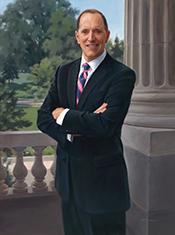
Historical · U.S. House · Michigan · District 4
Dave Camp
Former U.S. Representative · Michigan District 4 · 1991–2015 · Republican
Dave Camp represented Michigan's District 4 in the United States House of Representatives (1991–2015) for the Republican party. The page below collects sourced biographical facts, term history, committee roles, and provenance for Camp.
Bioguide ID: C000071
Key facts
- Full name
- Dave Camp
- State
- Michigan
- District
- District 4
- Party
- Republican
- House service
- 1991–2015
- First House term
- 1991
- Status
- Left office
- Current term ends
- —
- Born
- 1953
- Bioguide ID
- C000071
- Committee assignments
- —
- Dataset version
- 1.20260605
Biographical narrative
1,017 words · sourced from the Wikipedia REST extract
David Lee Camp is a former American politician who served as a member of the United States House of Representatives from 1991 to 2015. A member of the Republican Party, Camp represented Michigan's 4th congressional district from 1993 until the end of his tenure, having previously served one term in Michigan's 10th congressional district. During his time in Congress, he held significant leadership roles, including chairing the House Committee on Ways and Means from 2011 to 2015. His legislative career spanned twelve terms, during which he focused on various issues, including fiscal policy, health care, and social services.
Early life and career
Dave Camp was born on July 9, 1953, in Midland, Michigan, to Robert D. Camp and Norma L. Nehil. He completed his secondary education at H.H. Dow High School, graduating in 1971. Following high school, Camp pursued higher education at the University of Sussex in Brighton, England, for one year before earning a Bachelor of Arts degree, magna cum laude, from Albion College in Albion, Michigan, in 1975. He continued his academic journey by obtaining a Juris Doctor from the University of San Diego School of Law in 1978.
After completing his education, Camp began his professional career in law, becoming a partner at the law firm Riecker, Van Dam & Barker in Midland, Michigan, where he worked from 1979 until 1991. His early political involvement included serving on the Midland County board of canvassers and the Midland County Republican executive committee. Additionally, he worked as a special assistant to the Michigan attorney general from 1980 to 1984. Camp also gained legislative experience by working on the staff of U.S. Representative Bill Schuette from 1984 to 1987. His political career began to take shape when he successfully ran for the Michigan House of Representatives, representing the 102nd District, where he served one term starting in 1988.
House tenure
Dave Camp's tenure in the U.S. House of Representatives began in 1991 when he was elected to represent Michigan's 10th congressional district. His election followed the decision of Congressman Bill Schuette to run for the U.S. Senate. Camp won the Republican primary with a plurality of votes and subsequently secured the general election with a significant majority. After redistricting, he transitioned to represent Michigan's 4th congressional district, where he continued to win re-election with substantial margins, consistently receiving over 60% of the vote in general elections and facing no primary challenges throughout his career.
During his time in Congress, Camp served on several important committees. In the 102nd Congress, he was a member of the House Committee on Agriculture and received recognition for his work, including the Golden Plow Award from the American Farm Bureau Federation in 1998. As he progressed through his congressional career, he took on more significant roles, including serving as a deputy majority whip in the 108th Congress and as a member of the House Ways and Means Committee. He was appointed by Speaker Denny Hastert to the Select Committee on Homeland Security, where he chaired the Subcommittee on Infrastructure and Border Security, contributing to the development of policies aimed at enhancing U.S. border security in the aftermath of the September 11 attacks.
In subsequent Congresses, Camp continued to hold leadership positions, including serving as the Ranking Member of the Subcommittee on Health and the Chairman of the Subcommittee on Select Revenue Measures. He played a notable role in the passage of the Personal Responsibility and Work Opportunity Act as a junior member of the Ways and Means Committee in 1996. In the 111th Congress, he served as the Ranking Member of the full Ways and Means Committee and was appointed to the National Commission on Fiscal Responsibility and Reform, also known as the Bowles-Simpson Commission, which aimed to address the U.S. fiscal situation.
Camp's legislative efforts included introducing and supporting various bills focused on social services and health care. He introduced the Promoting Adoption and Legal Guardianship for Children in Foster Care Act in 2013, which aimed to reauthorize the Adoption Incentives Program. This bill passed the House and was part of his broader commitment to improving the welfare of children in foster care. Additionally, he introduced the Preventing Sex Trafficking and Strengthening Families Act, which also passed the House, reflecting his focus on child welfare issues. In 2014, he introduced the Improving Medicare Post-Acute Care Transformation Act, aimed at reforming Medicare's post-acute care services.
Legislative focus and committees
Throughout his congressional career, Dave Camp was involved in various legislative initiatives and committee assignments that shaped his political focus. He was a prominent member of the House Committee on Ways and Means, where he served as chair from 2011 until the end of his tenure in 2015. This committee is responsible for significant areas of tax policy, trade, and social security, among other issues. His leadership in this committee allowed him to influence key legislation related to fiscal policy and taxation.
In addition to his role on the Ways and Means Committee, Camp was involved in several other committees and caucuses during his time in Congress. He chaired the Joint Committee on Taxation and was a member of the Joint Select Committee on Deficit Reduction. His participation in these committees underscored his commitment to addressing fiscal responsibility and tax reform.
Camp's legislative priorities reflected a blend of conservative fiscal policies and moderate positions on certain social issues. He was known for his alignment with the Republican Party, voting along party lines a significant majority of the time. His lifetime rating from the American Conservative Union was notably high, indicating his conservative stance on many issues, while his score with the Club for Growth was lower, suggesting a more nuanced approach to economic policy.
In summary, Dave Camp's career in the U.S. House of Representatives was marked by a commitment to fiscal responsibility, health care reform, and child welfare. His leadership roles and legislative initiatives reflect a long-standing dedication to serving his constituents in Michigan and contributing to national policy discussions. After retiring from Congress in 2015, Camp left behind a legacy of public service that spanned over two decades.
Notable legislation
Sponsored and co-sponsored legislation for Dave Camp is pending operator curation. The biographical narrative above carries the same provenance trail until per-bill rows are written.
Sources
- [1]https://en.wikipedia.org/wiki/Dave_CampWikipedia · retrieved 2026-06-05
Notable quotes
Sourced quotes for Dave Camp are pending operator curation. Narrative-scope provenance remains attached below.
Sources
- [1]https://en.wikipedia.org/wiki/Dave_CampWikipedia · retrieved 2026-06-05
Key positions
Curated policy positions for Dave Camp are pending operator review. The biographical narrative above carries the same provenance trail until per-topic positions are written.
Sources
- [1]https://en.wikipedia.org/wiki/Dave_CampWikipedia · retrieved 2026-06-05
Terms served
- 1991–1993U.S. House · Term 1 · Republican
- 1993–1995U.S. House · Term 2 · Republican
- 1995–1997U.S. House · Term 3 · Republican
- 1997–1999U.S. House · Term 4 · Republican
- 1999–2001U.S. House · Term 5 · Republican
- 2001–2003U.S. House · Term 6 · Republican
- 2003–2005U.S. House · Term 7 · Republican
- 2005–2007U.S. House · Term 8 · Republican
- 2007–2009U.S. House · Term 9 · Republican
- 2009–2011U.S. House · Term 10 · Republican
- 2011–2013U.S. House · Term 11 · Republican
- 2013–2015U.S. House · Term 12 · Republican
Sources & provenance
Every attributable claim above carries a per-section [N] marker that resolves to the corresponding URL below. Each entry records the upstream provider, the canonical URL, and the timestamp at which the source was retrieved by the ingest pipeline.
Key facts
- https://bioguide.congress.gov/search/bio/C000071bioguide · retrieved 2026-06-05
- http://camp.house.govhouse.gov · retrieved 2026-06-05
Biographical narrative
- https://en.wikipedia.org/wiki/Dave_Campwikipedia · retrieved 2026-06-05
Find your representative
Every U.S. state elects representatives by district. Browse Michigan’s delegation, the full former-representative roster, or explore the role and term length.
Related on The Candidate
- Preceded by Mark SiljanderEarlier holder of the Michigan District 4 House seat · Republican.Open
- Alexander BuelFormer U.S. Representative · Michigan District 1 · DemocraticOpen
- Alfred LuckingFormer U.S. Representative · Michigan District 1 · DemocraticOpen
- Alpheus WilliamsFormer U.S. Representative · Michigan District 1 · DemocraticOpen
- Bart StupakFormer U.S. Representative · Michigan District 1 · DemocraticOpen
- Republican PartyFederal candidates and office holders on the Republican line.Open