
Historical · U.S. House · Michigan · District 4
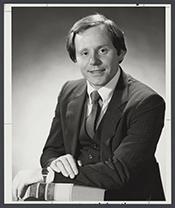
Mark Siljander
Former U.S. Representative · Michigan District 4 · 1981–1987 · Republican
Mark Siljander represented Michigan's District 4 in the United States House of Representatives (1981–1987) for the Republican party. The page below collects sourced biographical facts, term history, committee roles, and provenance for Siljander.
Bioguide ID: S000409
Key facts
- Full name
- Mark Siljander
- State
- Michigan
- District
- District 4
- Party
- Republican
- House service
- 1981–1987
- First House term
- 1981
- Status
- Left office
- Current term ends
- —
- Born
- 1951
- Bioguide ID
- S000409
- Committee assignments
- —
- Dataset version
- 1.20260605
Biographical narrative
914 words · sourced from the Wikipedia REST extract
Mark D. Siljander is a former American politician and author who served as a Republican U.S. Representative for Michigan's 4th congressional district from 1981 to 1987. Known for his strong conservative views, Siljander was active in various legislative efforts during his time in Congress and later became involved in international diplomacy and advocacy work. He authored the book "A Deadly Misunderstanding: A Congressman's Quest to Bridge the Muslim-Christian Divide," which reflects his interest in interfaith dialogue and conflict resolution.
Early life and career
Mark D. Siljander was born on June 11, 1951, in Chicago, Illinois. He completed his secondary education at Oak Park and River Forest High School, graduating in 1969. Following high school, Siljander pursued higher education at Western Michigan University in Kalamazoo, where he earned both a Bachelor of Science and a Master of Arts degree. His academic background laid the foundation for his future endeavors in politics and public service.
Before entering Congress, Siljander was actively involved in local governance. He served as a trustee on the Fabius Township Board in St. Joseph County, Michigan, from 1972 to 1976. In addition to his role in local government, he worked as a real estate broker, gaining experience in business and community engagement that would later inform his political career.
House tenure
Siljander's political career at the federal level began when he was elected to the U.S. House of Representatives in a special election held on April 21, 1981. He succeeded David Stockman, who had resigned to take a position in the Reagan administration. In the special Republican primary, Siljander emerged as the front-runner among seven candidates, securing a plurality of the vote. He subsequently won the general election against Democratic opponent Johnie Rodebush with a significant margin.
During his time in the House, Siljander served on the House Foreign Affairs Committee, where he was involved in shaping U.S. foreign policy. His tenure was marked by a strong commitment to conservative values, and he was known for his vocal opposition to various social issues, including abortion and the Equal Rights Amendment. Siljander's voting record generally aligned with that of his Republican colleagues, and he became recognized for his passionate rhetoric, often criticizing what he termed "secular humanism."
Siljander faced challenges in subsequent elections but successfully secured re-election in 1982 and 1984. In the 1982 Republican primary, he defeated attorney Harold Schuitmaker, and in the general election, he won a full term with a substantial majority. His re-election campaign in 1984 saw him once again prevail in the Republican primary and subsequently win a second full term with an even larger share of the vote.
Throughout his congressional career, Siljander was involved in several notable legislative initiatives. In 1981, he sponsored an amendment to the Foreign Assistance and Related Programs Appropriations Act, which prohibited U.S. funds from being used to lobby for abortion. This amendment was later modified to clarify that funds could not be used to lobby either for or against abortion. Siljander also sponsored legislation aimed at denying most favored nation status to countries that discriminated based on cultural, ethnic, or religious grounds.
Despite his electoral successes, Siljander's political career faced a significant setback in 1986 when he was defeated in the Republican primary by Fred Upton, a staffer for his predecessor. This marked the end of his time in Congress, as Upton became the only Republican to unseat an incumbent in a primary that year.
Legislative focus and committees
During his tenure in the House of Representatives, Siljander was recognized for his strong conservative stance on social issues. He was a vocal opponent of abortion and sought to advance legislation that reflected his beliefs. One of his most notable proposals was an amendment that sought to define "person" to include unborn children from the moment of conception. This amendment, while ultimately unsuccessful, was indicative of Siljander's commitment to anti-abortion advocacy.
Siljander's legislative focus extended beyond domestic issues; he was also engaged in international matters. His involvement with Christian Watch International led him to travel to Romania, where he addressed concerns regarding the persecution of religious minorities. This experience contributed to his understanding of global issues and the importance of human rights in foreign policy.
After leaving Congress, Siljander continued to engage in public service and advocacy. He was appointed by President Reagan as an alternate representative to the United Nations General Assembly, serving from September 1987 to September 1988. In the years that followed, he sought to influence public policy through various initiatives, including co-founding the Alliance Defending Freedom, an organization focused on advancing religious freedom and conservative values.
In 2008, Siljander faced legal challenges when he was indicted on charges related to money laundering and conspiracy. He later pleaded guilty to obstruction of justice and acting as an unregistered foreign agent. In 2020, he received a pardon from President Donald Trump, which restored his legal standing.
In addition to his political work, Siljander authored "A Deadly Misunderstanding," which explores the complexities of Muslim-Christian relations and advocates for dialogue and understanding between the two faiths. His efforts in this area have been recognized, and he has continued to work on initiatives aimed at fostering peace and cooperation in conflict zones.
Overall, Mark D. Siljander's career reflects a blend of local governance, congressional service, and international advocacy, marked by a commitment to conservative principles and a focus on interfaith dialogue. His experiences and writings contribute to ongoing discussions about the intersection of faith, politics, and diplomacy in contemporary society.
Notable legislation
Sponsored and co-sponsored legislation for Mark Siljander is pending operator curation. The biographical narrative above carries the same provenance trail until per-bill rows are written.
Sources
- [1]https://en.wikipedia.org/wiki/Mark_D._SiljanderWikipedia · retrieved 2026-06-05
Notable quotes
Sourced quotes for Mark Siljander are pending operator curation. Narrative-scope provenance remains attached below.
Sources
- [1]https://en.wikipedia.org/wiki/Mark_D._SiljanderWikipedia · retrieved 2026-06-05
Key positions
Curated policy positions for Mark Siljander are pending operator review. The biographical narrative above carries the same provenance trail until per-topic positions are written.
Sources
- [1]https://en.wikipedia.org/wiki/Mark_D._SiljanderWikipedia · retrieved 2026-06-05
Terms served
- 1981–1983U.S. House · Term 1 · Republican
- 1983–1985U.S. House · Term 2 · Republican
- 1985–1987U.S. House · Term 3 · Republican
Sources & provenance
Every attributable claim above carries a per-section [N] marker that resolves to the corresponding URL below. Each entry records the upstream provider, the canonical URL, and the timestamp at which the source was retrieved by the ingest pipeline.
Key facts
- https://bioguide.congress.gov/search/bio/S000409bioguide · retrieved 2026-06-05
- https://www.govtrack.us/congress/members/409903govtrack · retrieved 2026-06-05
Biographical narrative
- https://en.wikipedia.org/wiki/Mark_D._Siljanderwikipedia · retrieved 2026-06-05
Find your representative
Every U.S. state elects representatives by district. Browse Michigan’s delegation, the full former-representative roster, or explore the role and term length.
Related on The Candidate
- Preceded by J. HutchinsonEarlier holder of the Michigan District 4 House seat · Republican.Open
- Succeeded by Dave CampLater holder of the Michigan District 4 House seat · Republican.Open
- Alexander BuelFormer U.S. Representative · Michigan District 1 · DemocraticOpen
- Alfred LuckingFormer U.S. Representative · Michigan District 1 · DemocraticOpen
- Alpheus WilliamsFormer U.S. Representative · Michigan District 1 · DemocraticOpen
- Bart StupakFormer U.S. Representative · Michigan District 1 · DemocraticOpen