
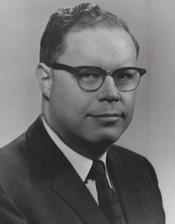
Historical · U.S. House · Michigan · District 4
J. Hutchinson
Former U.S. Representative · Michigan District 4 · 1963–1977 · Republican
J. Hutchinson represented Michigan's District 4 in the United States House of Representatives (1963–1977) for the Republican party. The page below collects sourced biographical facts, term history, committee roles, and provenance for Hutchinson.
Bioguide ID: H001011
Key facts
- Full name
- J. Hutchinson
- State
- Michigan
- District
- District 4
- Party
- Republican
- House service
- 1963–1977
- First House term
- 1963
- Status
- Left office
- Current term ends
- —
- Born
- 1914
- Bioguide ID
- H001011
- Committee assignments
- —
- Dataset version
- 1.20260605
Biographical narrative
814 words · sourced from the Wikipedia REST extract
Edward Hutchinson was an American lawyer and politician who served as a U.S. Representative for Michigan's 4th congressional district from 1963 to 1977. A member of the Republican Party, Hutchinson's political career spanned several decades, during which he held various positions at both the state and federal levels. Known for his involvement in significant legislative matters, including the impeachment process of President Richard Nixon, Hutchinson left a mark on Michigan's political landscape before retiring from public service.
Early life and career
Edward Hutchinson was born on October 13, 1914, in Fennville, Michigan. He completed his secondary education at Fennville High School, graduating in 1932. Following high school, Hutchinson pursued higher education at the University of Michigan in Ann Arbor, where he earned his undergraduate degree in 1936. During his time at the university, he was a member of the Acacia fraternity, which is known for fostering leadership and community service among its members. Hutchinson continued his studies at the University of Michigan Law School, graduating in 1938. Shortly thereafter, he was admitted to the State Bar of Michigan and established a law practice in Allegan, Michigan.
In January 1941, Hutchinson enlisted in the United States Army, where he began his military service as a private. Throughout World War II, he served in various capacities, including as a noncommissioned officer in the Fourteenth Coast Artillery and later as a captain in the Transportation Corps. His military service concluded with his discharge in April 1946, after which he returned to his law practice and began to engage more actively in politics.
Hutchinson's political career began at the state level when he was elected to the Michigan House of Representatives in 1946 and again in 1948. His legislative experience continued as he served in the Michigan Senate from 1951 to 1960. During this time, he was involved in significant political events, including serving as a delegate to the 1948 Republican National Convention. In April 1952, he was appointed chairman of the Republican State Convention. Additionally, Hutchinson played a notable role in the constitutional convention of 1961 and 1962, which led to the adoption of the Michigan Constitution of 1963, serving as a delegate and vice president of the convention.
House tenure
Hutchinson's tenure in the U.S. House of Representatives began on January 3, 1963, after being elected as a Republican from Michigan's 4th congressional district. He was re-elected to six consecutive terms, serving until January 3, 1977. Throughout his time in Congress, Hutchinson was involved in various legislative initiatives and discussions that shaped national policies. His political career was marked by significant events, including his role as the ranking Republican on the Judiciary Committee during the impeachment proceedings against President Richard Nixon.
Although Hutchinson had previously been considered a supporter of Nixon, the Watergate scandal prompted him to reassess his position. In August 1974, he publicly called for Nixon's resignation or impeachment, reflecting a shift in his stance. While he initially voted against the articles of impeachment in committee, he ultimately joined his colleagues in supporting impeachment on the House floor, demonstrating his commitment to the principles of accountability and governance.
Hutchinson chose not to seek re-election in 1976, concluding his congressional career after serving seven terms in the House. His decision to retire marked the end of a significant chapter in his political life, during which he had established himself as a prominent figure in Michigan politics.
Legislative focus and committees
During his time in the U.S. House of Representatives, Hutchinson was involved in various legislative matters that reflected his interests and the concerns of his constituents. As a member of the Judiciary Committee, he played a crucial role in overseeing legal and constitutional issues, particularly during the contentious impeachment process of President Nixon. His position on the committee allowed him to engage deeply with matters of law and governance, contributing to discussions that had far-reaching implications for the nation.
Hutchinson's legislative focus extended beyond impeachment. He was involved in a range of issues pertinent to his district and the broader political landscape. His experience in state politics informed his approach to federal legislation, as he sought to address the needs of his constituents while navigating the complexities of national governance. Throughout his congressional career, Hutchinson maintained a commitment to the principles of the Republican Party, advocating for policies that aligned with his party's platform.
After retiring from Congress, Hutchinson returned to Fennville, Michigan, where he lived until his passing. He died on July 22, 1985, in Naples, Florida, at the age of 70. His contributions to Michigan's political landscape and his service in the U.S. House of Representatives remain part of his legacy, reflecting a career dedicated to public service and the legal profession. Hutchinson is interred at the Fennville Cemetery, where he is remembered for his role in shaping both state and national politics during a transformative period in American history.
Notable legislation
Sponsored and co-sponsored legislation for J. Hutchinson is pending operator curation. The biographical narrative above carries the same provenance trail until per-bill rows are written.
Sources
- [1]https://en.wikipedia.org/wiki/J._Edward_HutchinsonWikipedia · retrieved 2026-06-05
Notable quotes
Sourced quotes for J. Hutchinson are pending operator curation. Narrative-scope provenance remains attached below.
Sources
- [1]https://en.wikipedia.org/wiki/J._Edward_HutchinsonWikipedia · retrieved 2026-06-05
Key positions
Curated policy positions for J. Hutchinson are pending operator review. The biographical narrative above carries the same provenance trail until per-topic positions are written.
Sources
- [1]https://en.wikipedia.org/wiki/J._Edward_HutchinsonWikipedia · retrieved 2026-06-05
Terms served
- 1963–1965U.S. House · Term 1 · Republican
- 1965–1967U.S. House · Term 2 · Republican
- 1967–1969U.S. House · Term 3 · Republican
- 1969–1971U.S. House · Term 4 · Republican
- 1971–1973U.S. House · Term 5 · Republican
- 1973–1975U.S. House · Term 6 · Republican
- 1975–1977U.S. House · Term 7 · Republican
Sources & provenance
Every attributable claim above carries a per-section [N] marker that resolves to the corresponding URL below. Each entry records the upstream provider, the canonical URL, and the timestamp at which the source was retrieved by the ingest pipeline.
Key facts
- https://bioguide.congress.gov/search/bio/H001011bioguide · retrieved 2026-06-05
- https://www.govtrack.us/congress/members/405852govtrack · retrieved 2026-06-05
Biographical narrative
- https://en.wikipedia.org/wiki/J._Edward_Hutchinsonwikipedia · retrieved 2026-06-05
Find your representative
Every U.S. state elects representatives by district. Browse Michigan’s delegation, the full former-representative roster, or explore the role and term length.
Related on The Candidate
- Preceded by Clare HoffmanEarlier holder of the Michigan District 4 House seat · Republican.Open
- Succeeded by David StockmanLater holder of the Michigan District 4 House seat · Republican.Open
- Alexander BuelFormer U.S. Representative · Michigan District 1 · DemocraticOpen
- Alfred LuckingFormer U.S. Representative · Michigan District 1 · DemocraticOpen
- Alpheus WilliamsFormer U.S. Representative · Michigan District 1 · DemocraticOpen
- Bart StupakFormer U.S. Representative · Michigan District 1 · DemocraticOpen