
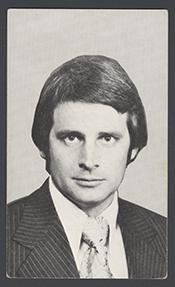
Historical · U.S. House · Michigan · District 4
David Stockman
Former U.S. Representative · Michigan District 4 · 1977–1983 · Republican
David Stockman represented Michigan's District 4 in the United States House of Representatives (1977–1983) for the Republican party. The page below collects sourced biographical facts, term history, committee roles, and provenance for Stockman.
Bioguide ID: S000935
Key facts
- Full name
- David Stockman
- State
- Michigan
- District
- District 4
- Party
- Republican
- House service
- 1977–1983
- First House term
- 1977
- Status
- Left office
- Current term ends
- —
- Born
- 1946
- Bioguide ID
- S000935
- Committee assignments
- —
- Dataset version
- 1.20260605
Biographical narrative
1,075 words · sourced from the Wikipedia REST extract
David A. Stockman is a former American politician and businessman who served as a Republican U.S. Representative from Michigan's 4th congressional district from 1977 until 1981. Following his tenure in the House, he became the Director of the Office of Management and Budget under President Ronald Reagan, a role in which he was instrumental in shaping fiscal policy during a transformative period in American economic history. Stockman is known for his advocacy of supply-side economics and his involvement in the Reagan administration's budgetary strategies, which have had lasting implications for federal fiscal policy.
Early life and career
David A. Stockman was born on November 10, 1946, in Fort Hood, Texas. He was raised in a conservative family in St. Joseph, Michigan, where his father, Allen Stockman, worked as a fruit farmer. His mother, Carol Bartz, contributed to the family’s values and upbringing. Stockman’s family heritage includes German roots, and the family name was originally "Stockmann." His upbringing in a politically active household influenced his later career in politics; his maternal grandfather, William Bartz, served for three decades as the Republican treasurer of Berrien County, Michigan.
Stockman attended public schools in Stevensville, Michigan, and graduated from Lakeshore High School in 1964. He pursued higher education at Michigan State University, where he earned a Bachelor of Arts degree in History in 1968. Following his undergraduate studies, he enrolled as a graduate theology student at Harvard University. However, he left the program after one year in 1969 to pursue a career in politics.
His early career included serving as a special assistant to U.S. Representative John Anderson of Illinois from 1970 to 1972. This role provided him with valuable experience in legislative processes and political strategy. Following this position, Stockman was appointed as the executive director of the United States House of Representatives Republican Conference, where he worked from 1972 until 1975. These roles laid the groundwork for his subsequent election to Congress.
House tenure
In 1976, Stockman was elected to represent Michigan's 4th congressional district in the U.S. House of Representatives, marking the beginning of his congressional career. He took office on January 3, 1977, and was re-elected in the subsequent elections, serving a total of three terms in the House. His tenure in Congress was characterized by his alignment with the Republican Party's agenda and his focus on fiscal conservatism.
During his time in the House, Stockman was involved in various legislative initiatives and debates that reflected the political climate of the late 1970s and early 1980s. He was known for his commitment to reducing government spending and promoting free-market principles. His legislative activities were influenced by the broader economic challenges facing the United States at the time, including inflation and rising federal deficits.
Stockman’s congressional career came to an end when he resigned on January 21, 1981, to accept an appointment as the Director of the Office of Management and Budget (OMB) under President Ronald Reagan. His departure from the House marked a transition from legislative responsibilities to executive leadership in the realm of federal budgetary policy.
Legislative focus and committees
During his time in the House of Representatives, Stockman was primarily focused on issues related to fiscal policy and government spending. His commitment to reducing the size and scope of government was a central theme of his legislative agenda. He was a proponent of supply-side economics, which emphasizes tax cuts and deregulation as means to stimulate economic growth. This economic philosophy would later play a significant role in his work as OMB Director.
As a member of Congress, Stockman participated in various committees that dealt with budgetary and economic issues. His experience in these committees provided him with a deep understanding of the complexities of federal budgeting and the legislative process. His ability to navigate the political landscape was evident in his interactions with both Republican and Democratic leaders.
Stockman’s influence in Congress was further amplified by the political context of the time, as the United States was experiencing significant economic challenges. The late 1970s were marked by high inflation, energy crises, and a growing national debt. Stockman’s advocacy for fiscal restraint and supply-side policies resonated with many constituents who were concerned about the direction of the economy.
Following his resignation from the House, Stockman became a prominent figure in the Reagan administration. As the Director of the OMB, he was tasked with formulating and implementing the administration's budgetary policies. He played a key role in the development of the "Reagan Budget," which aimed to reduce government spending and lower taxes. This budget was a reflection of Stockman's belief in the principles of supply-side economics, which he argued would lead to increased economic growth and job creation.
Stockman's tenure at the OMB was marked by significant challenges, including contentious negotiations with Congress over budgetary matters. He became known for his tough negotiating style, particularly in dealings with House Speaker Tip O'Neill and Senate Majority Leader Howard Baker. His efforts to curtail the welfare state and promote tax cuts were central to the administration's economic agenda, but they also sparked considerable debate and controversy.
Despite his initial influence within the Reagan administration, Stockman's position became more precarious following the publication of a lengthy article in the Atlantic Monthly that revealed his candid assessments of the administration's fiscal policies. This article, which detailed his views on the limitations and challenges of supply-side economics, led to tensions between Stockman and other administration officials.
Stockman resigned from the OMB in August 1985, citing concerns about the growing federal deficits and national debt. His experiences during this period were later chronicled in his memoir, where he reflected on the complexities of governance and the challenges of implementing fiscal policies in a politically charged environment.
After leaving government service, Stockman transitioned to the private sector, where he pursued a career in investment banking and private equity. His post-political career included roles at Salomon Brothers and the Blackstone Group, where he was involved in various investment ventures. He later founded his own private equity firm, Heartland Industrial Partners, which focused on investments in sectors that were experiencing limited equity interest.
David A. Stockman's career has been marked by his involvement in significant economic policy discussions and his contributions to the Republican Party's fiscal agenda during a pivotal era in American history. His legacy encompasses both his legislative work in the House of Representatives and his influential role in shaping federal budgetary policy as OMB Director under President Reagan.
Notable legislation
Sponsored and co-sponsored legislation for David Stockman is pending operator curation. The biographical narrative above carries the same provenance trail until per-bill rows are written.
Sources
- [1]https://en.wikipedia.org/wiki/David_StockmanWikipedia · retrieved 2026-06-05
Notable quotes
Sourced quotes for David Stockman are pending operator curation. Narrative-scope provenance remains attached below.
Sources
- [1]https://en.wikipedia.org/wiki/David_StockmanWikipedia · retrieved 2026-06-05
Key positions
Curated policy positions for David Stockman are pending operator review. The biographical narrative above carries the same provenance trail until per-topic positions are written.
Sources
- [1]https://en.wikipedia.org/wiki/David_StockmanWikipedia · retrieved 2026-06-05
Terms served
- 1977–1979U.S. House · Term 1 · Republican
- 1979–1981U.S. House · Term 2 · Republican
- 1981–1983U.S. House · Term 3 · Republican
Sources & provenance
Every attributable claim above carries a per-section [N] marker that resolves to the corresponding URL below. Each entry records the upstream provider, the canonical URL, and the timestamp at which the source was retrieved by the ingest pipeline.
Key facts
- https://bioguide.congress.gov/search/bio/S000935bioguide · retrieved 2026-06-05
- https://www.govtrack.us/congress/members/410394govtrack · retrieved 2026-06-05
Biographical narrative
- https://en.wikipedia.org/wiki/David_Stockmanwikipedia · retrieved 2026-06-05
Find your representative
Every U.S. state elects representatives by district. Browse Michigan’s delegation, the full former-representative roster, or explore the role and term length.
Related on The Candidate
- Preceded by J. HutchinsonEarlier holder of the Michigan District 4 House seat · Republican.Open
- Succeeded by Dave CampLater holder of the Michigan District 4 House seat · Republican.Open
- Alexander BuelFormer U.S. Representative · Michigan District 1 · DemocraticOpen
- Alfred LuckingFormer U.S. Representative · Michigan District 1 · DemocraticOpen
- Alpheus WilliamsFormer U.S. Representative · Michigan District 1 · DemocraticOpen
- Bart StupakFormer U.S. Representative · Michigan District 1 · DemocraticOpen