
Historical · U.S. House · Michigan · District 6
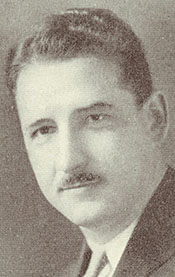
Andrew Transue
Former U.S. Representative · Michigan District 6 · 1937–1939 · Democratic
Andrew Transue represented Michigan's District 6 in the United States House of Representatives (1937–1939) for the Democratic party. The page below collects sourced biographical facts, term history, committee roles, and provenance for Transue.
Bioguide ID: T000354
Key facts
- Full name
- Andrew Transue
- State
- Michigan
- District
- District 6
- Party
- Democratic
- House service
- 1937–1939
- First House term
- 1937
- Status
- Left office
- Current term ends
- —
- Born
- 1903
- Bioguide ID
- T000354
- Committee assignments
- —
- Dataset version
- 1.20260605
Biographical narrative
885 words · sourced from the Wikipedia REST extract
Andrew Transue was an American politician and attorney who served as a U.S. Representative for Michigan's 6th congressional district from 1937 to 1939. A member of the Democratic Party, he was elected during a period marked by significant political and economic changes in the United States. Transue's tenure in Congress was characterized by his efforts to represent the interests of his constituents during the Great Depression, a time when many Americans were facing economic hardship. Following his congressional service, he returned to his legal career, where he continued to make an impact in the field of law.
Early life and career
Andrew Transue was born on January 12, 1903, in Clarksville, Michigan. His early education took place in the local schools of his hometown, where he began to develop the foundational skills that would later serve him in his professional life. After completing his primary education, Transue pursued higher education in law. He attended the Detroit College of Law, where he earned his Bachelor of Laws (LL.B.) degree in 1926 and later obtained his Juris Doctor (J.D.) degree in 1968. This educational background equipped him with the knowledge and skills necessary for a successful career in law.
Transue was admitted to the bar in 1926, marking the beginning of his legal career. He initially practiced law in Detroit, Michigan, and soon expanded his practice to Flint, Michigan, in 1927. His work as an attorney allowed him to gain valuable experience and establish a reputation in the legal community. In addition to his private practice, Transue took on public service roles, including serving as the prosecuting attorney for Genesee County in two separate terms, first in 1933 and again in 1937. These positions provided him with insights into the legal system and the workings of local government, further preparing him for his future role in Congress.
House tenure
Transue's political career took a significant turn in 1936 when he decided to run for a seat in the United States House of Representatives. He campaigned as a Democrat in Michigan's 6th congressional district, a competitive political landscape at the time. In a notable victory, he defeated the incumbent Republican representative, William W. Blackney, securing his election to the 75th United States Congress. Transue officially took office on January 3, 1937.
During his time in Congress, which lasted until January 3, 1939, Transue was involved in various legislative activities and discussions that were crucial to the nation during the Great Depression. His tenure coincided with a period when the federal government was implementing significant reforms aimed at alleviating economic distress and addressing the needs of struggling Americans. Although specific details of his legislative actions are not documented, it is understood that he worked to represent the interests of his constituents and contribute to the broader goals of the Democratic Party during this critical time.
Despite his efforts, Transue faced challenges in securing re-election. In 1938, he ran for a second term but was unsuccessful, losing to his former opponent, William W. Blackney. This defeat marked the end of his congressional career, as he did not return to the House of Representatives after his initial term.
Legislative focus and committees
While specific details regarding the committees on which Transue served or the legislation he sponsored are not available, it is important to contextualize his work within the broader legislative environment of the late 1930s. During this period, Congress was heavily focused on enacting policies that would address the economic challenges faced by the nation. The New Deal programs, initiated by President Franklin D. Roosevelt, were central to the legislative agenda, aiming to provide relief, recovery, and reform to the American populace.
As a member of the Democratic Party, Transue would have aligned with the party's objectives to support these initiatives. His background as a practicing attorney and his experience as a prosecuting attorney likely informed his perspective on various legal and social issues, including labor rights, social welfare, and economic recovery efforts. The Great Depression had a profound impact on American society, and legislators like Transue were tasked with navigating the complexities of public policy to address the needs of their constituents.
After leaving Congress, Transue returned to his legal practice and continued to reside in Flint, Michigan. His legal career did not end with his congressional tenure; he remained active in the field and was involved in significant legal cases. Notably, he served as the attorney for the plaintiff in the landmark U.S. Supreme Court case Morissette v. United States, which took place during the early 1950s. This case addressed important issues related to criminal law and the principles of mens rea, or the mental state of a defendant at the time of an alleged crime. Transue's involvement in this case underscored his commitment to the legal profession and his ability to engage with complex legal matters.
Andrew Transue passed away on June 24, 1995, leaving behind a legacy as a public servant and legal professional. His contributions to Michigan's political landscape and his work in the legal field reflect a career dedicated to serving the public and advocating for justice. Although his time in Congress was brief, it occurred during a pivotal moment in American history, and his efforts to represent his constituents during the Great Depression remain a notable aspect of his biography.
Notable legislation
Sponsored and co-sponsored legislation for Andrew Transue is pending operator curation. The biographical narrative above carries the same provenance trail until per-bill rows are written.
Sources
- [1]https://en.wikipedia.org/wiki/Andrew_J._TransueWikipedia · retrieved 2026-06-05
Notable quotes
Sourced quotes for Andrew Transue are pending operator curation. Narrative-scope provenance remains attached below.
Sources
- [1]https://en.wikipedia.org/wiki/Andrew_J._TransueWikipedia · retrieved 2026-06-05
Key positions
Curated policy positions for Andrew Transue are pending operator review. The biographical narrative above carries the same provenance trail until per-topic positions are written.
Sources
- [1]https://en.wikipedia.org/wiki/Andrew_J._TransueWikipedia · retrieved 2026-06-05
Terms served
- 1937–1939U.S. House · Term 1 · Democratic
Sources & provenance
Every attributable claim above carries a per-section [N] marker that resolves to the corresponding URL below. Each entry records the upstream provider, the canonical URL, and the timestamp at which the source was retrieved by the ingest pipeline.
Key facts
- https://bioguide.congress.gov/search/bio/T000354bioguide · retrieved 2026-06-05
- https://www.govtrack.us/congress/members/410924govtrack · retrieved 2026-06-05
Biographical narrative
- https://en.wikipedia.org/wiki/Andrew_J._Transuewikipedia · retrieved 2026-06-05
Find your representative
Every U.S. state elects representatives by district. Browse Michigan’s delegation, the full former-representative roster, or explore the role and term length.
Related on The Candidate
- Preceded by Claude CadyEarlier holder of the Michigan District 6 House seat · Democratic.Open
- Succeeded by Kit ClardyLater holder of the Michigan District 6 House seat · Republican.Open
- Alexander BuelFormer U.S. Representative · Michigan District 1 · DemocraticOpen
- Alfred LuckingFormer U.S. Representative · Michigan District 1 · DemocraticOpen
- Alpheus WilliamsFormer U.S. Representative · Michigan District 1 · DemocraticOpen
- Bart StupakFormer U.S. Representative · Michigan District 1 · DemocraticOpen