
Historical · U.S. House · Michigan · District 6
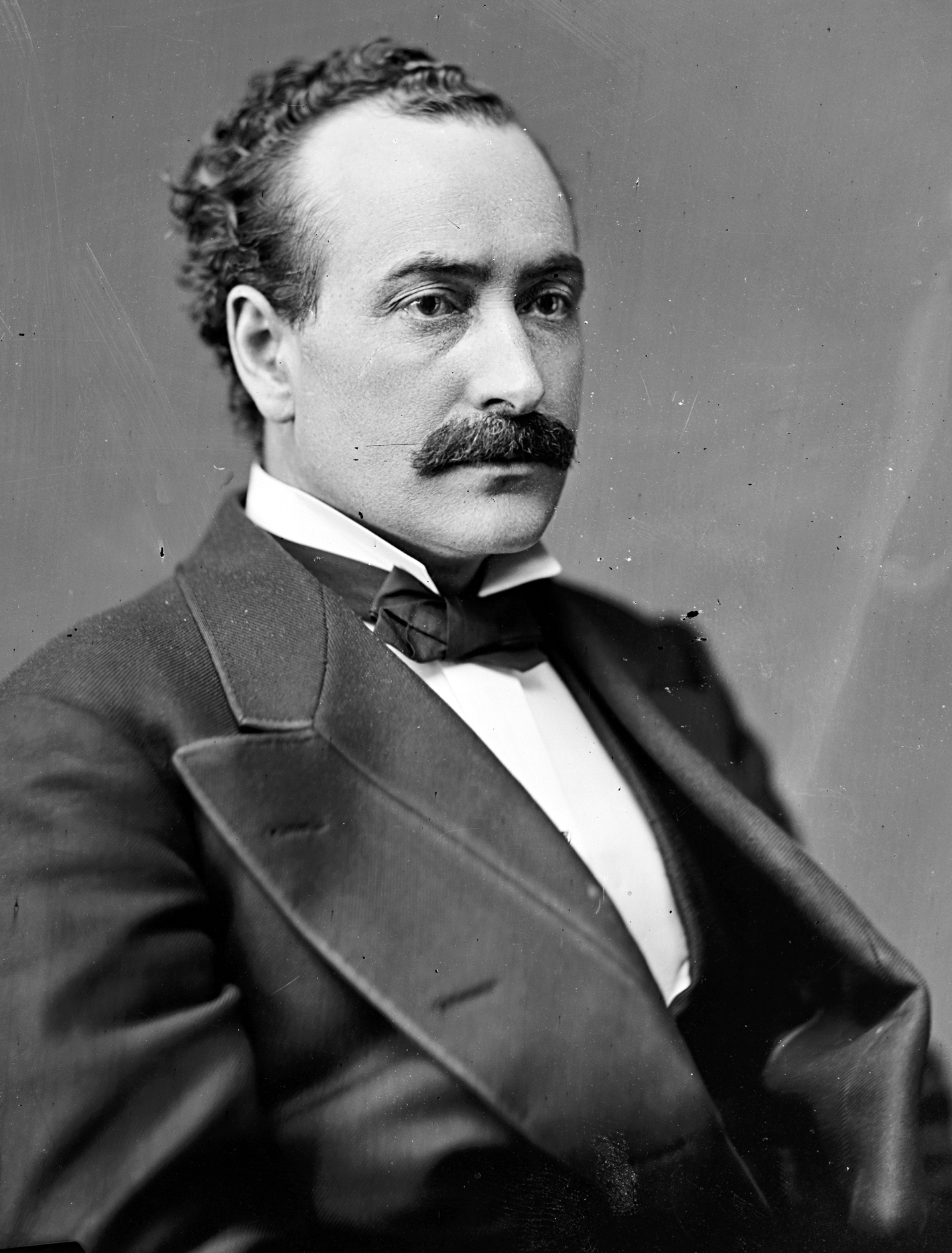
George Durand
Former U.S. Representative · Michigan District 6 · 1875–1877 · Democratic
George Durand represented Michigan's District 6 in the United States House of Representatives (1875–1877) for the Democratic party. The page below collects sourced biographical facts, term history, committee roles, and provenance for Durand.
Bioguide ID: D000562
Key facts
- Full name
- George Durand
- State
- Michigan
- District
- District 6
- Party
- Democratic
- House service
- 1875–1877
- First House term
- 1875
- Status
- Left office
- Current term ends
- —
- Born
- 1838
- Bioguide ID
- D000562
- Committee assignments
- —
- Dataset version
- 1.20260606
Biographical narrative
868 words · sourced from the Wikipedia REST extract
George Durand was a prominent figure in Michigan's political landscape during the late 19th century. A member of the Democratic Party, he served as a U.S. Representative for Michigan's 6th congressional district from 1875 to 1877. His career encompassed various roles, including that of a politician, jurist, and attorney, reflecting a commitment to public service and the legal profession. Durand's contributions to both local governance and state-level judiciary were notable, and his legacy continues to be recognized in Michigan, particularly through the community named in his honor.
Early life and career
George Harman Durand was born on February 21, 1838, in Cobleskill, New York. His early education took place in local common schools, followed by attendance at the Genesee Wesleyan Seminary in Lima, New York. This foundational education provided him with the skills and knowledge that would later support his career in law and public service. In 1856, seeking new opportunities, Durand relocated to Oxford, Michigan. There, he began his professional journey by teaching school, which not only contributed to his personal development but also allowed him to engage with the community.
While teaching, Durand pursued legal studies and was eventually admitted to the bar, marking the beginning of his legal career in 1858 when he commenced practice in Flint, Michigan. His involvement in the community extended beyond his legal work; he served on the board of education and was a member of the board of aldermen from 1862 to 1867. These roles provided him with valuable experience in governance and public administration, laying the groundwork for his future political aspirations.
Durand's political career further advanced when he was elected mayor of Flint, serving in this capacity during 1873 and 1874. His leadership in local government demonstrated his commitment to civic engagement and his ability to navigate the complexities of municipal affairs. Additionally, he was actively involved in the Masonic community, serving as the Worshipful Master of the Genesee Lodge No. 174 F. & A. M. in Flint from 1870 to 1874 and again in 1877. His role as Grand Master of the Grand Lodge of Free and Accepted Masons of the State of Michigan in 1875 further underscored his influence and standing within the community.
House tenure
In 1874, George Durand's political career took a significant turn when he was elected as a Democrat to represent Michigan's 6th congressional district in the 44th United States Congress. His term in the House of Representatives began on March 4, 1875, and concluded on March 3, 1877. During this period, Durand participated in the legislative process, contributing to discussions and decisions that shaped national policy. His tenure in Congress was marked by the challenges and dynamics of the post-Civil War era, a time when the nation was grappling with issues of reconstruction, economic development, and social change.
Despite his efforts and contributions, Durand faced electoral challenges. In 1876, he sought re-election but was defeated by Republican candidate Mark S. Brewer in the general election. This loss marked the end of his congressional career, but it did not signify the conclusion of his public service. After leaving Congress, Durand returned to his law practice, continuing to engage with the legal community and serve the public in various capacities.
Legislative focus and committees
While specific details regarding the committees Durand served on during his congressional tenure are not documented, it is known that he was involved in legislative matters pertinent to his constituents and the broader national context of the time. His background as an attorney and his experience in local government likely informed his legislative priorities, which may have included issues related to education, infrastructure, and legal reform.
After his time in Congress, Durand remained active in public service. In 1892, he was appointed as one of Michigan's Presidential Electors, a role that allowed him to participate in the electoral process at a national level. His legal expertise was further recognized when he was appointed as a Justice of the Michigan Supreme Court in the same year. Although he faced defeat in the subsequent election for a full term on the court in 1893, his contributions to the judiciary were significant. He also served as president of the State Board of Law Examiners for many years, overseeing the examination and admission of new attorneys to the bar in Michigan.
Durand's legal career included a notable appointment as a special assistant United States attorney, where he focused on cases involving Chinese and opium smuggling in Oregon from 1893 to 1896. This role reflected his commitment to upholding the law and addressing complex legal issues that arose during a period of significant immigration and trade challenges in the United States.
George Durand passed away on June 8, 1903, in Flint, Michigan. His contributions to the community and the state are commemorated through various means, including the naming of the community of Durand, Michigan, in his honor in 1876. His legacy as a politician, jurist, and community leader remains a part of Michigan's historical narrative, illustrating the impact of dedicated public service on local and national governance. Durand's life and career exemplify the intertwining of legal practice and political engagement, reflecting the multifaceted nature of public service in the 19th century.
Notable legislation
Sponsored and co-sponsored legislation for George Durand is pending operator curation. The biographical narrative above carries the same provenance trail until per-bill rows are written.
Sources
- [1]https://en.wikipedia.org/wiki/George_H._DurandWikipedia · retrieved 2026-06-06
Notable quotes
Sourced quotes for George Durand are pending operator curation. Narrative-scope provenance remains attached below.
Sources
- [1]https://en.wikipedia.org/wiki/George_H._DurandWikipedia · retrieved 2026-06-06
Key positions
Curated policy positions for George Durand are pending operator review. The biographical narrative above carries the same provenance trail until per-topic positions are written.
Sources
- [1]https://en.wikipedia.org/wiki/George_H._DurandWikipedia · retrieved 2026-06-06
Terms served
- 1875–1877U.S. House · Term 1 · Democratic
Sources & provenance
Every attributable claim above carries a per-section [N] marker that resolves to the corresponding URL below. Each entry records the upstream provider, the canonical URL, and the timestamp at which the source was retrieved by the ingest pipeline.
Key facts
- https://bioguide.congress.gov/search/bio/D000562bioguide · retrieved 2026-06-06
- https://www.govtrack.us/congress/members/403666govtrack · retrieved 2026-06-06
Biographical narrative
- https://en.wikipedia.org/wiki/George_H._Durandwikipedia · retrieved 2026-06-06
Find your representative
Every U.S. state elects representatives by district. Browse Michigan’s delegation, the full former-representative roster, or explore the role and term length.
Related on The Candidate
- Preceded by Josiah BegoleEarlier holder of the Michigan District 6 House seat · Republican.Open
- Succeeded by Mark BrewerLater holder of the Michigan District 6 House seat · Republican.Open
- Alexander BuelFormer U.S. Representative · Michigan District 1 · DemocraticOpen
- Alfred LuckingFormer U.S. Representative · Michigan District 1 · DemocraticOpen
- Alpheus WilliamsFormer U.S. Representative · Michigan District 1 · DemocraticOpen
- Bart StupakFormer U.S. Representative · Michigan District 1 · DemocraticOpen