
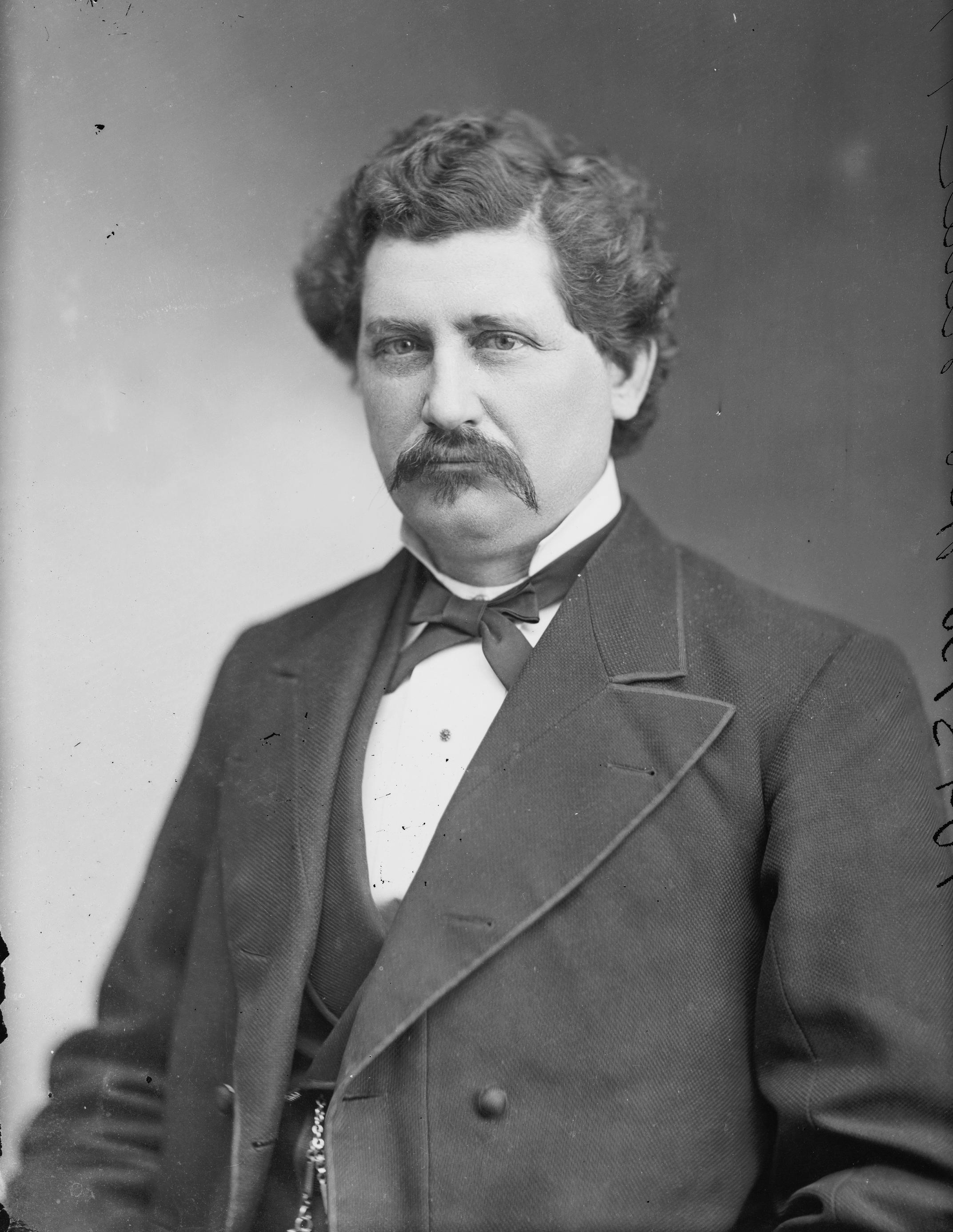
Historical · U.S. House · Michigan · District 6
Mark Brewer
Former U.S. Representative · Michigan District 6 · 1877–1891 · Republican
Mark Brewer represented Michigan's District 6 in the United States House of Representatives (1877–1891) for the Republican party. The page below collects sourced biographical facts, term history, committee roles, and provenance for Brewer.
Bioguide ID: B000811
Key facts
- Full name
- Mark Brewer
- State
- Michigan
- District
- District 6
- Party
- Republican
- House service
- 1877–1891
- First House term
- 1877
- Status
- Left office
- Current term ends
- —
- Born
- 1837
- Bioguide ID
- B000811
- Committee assignments
- —
- Dataset version
- 1.20260606
Biographical narrative
913 words · sourced from the Wikipedia REST extract
Mark Brewer was an American lawyer and politician who served as a U.S. Representative for Michigan's 6th congressional district. A member of the Republican Party, Brewer's political career spanned over a decade, during which he held office in the U.S. House of Representatives for four terms across two separate periods. His tenure in Congress was marked by a commitment to his constituents and an engagement in national politics during a transformative era in American history. After his congressional service, he continued to contribute to public life through various roles, including a diplomatic appointment and a position on the United States Civil Service Commission.
Early life and career
Mark Brewer was born on October 22, 1837, in Addison Township, Michigan. Growing up in a rural environment, he received his early education in local schools before advancing his studies at the Romeo and Oxford Academies. His academic pursuits laid the groundwork for a career in law. After completing his education, Brewer studied law and was admitted to the bar in 1864. He began his legal practice in Pontiac, Michigan, where he quickly established himself in the legal community.
Brewer's early career included significant local government roles. He served as the city attorney of Pontiac in 1866 and 1867, a position that allowed him to gain valuable experience in municipal law and governance. Following this, he was appointed as the circuit court commissioner for Oakland County, a role he held from 1866 to 1869. These positions not only enhanced his legal expertise but also provided him with insights into the workings of government at both the city and county levels.
In addition to his legal career, Brewer ventured into state politics. He was elected to the Michigan State Senate, representing the 20th District from 1873 to 1874. His time in the state legislature further solidified his reputation as a dedicated public servant and prepared him for the next step in his political journey.
House tenure
Mark Brewer's congressional career began when he was elected as a Republican to the United States House of Representatives from Michigan's 6th District. He served in the 45th and 46th Congresses, with his first term commencing on March 4, 1877, and concluding on March 3, 1881. During this initial period in Congress, Brewer engaged in the legislative process and contributed to discussions on various national issues. His election to the House marked a significant milestone in his political career, allowing him to represent the interests of his constituents on a national stage.
Following his first term in Congress, Brewer was appointed by President James A. Garfield as consul general to Berlin on June 30, 1881. This diplomatic role took him to Germany, where he served from August 29, 1881, until June 7, 1885. His time in Berlin provided him with a unique perspective on international relations and diplomacy, further broadening his experience in public service.
After returning from his diplomatic post, Brewer re-entered politics and was elected again to the U.S. House for the 50th and 51st Congresses. He served from March 4, 1887, to March 3, 1891. During this second tenure, he continued to advocate for his constituents and engage with the pressing issues of the day. Brewer chose not to seek renomination in 1890, opting instead to return to his legal practice in Pontiac, where he had begun his career.
Legislative focus and committees
Throughout his time in Congress, Mark Brewer was involved in various legislative efforts and discussions that reflected the priorities and concerns of his constituents as well as the broader national context. While specific details about the bills he sponsored or the committees on which he served are not documented in the available records, it is known that he was an active participant in the legislative process during a time of significant change in the United States.
Brewer's involvement in Congress coincided with a period marked by economic transformation, social change, and the evolving role of the federal government. The late 19th century was characterized by rapid industrialization, urbanization, and significant shifts in American society. As a representative from Michigan, a state that was experiencing its own economic growth and challenges, Brewer's legislative focus would have likely included issues pertinent to his constituents, such as economic development, infrastructure, and labor relations.
In addition to his legislative work, Brewer's role as consul general in Berlin provided him with insights into international affairs, which may have influenced his perspectives on foreign policy during his congressional service. The experience gained from his diplomatic position likely enriched his contributions to discussions on trade, diplomacy, and international relations.
After concluding his congressional service, Brewer remained active in public life. He served as a delegate to the 1896 Republican National Convention, where he participated in shaping the party's platform and direction. His involvement in the convention underscored his continued commitment to the Republican Party and its principles.
In 1898, Brewer was appointed by President William McKinley to the United States Civil Service Commission, a role he held until his death. This position allowed him to contribute to the reform of the civil service system, promoting merit-based hiring and reducing political patronage in government employment.
Mark Brewer passed away on March 18, 1901, in Washington, D.C. He is interred at Oak Hill Cemetery in Pontiac, Michigan. His legacy as a lawyer, politician, and public servant reflects a career dedicated to the principles of governance and civic engagement, leaving an imprint on both his local community and the national political landscape.
Notable legislation
Sponsored and co-sponsored legislation for Mark Brewer is pending operator curation. The biographical narrative above carries the same provenance trail until per-bill rows are written.
Sources
- [1]https://en.wikipedia.org/wiki/Mark_S._BrewerWikipedia · retrieved 2026-06-06
Notable quotes
Sourced quotes for Mark Brewer are pending operator curation. Narrative-scope provenance remains attached below.
Sources
- [1]https://en.wikipedia.org/wiki/Mark_S._BrewerWikipedia · retrieved 2026-06-06
Key positions
Curated policy positions for Mark Brewer are pending operator review. The biographical narrative above carries the same provenance trail until per-topic positions are written.
Sources
- [1]https://en.wikipedia.org/wiki/Mark_S._BrewerWikipedia · retrieved 2026-06-06
Terms served
- 1877–1879U.S. House · Term 1 · Republican
- 1879–1881U.S. House · Term 2 · Republican
- 1887–1889U.S. House · Term 3 · Republican
- 1889–1891U.S. House · Term 4 · Republican
Sources & provenance
Every attributable claim above carries a per-section [N] marker that resolves to the corresponding URL below. Each entry records the upstream provider, the canonical URL, and the timestamp at which the source was retrieved by the ingest pipeline.
Key facts
- https://bioguide.congress.gov/search/bio/B000811bioguide · retrieved 2026-06-06
- https://www.govtrack.us/congress/members/401768govtrack · retrieved 2026-06-06
Biographical narrative
- https://en.wikipedia.org/wiki/Mark_S._Brewerwikipedia · retrieved 2026-06-06
Find your representative
Every U.S. state elects representatives by district. Browse Michigan’s delegation, the full former-representative roster, or explore the role and term length.
Related on The Candidate
- Preceded by George DurandEarlier holder of the Michigan District 6 House seat · Democratic.Open
- Succeeded by Byron StoutLater holder of the Michigan District 6 House seat · Democratic.Open
- Alexander BuelFormer U.S. Representative · Michigan District 1 · DemocraticOpen
- Alfred LuckingFormer U.S. Representative · Michigan District 1 · DemocraticOpen
- Alpheus WilliamsFormer U.S. Representative · Michigan District 1 · DemocraticOpen
- Bart StupakFormer U.S. Representative · Michigan District 1 · DemocraticOpen